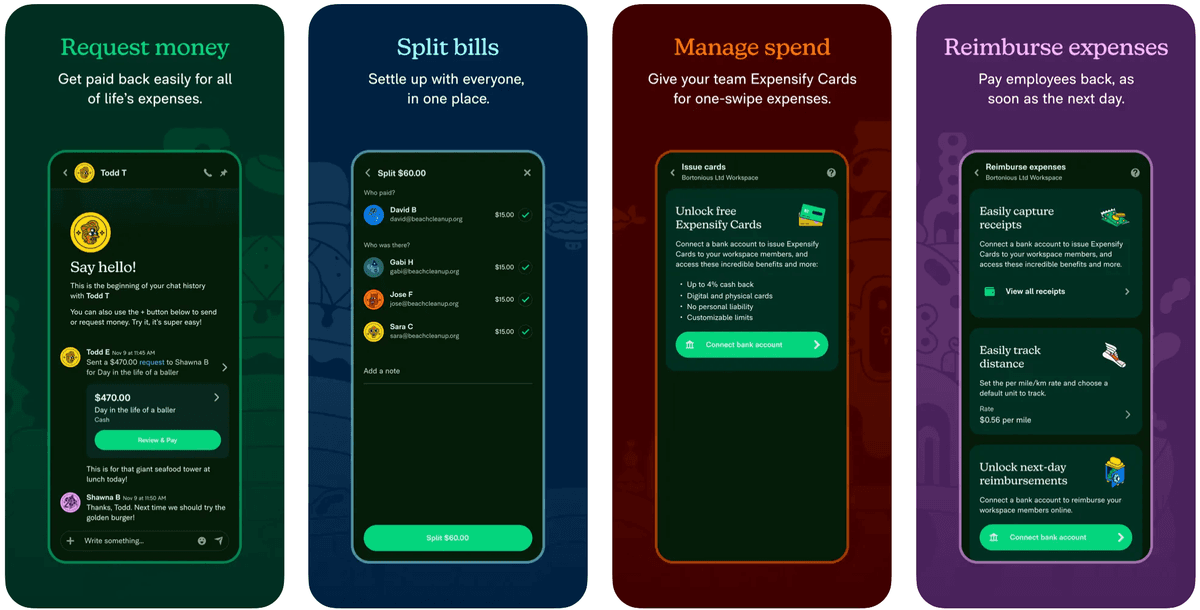
I offer technical architecture consulting — auditing what you have, designing what you need, and leaving your team with a decision record and migration plan they can execute — with engagements typically running $10K–$60K over two to eight weeks. I've spent 7+ years delivering production systems, worked as a Guest Engineer at Expensify on a platform serving millions of users, and I'm Top Rated on Upwork with $100K+ earned and verified client reviews. The deliverable is never a slide deck alone: you get written architecture decision records, a sequenced migration plan, and where the risk justifies it, a working prototype that proves the risky part before you commit a team to it.
Architecture mistakes are the most expensive ones a technical organization makes, because they're invisible for months and then cost a rewrite. This service exists for the moments where a decision is about to harden — a scaling wall, a stack choice, a system that's grown past its design — and getting an experienced outside read is dramatically cheaper than being wrong.
Weekly demos, async Slack updates, production standards.
04
Ship
Store launch, documentation, knowledge transfer.
Engagements this covers
The system that grew past its design
A product built quickly three years ago now takes weeks to ship small changes, and every deploy is tense. I audit the codebase and infrastructure, identify which pain is architectural and which is just debt, and deliver a sequenced plan that fixes the highest-leverage constraints first — incremental steps the existing team can execute without a rewrite or a hiring spree.
Build decision with long consequences
A team faces a fork: monolith or services, which database, buy or build a core component, how to add AI features without destabilizing the platform. I run a short, structured evaluation — requirements, constraints, honest trade-offs, a prototype of the riskiest assumption — and deliver a written recommendation with the reasoning attached, so the decision survives the meeting it was made in.
Pre-diligence or post-agency review
A founder is heading into a funding round, or has just received a codebase from an agency, and needs an independent read on what's actually there. I review architecture, code quality, security posture, and scaling headroom, and deliver a plain-language report ranking issues by real risk — what must be fixed now, what can wait, and what's fine despite looking scary.
What the engagement looks like
The first phase is evidence-gathering, not opinions: I read the code, trace the data flows, examine the infrastructure and its bills, and interview the engineers who live in the system — they almost always know where the bodies are buried, and often nobody has asked them. This takes one to two weeks and ends with a shared, written picture of the current state that your team agrees is accurate. Skipping this step is how consultants produce elegant recommendations for a system that doesn't exist.
The second phase is the design work: target architecture, the trade-offs considered and rejected, and — the part most consulting skips — the migration sequence from here to there in steps that each deliver value and each leave the system working. Where a recommendation rests on a risky assumption, I build a small prototype to test it. The engagement ends with a working session, not a document drop: your team interrogates the plan until they own it.
What drives cost inside $10K–$60K
Scope and depth set the price. A focused decision review — one architectural question, evaluated properly with a written recommendation — sits at the bottom of the range and takes two to three weeks. A full system audit with a sequenced modernization roadmap sits in the middle. The top of the range adds prototyping of risky components, participation in early execution, or a system large enough that the audit alone is weeks of reading.
Two things you shouldn't pay a premium for: diagram polish and page count. The value is in the quality of the trade-off analysis and the executability of the migration plan, and a twenty-page document your team acts on beats a hundred-page one they don't. What legitimately adds cost is organizational complexity — multiple teams with conflicting views of the system means more interviews and more reconciliation before design can even start — and regulated environments where compliance constraints must be verified rather than assumed.
Red flags when buying architecture advice
Be suspicious of any consultant whose recommendation is a rewrite, delivered early, with confidence. Rewrites are occasionally right, but they're recommended far more often than they're right, because rewrites are easy to sell and the recommender rarely lives through the execution. Equally suspicious: recommendations arriving before anyone has read your code — architecture advice from a slide template, pattern-matched to your industry rather than your system.
Watch for astronaut architecture: designs optimized for a scale you may reach in five years, at a cost you pay immediately in complexity your current team can't operate. And watch for vendor gravity — advice that always lands on the technologies the consultant resells or gets referral fees from. The tell for all of these is the missing migration plan: anyone can draw a beautiful target state, but the sequenced, value-delivering path from your actual system to that state is the hard part, and its absence means you bought a poster, not a plan.
How to evaluate an architecture consultant
Ask what they'd need to look at before recommending anything — the right answer is code, infrastructure, costs, and conversations with your engineers; the wrong answer is a discovery workshop with sticky notes and no code access. Ask them to describe a time their initial architectural instinct was wrong and what changed their mind; people who can't answer haven't been checked by production reality often enough. Ask how they handle the gap between the ideal design and what your team can realistically operate — the honest answer acknowledges that the best architecture your team can't run is worse than a mediocre one they can.
Then look at their delivery history, not just their advisory history. Architecture advice from someone who still builds and operates systems carries different weight than advice from someone who stopped shipping years ago — production has a way of punishing elegant theories, and you want a consultant who has been punished recently enough to remember it.
When you should not buy architecture consulting
If you already know what's wrong and need hands to fix it, hire a builder — a consulting engagement that restates your own diagnosis in nicer formatting is the most expensive way to procrastinate. If your team has fewer than three engineers, you likely need a fractional technical leader involved over months, not a one-time architecture review; advice without anyone to receive and execute it evaporates.
Also skip it if the real problem is organizational and everyone knows it — no architecture document fixes two teams that refuse to talk to each other, and hiring a consultant to referee a political dispute wastes everyone's money. Finally, pre-product-market-fit startups usually shouldn't buy this at all: your architecture should be the simplest thing that lets you iterate fast, and the correct 'consulting' is one honest conversation, which I'm happy to have without an engagement attached.
Low-risk to start
✓Fixed-scope proposal first
You approve milestones and a price before any build starts — no open-ended hourly surprises.
✓Working demos every week
You see running software each week, not status reports, so you can course-correct early.
✓One senior owner, no hand-offs
The person who scopes the work is the person who builds it — no junior layers, no agency markup.
✓A track record you can verify
Top Rated on Upwork with public client reviews and $100K+ earned, plus contributions to Expensify. Check the receipts before you commit.
How much does technical architecture consulting cost?
Typical engagements run $10K–$60K. A single focused decision review — one architectural question, properly evaluated, with a written recommendation — lands at $10K–$20K over two to three weeks. A full system audit with a sequenced modernization roadmap runs $25K–$40K. Prototyping risky components or staying involved through early execution pushes toward the top. You're paying for trade-off analysis and an executable migration plan, not document length.
How long does an architecture review take?
Two to eight weeks depending on system size and scope. The first one to two weeks are evidence-gathering — reading code, tracing data flows, interviewing your engineers — because recommendations made before that are pattern-matching, not analysis. Design and migration planning take another two to four weeks. A single well-bounded decision can be turned around in two to three weeks; a full audit of a multi-team system needs the longer end.
Should I hire an architecture consultant or just ask my senior engineers?
Ask your senior engineers first — they know the system best, and part of a good consultant's job is surfacing what they already know but haven't been heard on. Bring in outside help when the decision is outside the team's experience, when internal opinions are deadlocked, when the answer might threaten someone's past work, or when investors or a board need an independent read. The combination — your engineers' context plus outside pattern experience — beats either alone.
How much does technical architecture consulting typically cost?
Projects typically fall in the $10K–$60K range depending on scope, integrations, and timeline. I provide a fixed-scope proposal after a 30-minute scoping call.
How long does a technical architecture consulting project take?
MVPs often ship in 8–12 weeks. Production systems with AI backends or RAG may run 12–20 weeks. Rescue and audit engagements can start within days.
Do you work with startups and enterprises?
Yes. I work with founders, CTOs, product teams, and agencies worldwide — US, UK, EU, and APAC time zones with async updates and weekly demos.
Can you own mobile and backend together?
Yes. I specialize in React Native + Python (FastAPI) + AI (RAG, agents, OpenAI/Claude) under one senior owner — fewer handoffs, faster shipping.
How do I get started?
Book a free 30-minute scoping call on this site, hire through Upwork, or email dhairyasenjaliya@gmail.com with your brief and timeline.