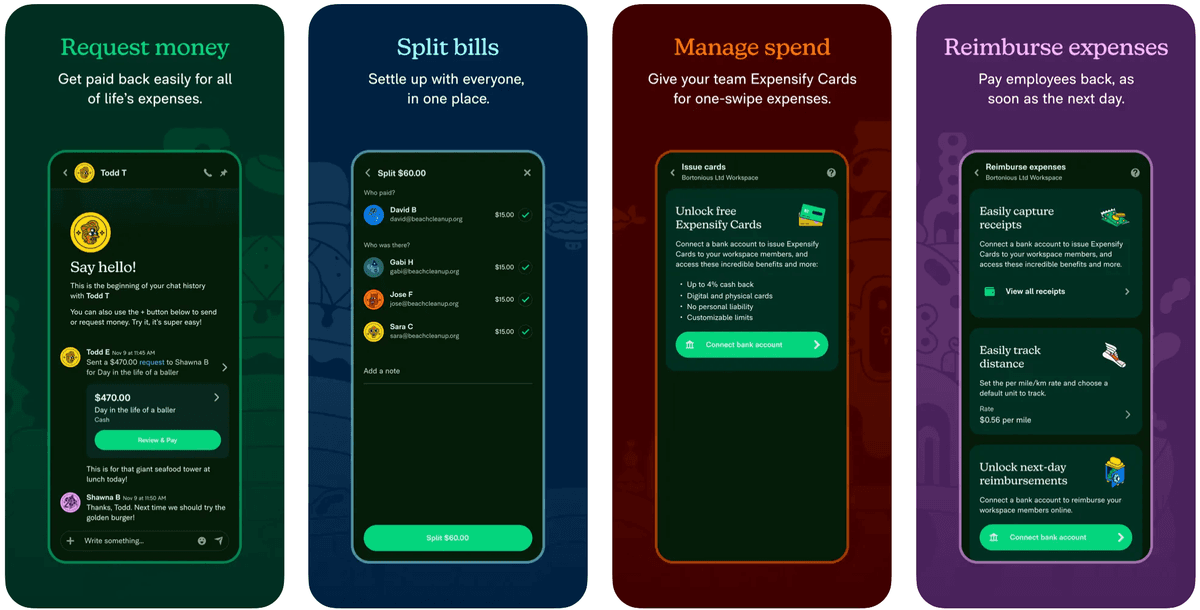
I build and rescue GraphQL APIs for $15K–$80K, with most engagements — a production schema, resolvers, authorization, and performance work for a real product — landing between $25K and $50K over 6–12 weeks. The low end covers a focused API for a single app; the high end covers federated schemas, migrations from sprawling REST estates, and APIs serving mobile apps at scale. I've shipped production systems for 7+ years including as a Guest Engineer at Expensify, I'm Top Rated on Upwork with $100K+ earned and verified reviews, and I consume GraphQL from the mobile side too — 20+ App Store launches — so I design schemas the way client teams actually need them.
GraphQL solves a real problem — mobile and web clients over-fetching and under-fetching from rigid REST endpoints — but a badly designed schema recreates that pain with more machinery. This service covers schema design that matches how clients actually consume data, resolvers that don't melt your database, and the authorization and caching layers GraphQL makes you build deliberately. Having built the mobile apps on the other end of these APIs, I design from the client backward.
Weekly demos, async Slack updates, production standards.
04
Ship
Store launch, documentation, knowledge transfer.
Engagements this covers
Greenfield API for a mobile-first product
A startup is building iOS and Android apps and wants an API that won't need a rewrite when web ships. I design the schema around client screens and workflows, implement resolvers with dataloader batching from day one, and set up persisted queries for mobile performance. The team gets typed, codegen-ready contracts and an API that serves three clients without endpoint sprawl.
GraphQL performance rescue
A team shipped GraphQL and now their database is on fire — N+1 queries everywhere, one bad client query can take down the API. I profile the resolver layer, add batching and caching, introduce query complexity limits and depth caps, and fix the schema patterns that invited abuse. Result: p95 latency drops and the API stops being an unbounded query engine.
Incremental migration from REST
A company with dozens of REST endpoints and multiple frustrated client teams wants GraphQL without a big-bang rewrite. I stand up a GraphQL layer over existing services, migrate the highest-pain screens first, and define a deprecation path for old endpoints. Client teams get one typed graph to work against while backend services migrate behind it on their own schedule.
How a GraphQL engagement runs
The first two weeks are schema design, and I do it from the consuming side: I look at your actual client screens and workflows and design types around them, because a schema that mirrors your database tables instead of your product is the root cause of most GraphQL misery. Schema review with your team happens before resolver code exists — changing SDL is free; changing a shipped schema is not.
Weeks three through six are implementation: resolvers with batching built in (not retrofitted after the first incident), an authorization layer enforced at the field level, error handling conventions, and pagination done once, correctly, as a pattern. The final phase covers the operational layer teams forget GraphQL needs: query complexity limits, persisted queries or an allow-list for production clients, caching strategy, and observability per-resolver so slow fields are visible. Handoff includes schema governance conventions — how your team evolves the graph without breaking mobile clients that can't force-update.
What drives cost in a GraphQL project
Schema surface is the honest unit of cost: an API covering one product's core workflows is a $15K–$30K project; a graph spanning several domains with multiple client teams and federation is $50K–$80K. The second driver is what's behind the resolvers. Clean services or a well-indexed database make implementation fast; resolvers that must stitch together legacy systems, third-party APIs, and databases with creative schemas absorb budget in integration work no framework saves you from.
Authorization complexity is the third: role-based access enforced at the field level, multi-tenant data isolation, and per-object permissions are all solvable but each adds real engineering. One thing that shouldn't drive cost: server framework debates. Apollo, Yoga, Pothos, or your language's equivalent — I'll recommend based on your stack, but the expensive decisions are schema shape and data loading, not which npm package hosts them.
Mistakes companies make buying GraphQL work
The most common mistake is treating GraphQL as a drop-in REST replacement and asking a vendor to 'convert our endpoints.' A generated schema that mirrors your REST resources gives you GraphQL's complexity with none of its benefits — clients still make five round trips, only now with a query language. If a vendor's migration plan is mechanical conversion, you're buying a lateral move.
Second mistake: ignoring the query cost problem. GraphQL hands clients an expressive query language, and without depth limits, complexity budgets, and batching, you've shipped a denial-of-service interface to your own database. Any proposal that doesn't mention this is incomplete. Third: skipping schema governance. The first schema is easy; the fiftieth change, with three client teams and mobile apps in the field that update on user schedules, is where graphs rot. Ask any vendor how they handle deprecation, and expect a process, not a shrug.
How to evaluate a GraphQL developer
Show a candidate one of your real client screens and ask them to sketch the schema for it. Strong candidates ask about workflows, nullability, and what the client does on partial failure; weak ones transcribe your database. Ask how they'd stop the N+1 problem — the answer should include dataloaders or equivalent batching as a default posture, plus per-resolver tracing to catch what slips through.
Ask them what belongs in the graph and what doesn't; a senior answer includes cases where a plain endpoint is better (file uploads, webhooks, bulk exports) because graph purism is its own failure mode. And if mobile apps consume your API, weight client-side experience heavily. I've been the mobile engineer stuck consuming schemas designed by people who never shipped an app — cursor pagination that breaks list virtualization, nullable fields that crash Swift codegen — and designing from the client backward is the single biggest quality lever in this work.
When GraphQL is the wrong choice
If you have one client, one team, and a handful of endpoints, REST with OpenAPI codegen gives you typed contracts with less machinery — GraphQL's payoff comes from multiple clients with divergent data needs, and below that threshold it's overhead. If your API is mostly server-to-server with stable, predictable payloads, you don't need client-shaped queries; you need good versioning.
Be honest about operational appetite too: GraphQL asks your team to own query cost control, caching strategy (HTTP caching gets harder), and schema governance forever. A team that won't invest in those will be happier with REST, and I'd rather tell you that in week zero than deliver a graph that decays. Where GraphQL genuinely earns its complexity — mobile plus web clients, fast-moving product surface, multiple teams consuming shared data — it's excellent, and that's precisely the situation where I recommend it.
Low-risk to start
✓Fixed-scope proposal first
You approve milestones and a price before any build starts — no open-ended hourly surprises.
✓Working demos every week
You see running software each week, not status reports, so you can course-correct early.
✓One senior owner, no hand-offs
The person who scopes the work is the person who builds it — no junior layers, no agency markup.
✓A track record you can verify
Top Rated on Upwork with public client reviews and $100K+ earned, plus contributions to Expensify. Check the receipts before you commit.
A production GraphQL API from a senior engineer runs $15K–$80K. A focused schema for a single product with authorization, batching, and query cost controls lands at $25K–$40K over 6–10 weeks. Incremental REST migrations and multi-team federated graphs occupy the upper half of the range. Beware of quotes that only cover resolvers — authorization, caching, complexity limits, and schema governance are where production GraphQL costs actually live.
Is GraphQL better than REST for a mobile app?
For mobile specifically, GraphQL's advantages are real: one round trip per screen instead of several, exact-shape responses that cut payload on cellular networks, and typed codegen for Swift, Kotlin, or TypeScript clients. It matters most when screens compose data from many resources and when web and mobile need different shapes of the same data. For simple apps with a few stable endpoints, REST remains simpler to cache and operate — the crossover point is client complexity, not fashion.
How long does it take to migrate from REST to GraphQL?
Done sensibly — a GraphQL layer over existing services, migrating the highest-pain client screens first — teams see usable value in 4–6 weeks and complete core migration in 3–6 months depending on endpoint count. A big-bang rewrite is the wrong plan; the graph should wrap your REST estate and let old endpoints retire gradually. Mobile clients in the field constrain the pace more than backend work does, since old app versions keep calling old endpoints for months.
How much does graphql api development typically cost?
Projects typically fall in the $15K–$80K range depending on scope, integrations, and timeline. I provide a fixed-scope proposal after a 30-minute scoping call.
How long does a graphql api development project take?
MVPs often ship in 8–12 weeks. Production systems with AI backends or RAG may run 12–20 weeks. Rescue and audit engagements can start within days.
Do you work with startups and enterprises?
Yes. I work with founders, CTOs, product teams, and agencies worldwide — US, UK, EU, and APAC time zones with async updates and weekly demos.
Can you own mobile and backend together?
Yes. I specialize in React Native + Python (FastAPI) + AI (RAG, agents, OpenAI/Claude) under one senior owner — fewer handoffs, faster shipping.
How do I get started?
Book a free 30-minute scoping call on this site, hire through Upwork, or email dhairyasenjaliya@gmail.com with your brief and timeline.