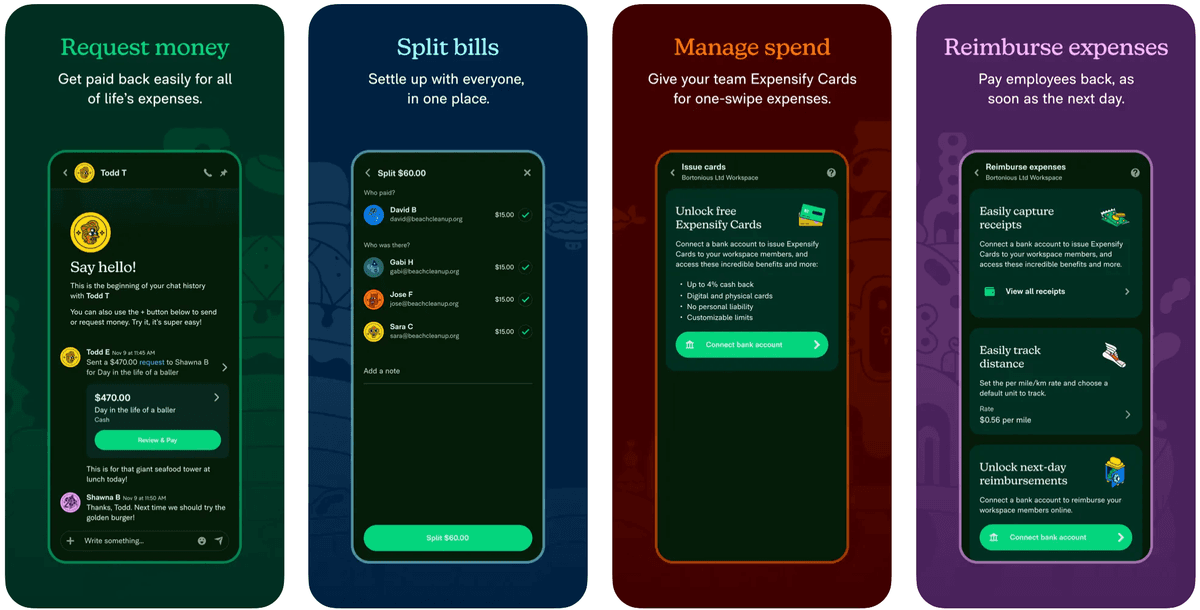
Document intelligence engagements — turning invoices, contracts, claims, or reports into structured, queryable data — typically run $25K–$120K depending on document variety, accuracy targets, and how deep the extraction pipeline goes. I build these systems myself: I spent 7+ years shipping production software, worked as a Guest Engineer at Expensify on an expense platform used by millions where document processing is the core business, and I'm Top Rated on Upwork with $100K+ earned and verified client reviews. Upwork is one verification channel; most of my document work comes from direct clients worldwide. You hire me by scoping the document types and target accuracy first, then committing to a fixed pilot before any large build.
If your team is manually keying data out of PDFs, scans, or emails, you are paying a recurring salary for work a pipeline can do with higher consistency. Document intelligence is the discipline of building that pipeline properly — extraction, validation, human review where it matters — instead of duct-taping an OCR API to a spreadsheet.
Weekly demos, async Slack updates, production standards.
04
Ship
Store launch, documentation, knowledge transfer.
Engagements this covers
Invoice processing for a logistics platform
An operations-heavy company receives thousands of supplier invoices monthly in fifty different layouts. I build an extraction pipeline combining layout-aware OCR with an LLM validation pass, route low-confidence fields to a lightweight review queue, and integrate the output into their accounting system. Manual entry drops to exceptions only, and month-end close stops depending on temp staff.
Contract clause extraction for a legal-adjacent SaaS
A startup wants to flag renewal dates, liability caps, and termination clauses across customer contracts. I design a chunking and extraction strategy tuned to legal documents, build evaluation sets from their real contracts, and ship an API their product calls directly. The founders get a defensible feature, not a demo, with measured precision on the clauses that carry legal risk.
Claims intake modernization
An insurance-sector client processes handwritten and scanned claim forms with a two-week backlog. I build a pipeline that classifies incoming documents, extracts structured fields, validates them against policy data, and escalates ambiguous cases to adjusters with pre-filled context. Intake time falls from days to minutes for clean documents, and adjusters spend their time on judgment calls instead of typing.
What a typical engagement looks like week by week
Weeks 1–2 are document archaeology: I collect a representative sample of your real documents — not the clean ones, the ugly ones — and build a labeled evaluation set with your team. This step is non-negotiable because every accuracy claim later is measured against it. Weeks 3–5 produce a working pilot on your two or three highest-volume document types, with extraction, confidence scoring, and a review interface for the fields the system is unsure about.
Weeks 6–10 expand coverage: more document types, validation rules against your existing data (does this invoice total match the PO?), and integration into whatever system consumes the output. The final stretch is hardening — retry logic, monitoring, cost controls on LLM calls, and a handover where your team learns to add new document types without me. Larger engagements toward the top of the range extend the expansion phase rather than changing the shape.
What drives cost inside the $25K–$120K range
The single biggest driver is document variety. Ten thousand invoices in three known layouts is a $25K–$40K problem; the same volume across hundreds of supplier formats, some handwritten, pushes toward the middle of the range because evaluation and edge-case handling dominate the work. The second driver is your accuracy bar and its consequences: 90% field accuracy with human review of the rest is dramatically cheaper than 99% straight-through processing, and financial or medical data raises the bar by necessity.
The third driver is integration depth. A pipeline that drops clean JSON into a bucket is cheap; one that writes into your ERP, reconciles against existing records, and handles corrections flowing back is where budgets reach $80K–$120K. Compliance requirements — audit trails, data residency, PII handling — add real engineering, not just paperwork. I quote after seeing sample documents, never before.
Red flags when buying document intelligence
Be suspicious of anyone quoting a fixed price before seeing your actual documents — accuracy on your files is unknowable from a description. Be equally suspicious of demos run on the vendor's sample documents; every OCR and LLM pipeline looks flawless on curated inputs. Insist the demo runs on files you provide on the spot.
Watch for vendors who won't commit to a measured accuracy number on a shared evaluation set, or who quote accuracy without saying what it's measured against. "95% accurate" is meaningless until you know whether that's per character, per field, or per document — a document with twenty fields at 95% field accuracy is wrong on the whole document most of the time. Finally, avoid anyone who treats human review as failure rather than architecture. Systems that pretend they'll never be wrong hide their errors in your downstream data, which is far more expensive than a review queue.
How to evaluate any vendor, including me
Ask three questions before signing anything. First: "How will we measure accuracy, and on whose documents?" The right answer involves a labeled evaluation set built from your files, with field-level metrics you can rerun yourself. Second: "What happens when the system is unsure?" You want confidence scores, thresholds, and a defined human-review path — not a shrug. Third: "What does it cost per document at our volume?" LLM-heavy pipelines can have unit economics that look fine in a pilot and painful at scale; a competent vendor has already modeled this.
Then ask for a small paid pilot with explicit exit criteria before committing to the full budget. A vendor confident in their pipeline will happily stake the larger engagement on measured pilot results. One who pushes you to sign the whole scope up front is asking you to carry all the risk of an inherently empirical problem.
What good delivery looks like
At handover you should hold four things. One: a running pipeline processing your real document flow, with measured field-level accuracy against the evaluation set you helped build — numbers your team can reproduce, not numbers in a slide. Two: a review workflow where low-confidence extractions land in front of a human with the source document and the extracted values side by side, and corrections feed back into the evaluation set.
Three: operational visibility — per-document cost, latency, error rates, and alerts when accuracy drifts because a supplier changed their invoice template. Four: documentation and a recorded walkthrough that lets your engineers add a new document type without calling me. A good delivery is one where the system's failure modes are known, bounded, and routed to humans, and where the company owns the whole thing — code, prompts, evaluation data — with no dependency on my availability.
When you should not buy this
If your monthly document volume is a few hundred files, a person with a good process beats a pipeline on cost for years — automation earns its keep at volume or when latency matters, not before. If your documents are already digital and structured (proper e-invoices, API-delivered data, consistent CSV exports), you have an integration problem, not a document intelligence problem, and you should buy the cheaper thing.
Hold off if you can't provide real sample documents due to legal or client constraints — building against synthetic data produces a system that fails on contact with reality, and I'd rather you fix data access first. And if the underlying process is about to change — you're switching ERPs, renegotiating supplier formats, or standardizing intake forms — do that first. Automating a workflow you're about to replace is the most reliable way to waste this budget.
Low-risk to start
✓Fixed-scope proposal first
You approve milestones and a price before any build starts — no open-ended hourly surprises.
✓Working demos every week
You see running software each week, not status reports, so you can course-correct early.
✓One senior owner, no hand-offs
The person who scopes the work is the person who builds it — no junior layers, no agency markup.
✓A track record you can verify
Top Rated on Upwork with public client reviews and $100K+ earned, plus contributions to Expensify. Check the receipts before you commit.
Can you guarantee a specific extraction accuracy before we start?
No, and you should distrust anyone who does — accuracy depends entirely on your documents, which I haven't seen yet. What I do instead: we build a labeled evaluation set from your real files in the first two weeks, I report measured field-level accuracy against it throughout the project, and the pilot has explicit accuracy exit criteria. You decide whether to continue based on numbers from your own documents, not my promises.
Do we need an LLM pipeline, or is traditional OCR enough?
It depends on layout variety. Fixed-layout forms in known templates are often handled well by classical OCR plus rules, which is cheaper per document and fully deterministic. LLMs earn their cost when layouts vary widely, when fields require context to interpret, or when documents mix free text with structure. Most production systems I build are hybrids — cheap deterministic extraction where possible, LLM passes where necessary, and confidence scoring deciding which path each document takes.
What happens to documents containing sensitive or regulated data?
We decide the data path before any code is written. Options range from processing entirely inside your cloud account with no data leaving your infrastructure, to using API providers with zero-retention agreements, to on-premise models for the strictest cases. PII redaction can happen before any third-party call. I document the full data flow so your compliance team can review it, and audit logging is built in from the start rather than bolted on.
How much does document intelligence services typically cost?
Projects typically fall in the $25K–$120K range depending on scope, integrations, and timeline. I provide a fixed-scope proposal after a 30-minute scoping call.
How long does a document intelligence services project take?
MVPs often ship in 8–12 weeks. Production systems with AI backends or RAG may run 12–20 weeks. Rescue and audit engagements can start within days.
Do you work with startups and enterprises?
Yes. I work with founders, CTOs, product teams, and agencies worldwide — US, UK, EU, and APAC time zones with async updates and weekly demos.
Can you own mobile and backend together?
Yes. I specialize in React Native + Python (FastAPI) + AI (RAG, agents, OpenAI/Claude) under one senior owner — fewer handoffs, faster shipping.
How do I get started?
Book a free 30-minute scoping call on this site, hire through Upwork, or email dhairyasenjaliya@gmail.com with your brief and timeline.