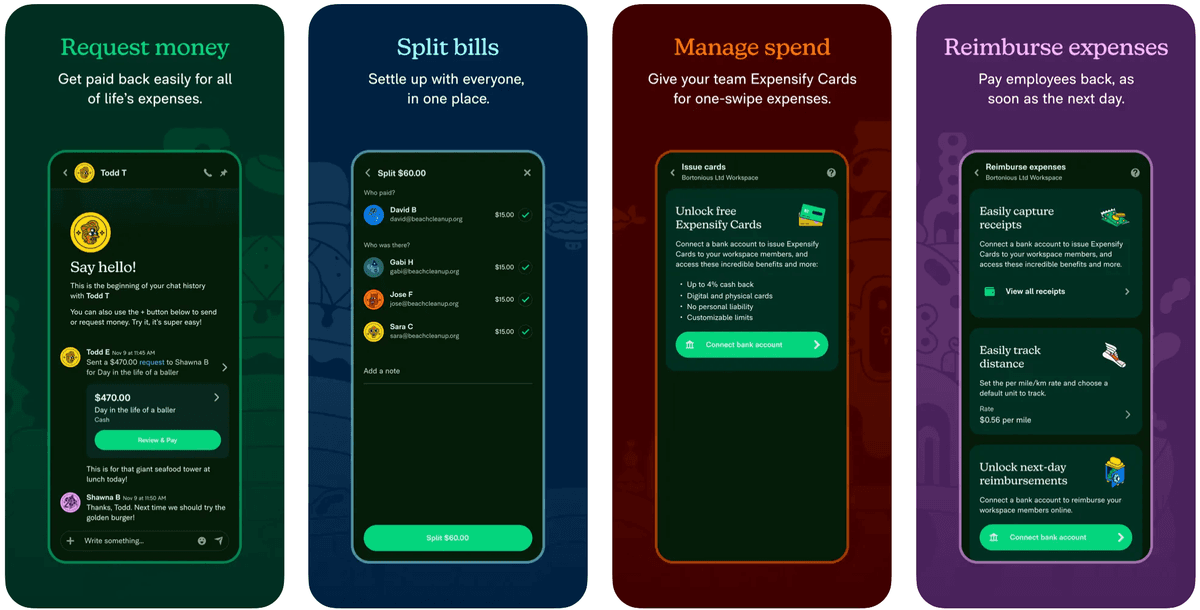
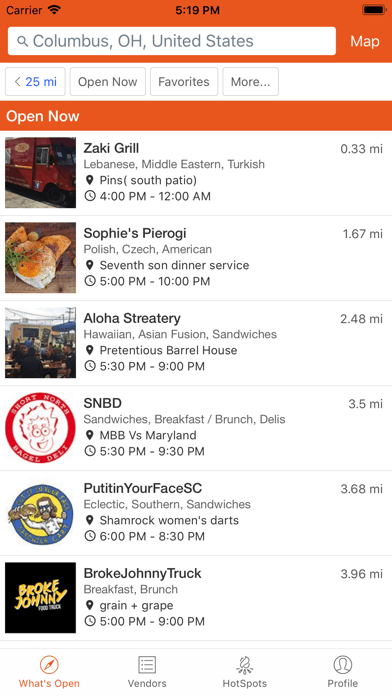
My full stack development engagements run $30K–$180K: the low end covers a focused product build — one app, one backend, shipped — and the high end covers a complete platform with mobile apps, APIs, admin tooling, and months of iteration. I have 7+ years of production delivery, 20+ App Store launches, worked as a Guest Engineer at Expensify, and I am Top Rated on Upwork with $100K+ earned and verified client reviews. You hire one senior engineer who owns the entire stack — React Native on the front, Python or Node on the back — which means no coordination tax and one throat to choke.
Early-stage products die from coordination overhead as often as from bad code — a frontend contractor waiting on a backend contractor waiting on a spec. Full stack delivery by one senior engineer collapses that loop: the person building the screen also builds the endpoint, so the API fits the product instead of the org chart.
Weekly demos, async Slack updates, production standards.
04
Ship
Store launch, documentation, knowledge transfer.
Engagements this covers
Zero to launched product for a non-technical founder
A funded founder has designs, a validated idea, and no engineering team. I build the entire system — mobile app, API, database, payments, admin panel — and handle App Store submission. The founder gets a weekly build on their phone from week two onward, and launches with a codebase and documentation a future in-house team can inherit cleanly.
The MVP that needs to become real software
A startup validated demand with a prototype held together by no-code tools and a freelancer who vanished. I rebuild it properly — typed API, tested business logic, real authentication — while keeping the existing product alive, then cut users over gradually. Feature development continues during the rebuild, because a rewrite that freezes the roadmap for six months is a rewrite that kills the company.
A feature that cuts through every layer
An established product needs something substantial — subscriptions, marketplace payments, real-time chat — that touches the mobile app, the API, the data model, and third-party services. Instead of coordinating two contractors and an integration spec, I deliver the whole vertical slice: one engineer, one timeline, one accountable owner from database migration to App Store release.
What full stack means in my practice, concretely
On the front: React Native for iOS and Android from one codebase, or React for web, with the navigation, offline behavior, and store-submission scar tissue that 20+ App Store launches builds. On the back: Python — FastAPI or Django — or Node with TypeScript, PostgreSQL, and deployment on managed cloud infrastructure that a small team can operate without a devops hire. In between: the parts most projects underestimate — authentication, payments, push notifications, file handling, admin tooling, analytics.
What it does not mean is shallow generalism. The reason to hire one senior engineer for the whole stack is not saving a hire; it is that the API gets designed by the person consuming it, error states flow through every layer coherently, and there is no gap between two contractors where bugs live and accountability dies.
How a build actually runs
The first week is architecture and scope surgery: I take the feature list and split it into launch-critical versus version two, then set up the skeleton — repos, CI, deployment, a walking skeleton of app talking to API in production infrastructure from day one. From week two you get a working build on your phone every week. That cadence is not a courtesy; it is the mechanism that keeps scope honest and surfaces wrong assumptions while they are cheap to fix.
Mid-build is feature delivery in vertical slices — each slice usable end to end rather than a backend that is 80 percent done and an app that is 40 percent done, which is how projects hide trouble. The final weeks cover the unglamorous launch work: store review, crash reporting, analytics, load sanity checks, and handover documentation. A focused MVP runs three to four months; larger platforms run six to nine.
What moves the price between $30K and $180K
Feature surface is the obvious driver, but the multipliers are less obvious. Real-time features — chat, live updates, collaborative state — roughly double backend complexity. Payments beyond a simple checkout, especially anything with payouts to users, add compliance and edge-case work that never shows up in the demo. Admin tooling is a hidden second product: founders budget for the app their users see and forget the dashboard their ops team lives in.
Third-party integration count matters, and so does whether those APIs are documented. What keeps cost down: ruthless version-one scoping, standard patterns over novel architecture, and managed services over self-hosted infrastructure. In the first week I will usually find 30 percent of the feature list that can move to version two without hurting launch — that conversation alone tends to pay for itself several times over.
How to evaluate any full stack developer
Ask to see one product they built end to end and still running in production — not a portfolio of contributions to other people's systems. Ask them to walk you through a data model they designed and why; weak full stack developers are almost always weak on the database, because it is the layer furthest from the demo. Ask what they do about the boring layers: migrations, error handling, logging, backups. Strong candidates have opinions and habits; weak ones have frameworks.
Then probe the edges of their range honestly. Everyone claims full stack; the tell is whether they can explain a tradeoff on both sides — why they chose this navigation pattern on mobile and this queue on the backend — with the same fluency. Finally, check they have shipped through app store review before, because that process burns two weeks of a novice's timeline every single time.
When one full stack engineer is the wrong buy
If your product has deep specialist requirements at its core — heavy ML modeling, video infrastructure, embedded hardware — a generalist owning the stack around a hollow center does not work; hire the specialist first. If you need raw speed on a huge surface area with a hard deadline, a coordinated team beats any individual, and the coordination tax is worth paying. And if you already have a backend team with strong conventions, hiring a full stack contractor who works around them creates friction; what you want then is a mobile specialist who integrates with what exists.
The honest heuristic: one senior full stack engineer is the highest-leverage option from zero to roughly the first ten thousand users. Past that, the role should split, and part of my job is building the system so that split is clean when it comes.
Low-risk to start
✓Fixed-scope proposal first
You approve milestones and a price before any build starts — no open-ended hourly surprises.
✓Working demos every week
You see running software each week, not status reports, so you can course-correct early.
✓One senior owner, no hand-offs
The person who scopes the work is the person who builds it — no junior layers, no agency markup.
✓A track record you can verify
Top Rated on Upwork with public client reviews and $100K+ earned, plus contributions to Expensify. Check the receipts before you commit.
How much does full stack development cost for a startup app?
A focused MVP — mobile app, API, database, authentication, one payment flow, basic admin — typically runs $30K–$60K over three to four months. Products with real-time features, complex payments, or multiple user roles land $60K–$120K. Full platforms with months of post-launch iteration reach $180K. The biggest hidden cost driver is admin tooling; the biggest saver is aggressive version-one scoping.
How long does it take to build an app and backend from scratch?
Three to four months to a launched MVP is realistic for a disciplined scope: week one for architecture, then weekly working builds, with the final month absorbed by payments edge cases, store review, and launch hardening. Anyone quoting six weeks for a full product is either cutting the layers you cannot see — error handling, security, migrations — or planning to disappear at 80 percent.
Should I hire one full stack developer or separate frontend and backend developers?
From zero to first traction, one senior full stack engineer usually wins: no integration gaps, no coordination overhead, one accountable owner, and an API designed by the person consuming it. Split the role when you have specialist-heavy requirements, a hard deadline across a huge surface, or an existing team with established conventions. Built well, a solo-built codebase splits cleanly into team ownership later.
How much does full stack development services typically cost?
Projects typically fall in the $30K–$180K range depending on scope, integrations, and timeline. I provide a fixed-scope proposal after a 30-minute scoping call.
How long does a full stack development services project take?
MVPs often ship in 8–12 weeks. Production systems with AI backends or RAG may run 12–20 weeks. Rescue and audit engagements can start within days.
Do you work with startups and enterprises?
Yes. I work with founders, CTOs, product teams, and agencies worldwide — US, UK, EU, and APAC time zones with async updates and weekly demos.
Can you own mobile and backend together?
Yes. I specialize in React Native + Python (FastAPI) + AI (RAG, agents, OpenAI/Claude) under one senior owner — fewer handoffs, faster shipping.
How do I get started?
Book a free 30-minute scoping call on this site, hire through Upwork, or email dhairyasenjaliya@gmail.com with your brief and timeline.