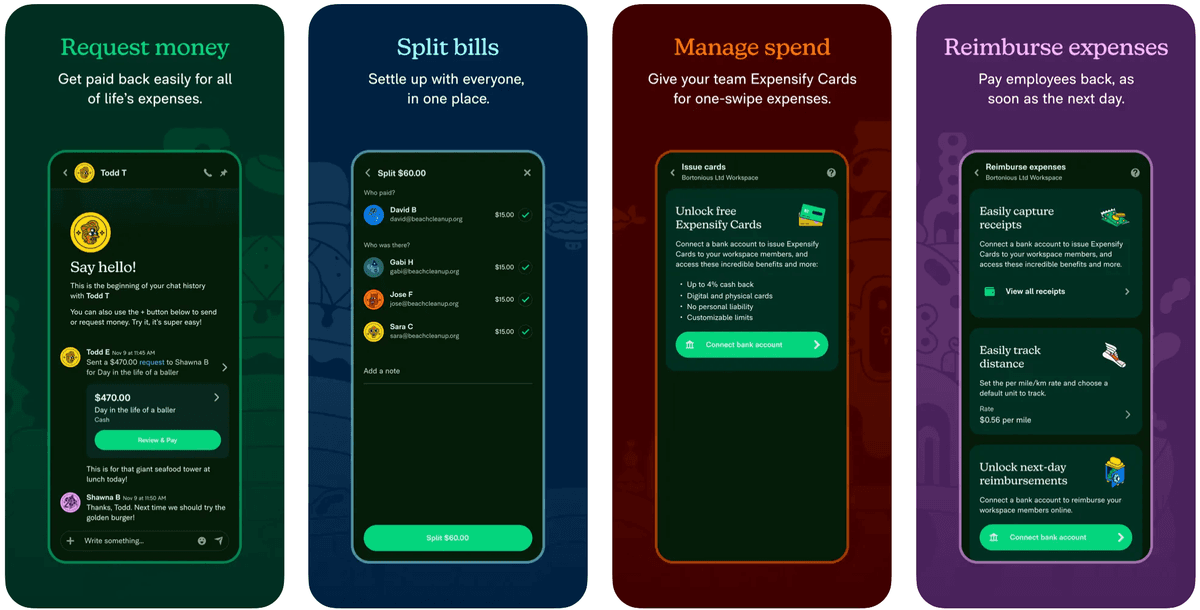
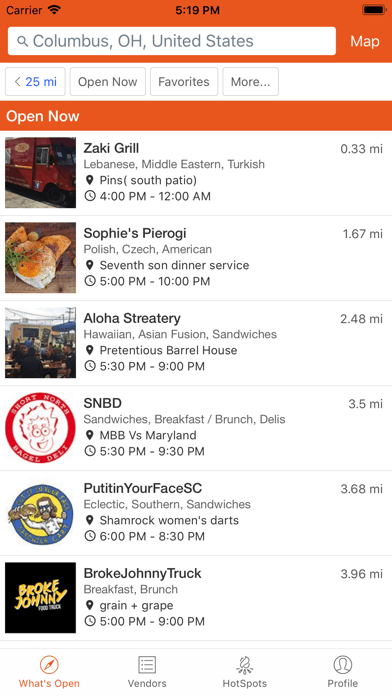
Hiring me as a full stack developer runs $35K–$200K per engagement: the low end covers a focused, well-defined product build on one platform, and the high end covers multi-quarter development across web, mobile, backend, and infrastructure. I'm Top Rated on Upwork with $100K+ earned and verified client reviews, I've worked as a Guest Engineer at Expensify, and I have 20+ App Store launches behind me. You get one senior engineer who owns the entire slice — API design, data model, frontend, deployment — instead of a hand-off chain where problems live in the gaps.
Hiring 'full stack' goes wrong when it means 'affordable generalist who is mediocre at everything.' It goes right when one senior person owns the seam between frontend, backend, and infrastructure — the place where most production bugs, most schedule slips, and most finger-pointing actually live.
Weekly demos, async Slack updates, production standards.
04
Ship
Store launch, documentation, knowledge transfer.
Engagements this covers
Founding engineer for a funded MVP
A founder with funding and designs needs the whole product built — API, database, web or mobile client, deployment — without coordinating three contractors. I build it end to end with weekly demo builds and decisions documented as we go. The outcome is a launched product plus a codebase and architecture notes that the first full-time hires can walk into.
Shipping a major module into an existing product
A team needs a substantial new capability — billing, reporting, a partner API — but everyone senior is committed to the roadmap. I join the existing codebase, match its conventions, and deliver the module end to end: schema, backend, frontend, tests, migration plan. The outcome shape: a shipped module that looks like the team built it, with no architectural orphans.
Taking over from a departed agency
A company inherits a half-built codebase after an agency relationship ended, with no documentation and an uncertain launch date. I audit what exists, produce an honest state-of-the-code report, stabilize the critical paths, and finish the build. The outcome is a shipped product and a written record of what was salvaged, what was rewritten, and why.
What full stack should actually mean
A real full stack engineer designs the API and the data model, builds the frontend that consumes them, and deploys the whole thing — which means when something breaks, there is no gap for the bug to hide in. The alternative model, a frontend contractor and a backend contractor coordinating over Slack, spends a shocking share of its budget on the seam: contract mismatches, integration delays, and two people each certain the bug is on the other side.
The test is ownership depth, not framework count. Someone who has carried one product from schema design through App Store review is full stack. Someone with nine frameworks on a resume and no deployment stories is a frontend developer with opinions.
How I structure the engagement
The first week or two produce a written technical spec and milestone plan — not a formality, but the document we'll both point at when scope questions come up in week eight. Each milestone is two to three weeks and ends with a demo of working software in a deployed environment, never slides.
You see the repository from day one and every decision with long-term consequences — data model, auth approach, third-party dependencies — gets a short written rationale. The engagement ends with handover: documentation, a walkthrough for whoever inherits the code, and if you're hiring, help interviewing the engineers who will.
What you're paying for across $35K–$200K
Surface area is the main axis. One platform, one backend, and a defined feature list sits near $35K–$60K. Add a second client platform, an admin panel, third-party integrations like payments and messaging, or compliance requirements, and each expands the surface that must be designed, built, tested, and maintained in sync.
The other axis is timeline compression and uncertainty. A well-specified build is cheaper than one where we're discovering requirements as we go — discovery is legitimate work, but it's work. Multi-quarter engagements at the $150K–$200K end usually mean I'm effectively your engineering department: product build plus infrastructure, hiring support, and technical decisions along the way.
How to interview any full stack candidate
Ask them to walk you through one system they owned end to end — where the data lived, how the frontend talked to it, how it deployed, and what broke in production. Depth on a single real system beats breadth across buzzwords every time. Then ask two specific questions: 'Describe a database migration you ran on live data' and 'How do you roll back a bad deploy?' Both have concrete answers that only come from having done it.
Finally, give them a genuinely ambiguous requirement and watch what happens. Strong candidates ask clarifying questions and state trade-offs; weak ones start naming technologies. You're hiring judgment at the seams, and that's where it shows.
Mistakes companies make with this hire
The most expensive mistake is optimizing for hourly rate: two cheap developers who need a project manager to coordinate them routinely cost more than one senior engineer who needs neither. The second is hiring against a framework checklist — technologies are learnable in weeks; system design judgment takes years and is the thing you're actually buying.
Third: not looking at the code as it's written. Ask for repository access from day one and demos of deployed software every couple of weeks. Vendors who resist either are hiding velocity problems, and by the time a polished final reveal disappoints you, the budget is gone.
When you need specialists instead
Full stack is the wrong hire for genuinely deep verticals: custom machine-learning model training, embedded and hardware work, heavy real-time audio or video processing, or design-system work across a large product org. In those cases a generalist will deliver a competent-looking version of the wrong thing, and I'd rather tell you that in the first call.
It's also the wrong shape once you have a real team. Past six or eight engineers, you want specialists with depth plus a strong technical lead — the one-person-owns-everything model is a stage, not a destination. The right time for this hire is between zero and that point.
Low-risk to start
✓Fixed-scope proposal first
You approve milestones and a price before any build starts — no open-ended hourly surprises.
✓Working demos every week
You see running software each week, not status reports, so you can course-correct early.
✓One senior owner, no hand-offs
The person who scopes the work is the person who builds it — no junior layers, no agency markup.
✓A track record you can verify
Top Rated on Upwork with public client reviews and $100K+ earned, plus contributions to Expensify. Check the receipts before you commit.
How much does it cost to hire a full stack developer for a project?
For senior project-based work, expect $35K–$200K depending on surface area. A single-platform product with a defined scope runs $35K–$60K. Web plus mobile plus admin tooling, payment and messaging integrations, or compliance requirements push into six figures, and multi-quarter engagements where the developer is effectively your engineering department land at $150K–$200K. Hourly-rate comparisons mislead here; total cost to a shipped, maintainable product is the number that matters.
Should I hire a freelance full stack developer or an agency?
A senior freelancer wins when the product can be built by one strong person — you get direct communication, no project-manager markup, and one accountable owner of every layer. An agency wins when you need parallel workstreams, guaranteed staffing continuity, or more hours per week than one human has. The failure mode to avoid is the middle: an agency that assigns one mid-level developer anyway and charges you for the org chart around them.
How do I verify a full stack developer's skill before committing?
Check for shipped, verifiable work: live products, App Store listings, platform profiles with reviewed transaction history like Upwork's. Then run a paid pilot — one or two weeks on a real, bounded task from your actual backlog. You'll learn more from how they handle ambiguity, communicate progress, and structure code in ten paid days than from any interview loop, and it caps your downside at the pilot cost.
How much does hire full stack developer typically cost?
Projects typically fall in the $35K–$200K range depending on scope, integrations, and timeline. I provide a fixed-scope proposal after a 30-minute scoping call.
How long does a hire full stack developer project take?
MVPs often ship in 8–12 weeks. Production systems with AI backends or RAG may run 12–20 weeks. Rescue and audit engagements can start within days.
Do you work with startups and enterprises?
Yes. I work with founders, CTOs, product teams, and agencies worldwide — US, UK, EU, and APAC time zones with async updates and weekly demos.
Can you own mobile and backend together?
Yes. I specialize in React Native + Python (FastAPI) + AI (RAG, agents, OpenAI/Claude) under one senior owner — fewer handoffs, faster shipping.
How do I get started?
Book a free 30-minute scoping call on this site, hire through Upwork, or email dhairyasenjaliya@gmail.com with your brief and timeline.