Startup MVP development with me typically runs $15K–$80K: the low end covers a focused single-platform app with authentication and a handful of core screens, while the high end covers a cross-platform product with a custom Python backend, payments, and push infrastructure. You're hiring one senior engineer with 7+ years of production delivery and 20+ App Store launches, not an agency passing your build to juniors. I'm Top Rated on Upwork with $100K+ earned and verified client reviews, though Upwork is just one verification channel — most of my MVP work comes from direct founder referrals. Typical timeline is 8–14 weeks from kickoff to a store-submitted build.
Most startups don't die because the code was bad — they die because the first version took too long, cost too much, and tested nothing. MVP development done right means ruthless scoping around the one assumption your business depends on, then shipping a real app to real users fast enough that you still have runway left to act on what you learn.
Weekly demos, async Slack updates, production standards.
04
Ship
Store launch, documentation, knowledge transfer.
Engagements this covers
Founder with a Figma file and a deadline
A non-technical founder has validated designs and early customer interest but no engineering team. I take the Figma file, cut scope to the riskiest assumption, and build the React Native app plus a lean backend. Twelve weeks later there's a live TestFlight build in beta users' hands and a store submission queued — with a codebase a future hire can actually extend.
Rescuing a stalled agency build
A startup paid an agency for six months and got a half-working app with no tests and no releases. I audit what's salvageable, give an honest keep-or-rewrite verdict with evidence, then either stabilize the existing code or rebuild the core in weeks. The outcome is a shippable product and a written record of what went wrong, so it doesn't happen twice.
Technical founder who needs mobile shipped
A backend-strong founder has the API done but no mobile experience. I own the React Native side end to end — architecture, offline behavior, store accounts, review submission — while they keep building the server. We integrate weekly against a shared contract, and the founder never has to learn Xcode signing or Play Console policies to get launched.
What the first six weeks actually look like
Week one is scoping, not coding: we identify the single assumption your startup lives or dies on, and everything that doesn't test it gets cut or deferred. I write a one-page build plan with explicit out-of-scope items — that document prevents 80% of the disputes that kill agency projects. Weeks two and three produce the app skeleton: navigation, authentication, the data layer, and a CI pipeline that ships a TestFlight build from day one, so you're always looking at a real app on your own phone, never screenshots.
Weeks four through six are feature velocity: the core loop of your product gets built, demoed every Friday, and adjusted based on what you see. By week six you should be putting the build in front of five to ten friendly users. If a developer's plan has you waiting until 'the end' to touch the product, that's the plan of someone who has never had a launch go sideways.
What moves the price inside $15K–$80K
The biggest cost lever is backend complexity. An MVP that rides on Firebase or Supabase with straightforward data stays near the bottom of the range. Custom Python APIs, payment flows with webhooks and edge cases, real-time features, or AI functionality each add weeks. The second lever is platform count — React Native gives you iOS and Android from one codebase, but store setup, testing, and device quirks still add roughly 15–20% versus a single platform.
The third lever is the unglamorous stuff founders forget to budget: admin dashboards, content moderation tools, email flows, analytics wiring, and App Store assets. None of these are hard individually, but together they're often three or four weeks of work. When I quote, these are line items you can see and cut — not surprises invoiced in month three.
Mistakes founders make when buying MVP development
The most expensive mistake is buying by feature list instead of by learning goal. A 40-feature MVP isn't a minimum anything — it's a slow, expensive version one. The second mistake is hiring on price alone: a $8K quote from a body shop usually means a template codebase, no releases until 'done', and a rewrite bill later that exceeds what a senior build would have cost upfront.
Third: not asking who actually writes the code. Agencies sell you a portfolio built by people who no longer work there, then staff your project with whoever's free. Fourth: skipping the store logistics. Apple developer enrollment, privacy manifests, and review compliance take real calendar time, and founders who treat launch as an afterthought lose two to four weeks at the worst possible moment. Ask any vendor to walk you through their last store rejection and how they resolved it — the answer tells you if they've genuinely shipped.
How to evaluate anyone for this work — including me
Ask for live App Store or Play Store links, then check the review history and update cadence — a real shipper leaves a public trail. Ask what they would cut from your spec: a senior engineer will fight to shrink your scope, a body shop will happily quote everything. Ask how you'll see progress: the right answer is a build on your device every week, not a staging URL you'll get 'soon'.
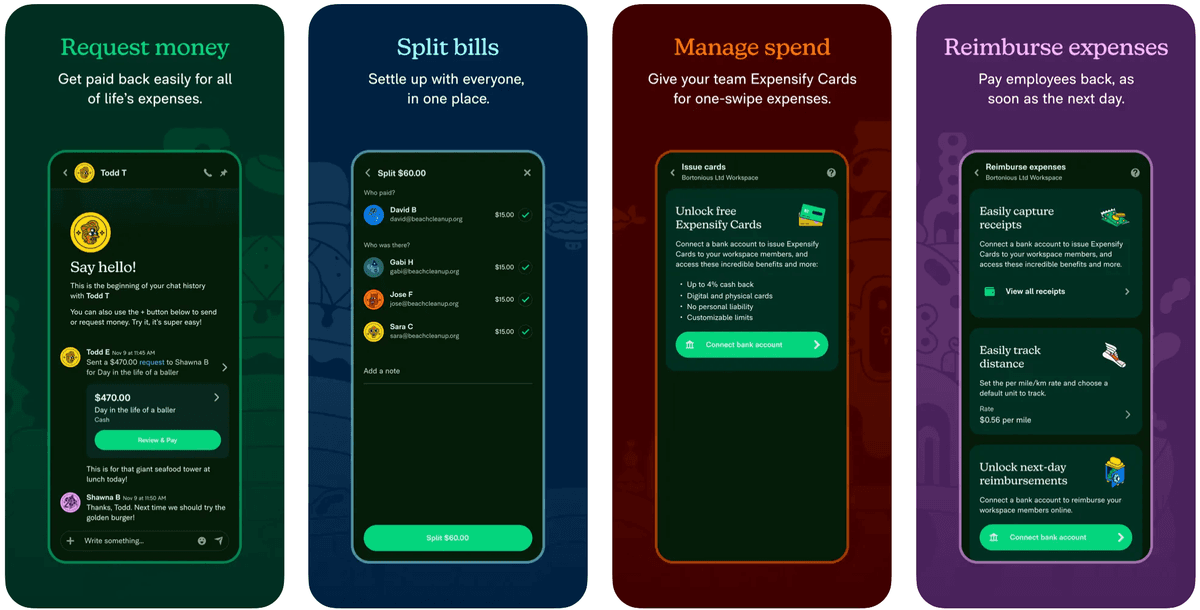
Then check verification you can't fake. My track record includes guest engineering at Expensify — an expense platform used by millions — 20+ App Store launches, and a Top Rated Upwork profile with verified client reviews. Whatever developer you pick, insist on equivalent third-party evidence: verified marketplace history, public apps, or referenceable clients. Vendors who can only show private screenshots and NDAs for everything are asking you to fund their learning curve.
When you should not build an MVP yet
If you haven't talked to at least twenty potential customers, don't pay anyone to write code — a landing page, a Typeform, or a concierge test will teach you more for a few hundred dollars than an app will for $30K. If your idea's risk is regulatory or supply-side rather than technical, an app proves nothing; validate the hard constraint first.
I also turn down builds where the founder wants to 'see what sticks' across five features — that budget produces five weak experiences instead of one convincing one. And if you already have a strong technical co-founder with time, you probably need an advisor for a few hours a month, not a build engagement. Telling you this now costs me projects and earns trust; the founders who come back are the ones who were ready.
Low-risk to start
✓Fixed-scope proposal first
You approve milestones and a price before any build starts — no open-ended hourly surprises.
✓Working demos every week
You see running software each week, not status reports, so you can course-correct early.
✓One senior owner, no hand-offs
The person who scopes the work is the person who builds it — no junior layers, no agency markup.
✓A track record you can verify
Top Rated on Upwork with public client reviews and $100K+ earned, plus contributions to Expensify. Check the receipts before you commit.
With me, $15K–$80K. A lean single-platform app on a managed backend lands around $15K–$30K. A cross-platform React Native app with a custom API, payments, and push notifications typically runs $40K–$80K. The honest variable is scope discipline — the same product idea can cost either number depending on how ruthlessly you cut the first version.
How long does startup MVP development take?
Eight to fourteen weeks from kickoff to a store-submitted build for most scopes. You'll have a working build on your own phone by week two or three and beta users on it by week six. Add one to two weeks of calendar time for Apple review and developer account setup if you're starting from zero — that part can't be compressed by working harder.
Should I hire a freelance developer or an agency for my MVP?
At MVP stage, one senior engineer usually beats an agency: you get the person you evaluated actually writing the code, decisions in hours instead of ticket queues, and 100% of budget going to building. Agencies make sense when you need parallel workstreams — a big backend, web, and mobile simultaneously. For a focused first product, that parallelism is overhead you're paying for, not speed.
How much does startup mvp development typically cost?
Projects typically fall in the $15K–$80K range depending on scope, integrations, and timeline. I provide a fixed-scope proposal after a 30-minute scoping call.
How long does a startup mvp development project take?
MVPs often ship in 8–12 weeks. Production systems with AI backends or RAG may run 12–20 weeks. Rescue and audit engagements can start within days.
Do you work with startups and enterprises?
Yes. I work with founders, CTOs, product teams, and agencies worldwide — US, UK, EU, and APAC time zones with async updates and weekly demos.
Can you own mobile and backend together?
Yes. I specialize in React Native + Python (FastAPI) + AI (RAG, agents, OpenAI/Claude) under one senior owner — fewer handoffs, faster shipping.
How do I get started?
Book a free 30-minute scoping call on this site, hire through Upwork, or email dhairyasenjaliya@gmail.com with your brief and timeline.