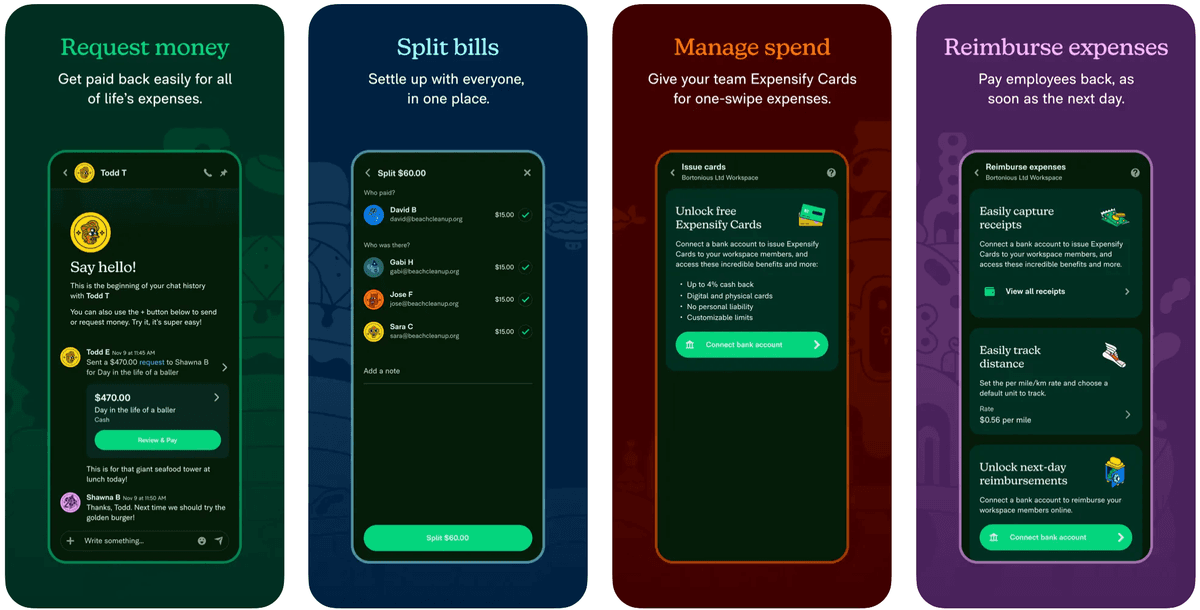
My fractional CTO engagements run $8K–$40K per month: the low end is an advisory cadence — architecture reviews, hiring support, vendor oversight, weekly leadership syncs — and the high end is hands-on technical leadership several days a week with delivery ownership. I bring 7+ years of production delivery, experience as a Guest Engineer at Expensify, and 20+ App Store launches. What you're buying is senior technical judgment on tap — someone who reads the actual code and the actual invoices — without committing to a full-time executive before the company needs one.
Non-technical founders lose money in the gap between what their developers or agencies report and what's actually true — velocity theater, architecture debt accumulating silently, hires made on gut feel. A fractional CTO closes that gap: someone technical enough to read the code, senior enough to make calls, and structurally on your side of the table.
Weekly demos, async Slack updates, production standards.
04
Ship
Store launch, documentation, knowledge transfer.
Engagements this covers
Non-technical founder overseeing an agency
A founder is paying an agency serious money each month and can't independently tell whether the progress reports reflect reality. I review the architecture, read the pull requests, and map invoices against shipped work. The outcome is an honest velocity picture, renegotiated scope where warranted, and a founder who walks into vendor meetings with technical leverage instead of hope.
Post-MVP startup making its first engineering hires
A startup with traction needs its first two engineers, and a bad first hire at this stage compounds for years. I define the roles, design a practical interview loop, screen candidates on real technical judgment, and help close the offers. The outcome shape: a small team hired against the actual roadmap, onboarded onto a codebase I've already reviewed, with an ownership structure that survives growth.
Technical roadmap and diligence for a growing product
A company heading into a raise or a scaling year needs to know what its technology can actually support. I run an architecture and security review, rank the risks by business impact, and build a two-quarter technical roadmap with board-ready reporting. The outcome is a defensible answer to 'will the tech hold' — for investors, and more importantly, for the founder.
What a fractional CTO actually does month to month
The rhythm is concrete: a weekly leadership sync where technical decisions get made with business context, standing review of the pull requests and architecture decisions your team or vendors produce, and ownership of the technical relationship with agencies and contractors — including the uncomfortable conversations. Around that core: hiring (role definition, interview loops, final-round screens), incident and risk oversight, and translation between board expectations and engineering reality.
What it is not: a figurehead who attends one meeting and lends a title. If your fractional CTO isn't reading code and looking at the deployment pipeline, you've hired a consultant with a better business card, and you'll learn the difference during your first real technical crisis.
What sets the rate within $8K–$40K per month
Time and ownership are the levers. At $8K–$15K monthly you get an advisory cadence — roughly a day a week: the leadership sync, code and architecture review, vendor oversight, and availability for decisions that can't wait. That's the right shape when a competent team just needs senior judgment above it.
The upper range buys delivery ownership: multiple days a week where I'm accountable for what ships, not just for advice — running the engineering process, managing vendors day to day, sometimes writing the critical-path code. Team size moves the number too, since more engineers and vendors mean more surface to review. What doesn't move it: title inflation. The rate follows responsibility, not the word 'CTO' in a pitch deck.
Red flags when hiring a fractional CTO
The first red flag is capacity math that doesn't close: someone promising deep engagement to eight companies simultaneously is doing shallow work for all of them — ask directly how many active clients they carry. The second is allergy to code: a fractional CTO who won't open the repository is producing slideware, and slideware doesn't catch the agency padding its invoices.
Third, check for conflicts of interest. A fractional CTO affiliated with a development shop has a structural incentive to recommend that shop; whatever their integrity, you can't unsee the incentive. And finally, insist on written output — decision memos, architecture notes, hiring scorecards. Judgment that never gets written down leaves with the person.
Fractional versus full-time versus agency tech lead
A full-time CTO is the right call when technology is the company's core differentiator and there's enough leadership work — team building, architecture strategy, board presence — to fill every week; before that point, a full-time executive salary buys a lot of idle seniority. An agency's tech lead is not a substitute: however good they are, they optimize for the agency's margins and staffing, and they leave when the contract does.
The fractional model fits the long middle: real products, real customers, real technical decisions, but not yet the scale that justifies the full-time cost. Done right, it should also make itself obsolete — part of my job is recognizing the moment you need a full-time leader, and helping you hire them.
When you should not hire a fractional CTO
If you already employ a strong senior engineer whose calls keep proving right, you likely don't need oversight above them — you need to give them authority, a title, and possibly a coach. Layering a fractional CTO over that person reads as distrust and often precipitates the departure you were trying to avoid; I've declined engagements for exactly this reason.
It's also premature at the pure-idea stage: before anything is being built, you need customer conversations and possibly an MVP builder, not executive oversight of nothing — a few one-off advisory sessions cover the technical questions. And if what you actually want is someone to build the product hands-on full time, hire that directly; renting a title around it just adds cost.
Low-risk to start
✓Fixed-scope proposal first
You approve milestones and a price before any build starts — no open-ended hourly surprises.
✓Working demos every week
You see running software each week, not status reports, so you can course-correct early.
✓One senior owner, no hand-offs
The person who scopes the work is the person who builds it — no junior layers, no agency markup.
✓A track record you can verify
Top Rated on Upwork with public client reviews and $100K+ earned, plus contributions to Expensify. Check the receipts before you commit.
Typically $8K–$40K per month. The lower end buys an advisory cadence of roughly a day a week — leadership syncs, architecture and code review, vendor oversight, hiring support. The upper end buys hands-on leadership several days a week with accountability for delivery, not just advice. Compare that against full-time CTO compensation plus equity, and the fractional model is what makes senior technical leadership affordable before the scale that justifies the full-time hire.
How many hours a week does a fractional CTO work with us?
Advisory engagements run about a day per week: a standing leadership sync, ongoing review of code and architecture, vendor management, and reachability for decisions that can't wait for the next meeting. Hands-on engagements run two to three days weekly with delivery ownership. The structural point matters more than the hours: it's a continuous relationship carrying context week to week, not a block of consulting hours you draw down.
When should a startup hire a fractional CTO?
Three moments reliably justify it: when a non-technical founder is spending real money with developers or agencies they can't independently evaluate; when a post-MVP company is making its first engineering hires, which compound for years; and when technical decisions start carrying consequences the team lacks the seniority to weigh — architecture bets, security posture, diligence for a raise. If none of those describe you yet, start with a one-off technical review instead.
How much does fractional cto services typically cost?
Projects typically fall in the $8K–$40K/mo range depending on scope, integrations, and timeline. I provide a fixed-scope proposal after a 30-minute scoping call.
How long does a fractional cto services project take?
MVPs often ship in 8–12 weeks. Production systems with AI backends or RAG may run 12–20 weeks. Rescue and audit engagements can start within days.
Do you work with startups and enterprises?
Yes. I work with founders, CTOs, product teams, and agencies worldwide — US, UK, EU, and APAC time zones with async updates and weekly demos.
Can you own mobile and backend together?
Yes. I specialize in React Native + Python (FastAPI) + AI (RAG, agents, OpenAI/Claude) under one senior owner — fewer handoffs, faster shipping.
How do I get started?
Book a free 30-minute scoping call on this site, hire through Upwork, or email dhairyasenjaliya@gmail.com with your brief and timeline.