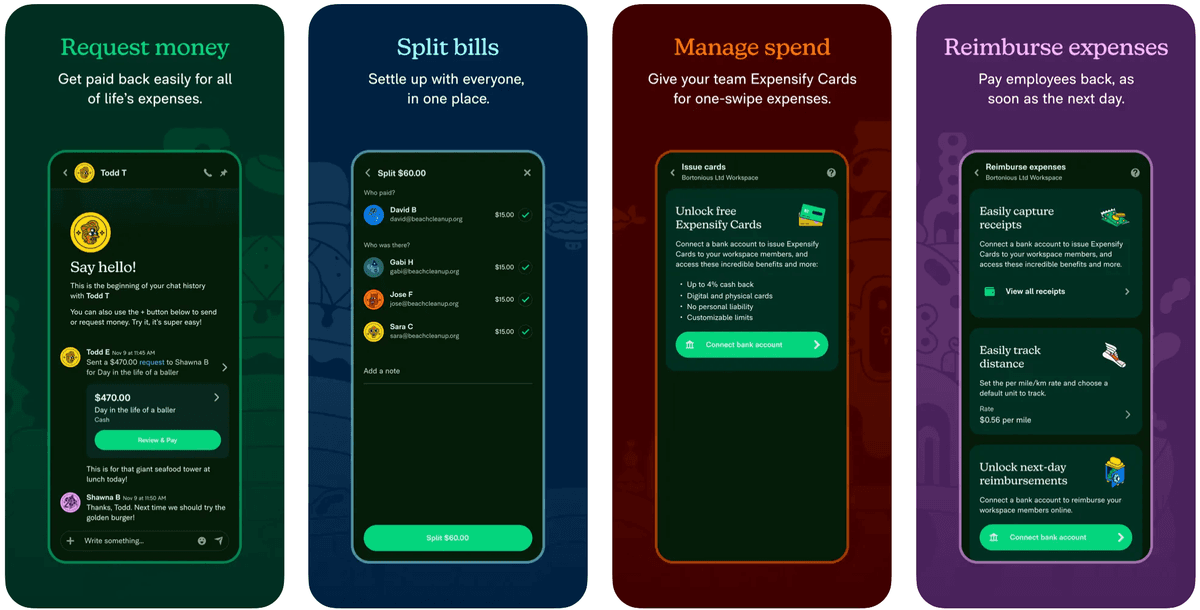
SaaS development with me runs $40K–$200K: the low end covers a focused single-product MVP with billing, auth, and an admin panel, while the high end covers a multi-tenant platform with web and mobile clients, usage-based billing, and the operational maturity B2B buyers demand. I've shipped 20+ App Store launches and apps used by millions of users, worked as a Guest Engineer at Expensify — itself a SaaS used by millions — and I'm Top Rated on Upwork with $100K+ earned and verified client reviews. Hiring starts with a scoping call, then fixed-price milestones with a working product slice deployed inside the first three weeks.
A SaaS product is really three products wearing one brand: the feature your customers pay for, the machinery around it — billing, tenancy, permissions, onboarding — and the operational layer that keeps both alive at 2am. Founders budget for the first, get surprised by the second, and discover the third during their first outage; I build all three from day one.
Weekly demos, async Slack updates, production standards.
04
Ship
Store launch, documentation, knowledge transfer.
Engagements this covers
Founder with revenue-ready demand and no product
A domain expert has a waitlist, a validated problem, and a deck — but nothing to charge for. I build the MVP around one core workflow done excellently: auth, subscription billing from day one, the primary feature, and an admin panel to run the business. First paying customers onboard within a quarter, and every subsequent feature gets prioritized by what they actually do in the product.
Internal tool that customers now want to buy
A company built something for themselves; now clients keep asking to use it. I turn a single-company tool into a multi-tenant product — data isolation per customer, roles and permissions, self-serve signup, billing, and the security posture that survives a buyer's vendor questionnaire. What was a cost center becomes a revenue line with proper foundations rather than a fork-per-customer mess.
SaaS that needs a mobile client to close deals
An established web SaaS keeps losing deals to competitors with mobile apps, and field-based users won't live in a browser. I build the React Native companion app against their existing API — offline-capable for the field, push notifications for the workflows that matter — and carry it through both app stores. Mobile stops being the objection in every sales call.
The build sequence that avoids expensive rework
Weeks one to three establish the platform skeleton in deliberate order: tenancy and data isolation first — because bolting multi-tenancy onto a single-tenant schema later is the single most expensive retrofit in SaaS — then authentication, roles, and billing integration, then continuous deployment to a staging environment you can log into. By week three you're clicking through a thin but real product: signup, subscribe, use one feature, and an admin view of it all.
From there, features ship in two-week milestones ordered by what closes revenue, and the machinery grows alongside: onboarding flows, usage tracking, email lifecycle, and the security work — audit logs, data export, access reviews — that B2B procurement will eventually demand. A typical MVP takes three to five months; the ordering exists so that at any pause point, what exists is shippable rather than a construction site.
What drives cost inside $40K–$200K
Three axes set the price. Tenancy and permissions complexity: a single-user tool is the floor; team accounts with roles, invitations, and per-seat billing are the honest middle; enterprise features — SSO, granular permissions, audit trails, per-tenant configuration — are what push toward the ceiling, and they're worth building only when a buyer is asking. Billing sophistication is second: flat subscriptions are nearly free to add early, while usage-based metering, proration, trials, and dunning are a genuine subsystem.
Third, client surface: web-only is the base case; adding a React Native mobile app raises the budget but shares the backend, which is where a combined web-plus-mobile builder saves you real money over two separate teams. What inflates budgets without adding value: speculative enterprise features before enterprise interest, custom infrastructure where managed services suffice, and pixel-perfecting screens before anyone's paid. I'll flag all three when I see them in your scope.
Mistakes first-time SaaS founders make
The most reliable mistake is deferring billing. 'We'll add payments after we validate' means validating a free product — a different product — and discovering months later that the architecture never modeled subscriptions, seats, or plan limits. Charge from the first customer; the billing integration takes days when designed in and weeks when retrofitted. The second mistake is skipping the admin panel: you'll spend hours a week answering 'can you reset this user' from the database console, which is both a time sink and an eventual security incident.
Third, building for imaginary scale — microservices, Kubernetes, and multi-region for a product with forty users — burns runway on problems you may never earn. The boring managed stack survives to product-market fit. Fourth, treating security as a later phase: your first serious B2B customer will send a questionnaire, and 'we'll get to it' loses the deal. Foundational security is cheap early and existential late.
How to evaluate any SaaS development partner
Ask what they build in week one. The right answer talks about tenancy, auth, billing, and deployment pipelines; a wrong answer starts with screens. Ask how they'd model one customer's data so another customer can never see it — the answer should be specific and unhesitating, because data isolation is the mistake you can't apologize your way out of. Ask what happens after launch: who watches errors, how incidents surface, what the handover to your future team looks like.
Commercially, insist on milestone structure with working software at every checkpoint, and be wary of anyone who needs the full budget committed before the first deploy. Check that they've operated SaaS, not just built it — ask about a production incident and what changed afterward. And ask what they'd cut from your spec; a partner unwilling to shrink your scope is optimizing their invoice, not your runway.
When custom SaaS development is premature
If you haven't validated willingness to pay, don't commission software — sell the outcome manually first. Deliver the service with spreadsheets, off-the-shelf tools, and your own hours; if nobody pays for the manual version, code wouldn't have saved it, and if people do pay, every workaround becomes a specification. Some of the best money I've made clients is the build we delayed six months.
Custom development is also premature when a no-code stack can carry your first fifty customers — a real position for many internal-workflow products — or when your differentiation is content or community rather than software mechanics. The threshold for custom is concrete: paying users straining the manual process, workflows too specific for off-the-shelf tools, or mobile and offline needs no-code can't reach. Arrive at that threshold and the $40K–$200K spends efficiently, because real usage has already written most of the spec.
Low-risk to start
✓Fixed-scope proposal first
You approve milestones and a price before any build starts — no open-ended hourly surprises.
✓Working demos every week
You see running software each week, not status reports, so you can course-correct early.
✓One senior owner, no hand-offs
The person who scopes the work is the person who builds it — no junior layers, no agency markup.
✓A track record you can verify
Top Rated on Upwork with public client reviews and $100K+ earned, plus contributions to Expensify. Check the receipts before you commit.
A production SaaS MVP — one core workflow, authentication, subscription billing, and an admin panel — typically costs $40K–$80K. Multi-tenant platforms with team accounts, roles, and usage-based billing run $80K–$140K, and adding a mobile client alongside web pushes toward $200K. Plan for roughly 15–20% of build cost annually in maintenance and iteration; a SaaS is an operated product, not a finished artifact.
How long does SaaS development take from idea to paying customers?
A focused MVP takes three to five months to first paying customers: platform foundations in the first three weeks, then two-week feature milestones you can test in staging throughout. Adding a mobile app or complex billing extends that to five to eight months. The stronger lever than calendar time is scope discipline — one excellent core workflow at month four beats five mediocre features at month eight.
Should I build my SaaS with no-code tools or hire a developer?
Start no-code if your product is forms, workflows, and dashboards — it's the fastest and cheapest way to test whether anyone pays. Hire a developer when you hit no-code's real walls: multi-tenant data isolation, per-seat or usage billing, mobile and offline requirements, API access for customers, or performance at growing volume. Many strong SaaS businesses validate on no-code and rebuild custom once revenue justifies it; that sequence wastes far less money than the reverse.
How much does saas development services typically cost?
Projects typically fall in the $40K–$200K range depending on scope, integrations, and timeline. I provide a fixed-scope proposal after a 30-minute scoping call.
How long does a saas development services project take?
MVPs often ship in 8–12 weeks. Production systems with AI backends or RAG may run 12–20 weeks. Rescue and audit engagements can start within days.
Do you work with startups and enterprises?
Yes. I work with founders, CTOs, product teams, and agencies worldwide — US, UK, EU, and APAC time zones with async updates and weekly demos.
Can you own mobile and backend together?
Yes. I specialize in React Native + Python (FastAPI) + AI (RAG, agents, OpenAI/Claude) under one senior owner — fewer handoffs, faster shipping.
How do I get started?
Book a free 30-minute scoping call on this site, hire through Upwork, or email dhairyasenjaliya@gmail.com with your brief and timeline.