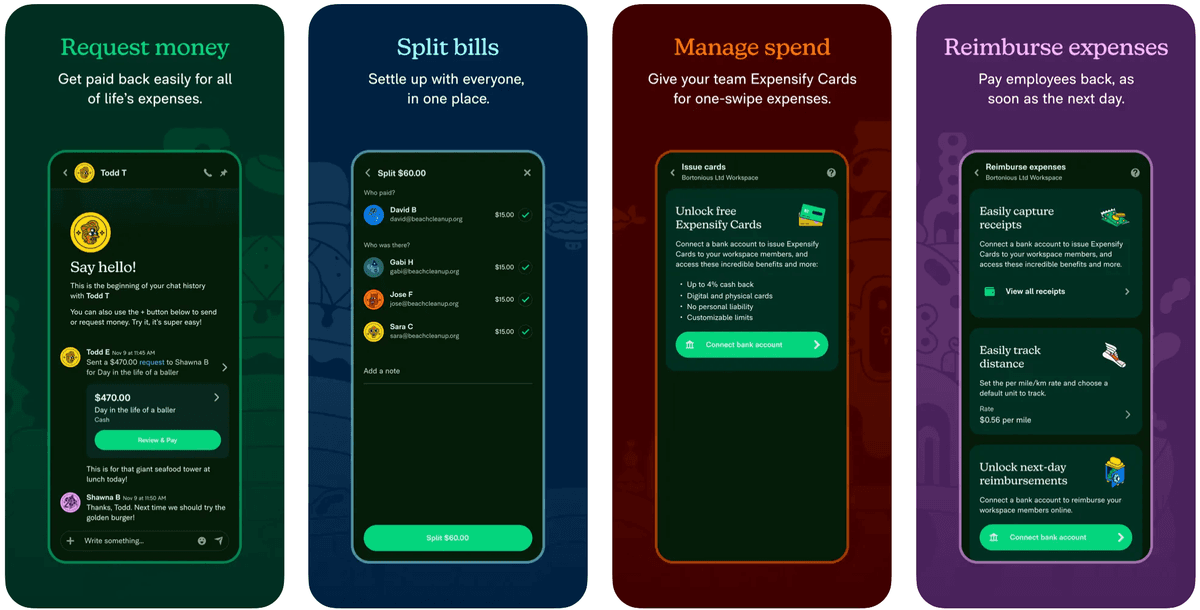
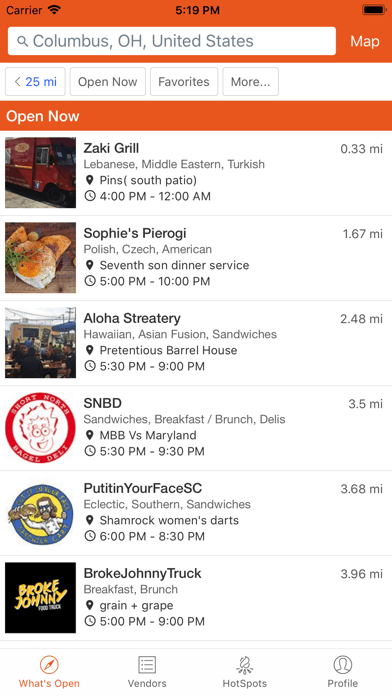
SaaS MVP development typically costs $25K–$100K for a production product — auth, the core workflow, billing, and deployment — shipped in eight to fourteen weeks. I build MVPs end to end as a single senior owner, with 7+ years of production delivery, 20+ App Store launches, Top Rated status on Upwork with $100K+ earned and verified client reviews, and experience as a Guest Engineer at Expensify. Engagements begin with a one-week scoping sprint that cuts the feature list to the smallest product that tests your business thesis, then run on fixed milestones with a deployed staging URL you can click from week two onward.
Most MVPs fail before launch for the same reason: scope grows until the budget dies, and the founder ships nothing or ships everything a year late. The job of MVP development is ruthless reduction — finding the smallest product that lets real customers say yes or no with their wallets. Delivery succeeds when version one is embarrassingly focused, launches on schedule, and is architected so the parts that survive contact with customers can grow.
Weekly demos, async Slack updates, production standards.
04
Ship
Store launch, documentation, knowledge transfer.
Engagements this covers
Founder with a validated idea and no product
A domain-expert founder has customer conversations, maybe pre-sales, and a spec that is three times too big. I run the scoping sprint that cuts it to the core loop, then build the full stack — web app, backend, auth, Stripe billing, deployment — as one accountable owner. First paying customers onboard within roughly three months, on a codebase an eventual hire can extend.
Half-built product rescue
A founder spent months and real money with a previous developer or agency and has a codebase that almost works and a burned budget. I assess what is salvageable — usually more than they fear — then finish, stabilize, and launch on a fixed plan. The outcome is a shipped product and an honest written account of what was kept, replaced, and why.
Internal tool becoming a product
A company built a spreadsheet-and-scripts tool that other businesses keep asking to buy. I productize it: multi-tenant architecture, self-serve onboarding, permissions, billing, and the operational hardening that internal tools never need. The result is a sellable SaaS with usage instrumentation from day one, so the pricing and roadmap decisions that follow run on data.
Scope discipline is the whole game
Every failed MVP I have been called to rescue died the same death: a feature list that grew faster than the budget burned. The scoping sprint that opens my engagements exists to prevent that, and it is genuinely adversarial — for every feature, the question is "does version one fail without this?" Admin dashboards, settings pages, team permissions, native mobile apps, and integrations are the usual casualties; the core loop that delivers the product's actual promise, plus auth and billing, is what survives.
The discipline continues through the build, because scope creep arrives mid-project wearing reasonable clothes — "while we're in there" and "customers will expect" are how budgets die at week nine. Every addition gets priced against the launch date openly, and the default answer is the post-launch backlog. Founders sometimes chafe at this for six weeks and then thank me at launch; shipping is the feature.
Week by week from kickoff to first customer
Week one is the scoping sprint: cut the spec, define the data model, pick the stack for boring reliability, and set the milestone schedule. Week two ships the walking skeleton — deployed staging environment, auth, CI, and one thin slice of the core workflow live at a URL you can send to anyone. That URL updates weekly for the rest of the project, which keeps progress honest in a way no status report can.
Weeks three through eight build the core loop to production quality, then billing — Stripe subscriptions, trials, the upgrade path — plus onboarding, transactional email, and error tracking. The final two to three weeks are launch hardening: security pass, backup and recovery, load sanity checks, analytics instrumentation, and a production cutover. Then the part that matters: real users, real payments, and a prioritized backlog shaped by what they actually do rather than what we guessed.
What drives cost across $25K–$100K
Workflow complexity leads. A single-role product — users sign up, use the core feature, pay — sits near $25K–$45K. Multi-sided products with distinct user types, approval flows, or marketplace mechanics carry more surface per feature and climb toward the middle. Integrations are the second driver: every external system your MVP must speak to — calendars, CRMs, accounting platforms, messaging — adds real edges, and integration-heavy products live in the upper half.
Third is the AI question, since many current MVPs have an AI feature at their core: doing that properly adds eval and cost-control work beyond a plain CRUD product. Fourth, compliance context — handling health, financial, or minors' data brings requirements that push budgets up honestly. What should not drive cost: speculative scale engineering. An MVP architected for a million users you do not have is money moved from validation to vanity, and I will argue against it every time.
Red flags when buying MVP development
The clearest red flag is a vendor who accepts your full spec without pushback — MVP development is a reduction service, and anyone happy to build all forty features is billing by the feature, not aligned with your launch. Next: no deployed URL until late in the project. Demo-day-only progress hides integration problems that surface catastrophically in the final weeks; insist on a staging environment you can click from the first fortnight.
Watch for stack exotica — vendors choosing technologies that pad their resume rather than ones your eventual hires can maintain — and for the ownership trap: code in the vendor's repositories, infrastructure in their accounts, a dependency dressed as a service. Everything should live in accounts you own from day one. Finally, distrust fixed quotes issued without a scoping conversation; a price for an unexamined spec is a price that will be renegotiated at your weakest moment, mid-build.
What good delivery looks like at handoff
A finished MVP engagement leaves you owning everything: repositories, cloud infrastructure, domains, and third-party accounts all under your control, with my access revocable in an afternoon. The codebase is boring in the best sense — mainstream stack, consistent conventions, a README that gets a new developer running locally in under an hour, and tests covering the money paths: signup, billing, and the core loop.
Operationally, you get deployment your team can run without me, error tracking and uptime alerts wired to your channels, backups that have been restore-tested rather than assumed, and analytics answering the launch questions — activation, retention, conversion. And a handoff conversation that includes the unfinished truth: the shortcuts consciously taken, where they live, and when they will need paying down. Every MVP contains those; the difference between mine and the ones I rescue is that mine come documented.
When you should not build yet
If you have not had substantive conversations with at least a dozen prospective customers, the MVP is premature — you would be paying real money to encode guesses, and code makes guesses expensive to change. Run the cheaper tests first: a landing page with pricing and a waitlist, a concierge version where you deliver the service manually, a Figma walkthrough in sales calls. Each can kill or confirm the thesis for a small fraction of a build.
Build when manual delivery is breaking under demand, when prospects have shown willingness to pay, and when you can articulate the one workflow that must work for the business to exist. And a matching honesty: if your idea's core is fully served by configurable off-the-shelf tools, I will tell you to assemble those instead — a real product build is justified by a defensible workflow those tools cannot express, not by wanting to own code.
Low-risk to start
✓Fixed-scope proposal first
You approve milestones and a price before any build starts — no open-ended hourly surprises.
✓Working demos every week
You see running software each week, not status reports, so you can course-correct early.
✓One senior owner, no hand-offs
The person who scopes the work is the person who builds it — no junior layers, no agency markup.
✓A track record you can verify
Top Rated on Upwork with public client reviews and $100K+ earned, plus contributions to Expensify. Check the receipts before you commit.
A production MVP — auth, core workflow, Stripe billing, deployment, and launch hardening — runs $25K–$100K. Single-role products with one core loop sit at $25K–$45K; multi-sided products, integration-heavy builds, or AI-core features push into the upper half. Sub-$15K quotes typically buy a prototype without billing, security, or operational plumbing, which means paying a second time to make it real before customers can safely use it.
How long does it take to build a SaaS MVP?
Eight to fourteen weeks to paying customers: one week of adversarial scoping, a deployed walking skeleton by week two, the core loop and billing built out through weeks three to eight, and two to three weeks of launch hardening. The variable is scope discipline, not engineering speed — MVPs that hold the line on a cut-down spec ship on schedule, and ones that keep absorbing ideas do not.
Should I hire a freelancer, an agency, or a technical co-founder for my MVP?
For most funded-but-early founders, a senior freelance builder is the efficient middle: full-stack ownership without agency overhead, and no equity surrendered while the idea is unproven. Agencies suit budgets over $150K needing design, build, and marketing under one roof. A technical co-founder is an equity-for-decades decision that should never be forced by a build deadline — many strong companies launch on contracted engineering and hire in-house once revenue justifies it.
How much does saas mvp development typically cost?
Projects typically fall in the $25K–$100K range depending on scope, integrations, and timeline. I provide a fixed-scope proposal after a 30-minute scoping call.
How long does a saas mvp development project take?
MVPs often ship in 8–12 weeks. Production systems with AI backends or RAG may run 12–20 weeks. Rescue and audit engagements can start within days.
Do you work with startups and enterprises?
Yes. I work with founders, CTOs, product teams, and agencies worldwide — US, UK, EU, and APAC time zones with async updates and weekly demos.
Can you own mobile and backend together?
Yes. I specialize in React Native + Python (FastAPI) + AI (RAG, agents, OpenAI/Claude) under one senior owner — fewer handoffs, faster shipping.
How do I get started?
Book a free 30-minute scoping call on this site, hire through Upwork, or email dhairyasenjaliya@gmail.com with your brief and timeline.