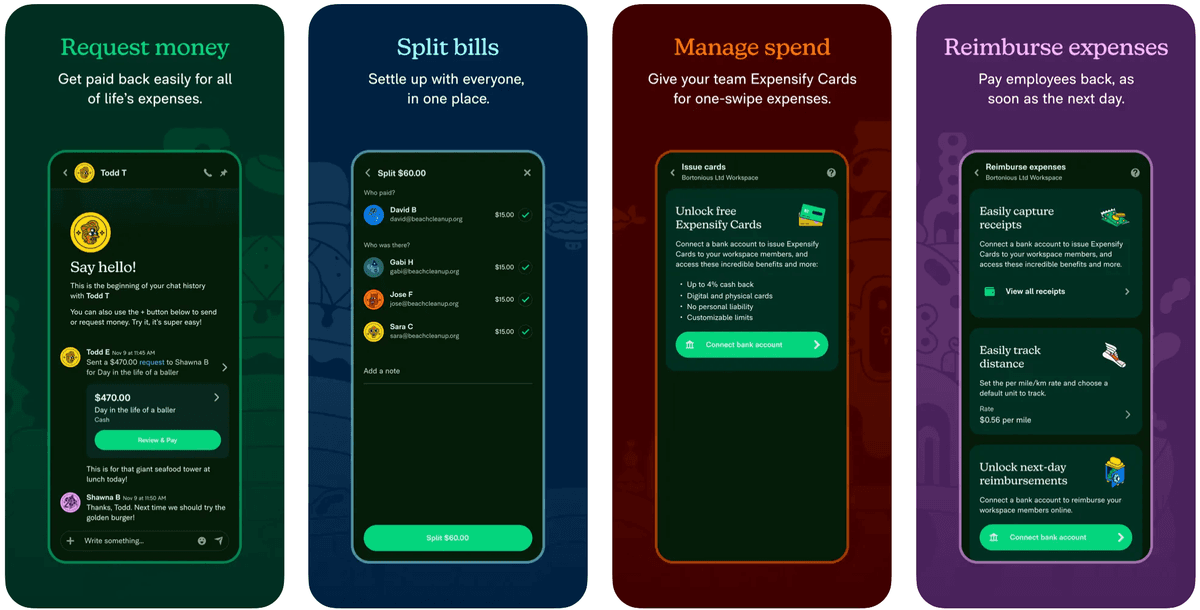
Hiring me as your startup's app developer runs $20K–$100K depending on how much product we build before your next milestone — the low end buys a sharply scoped v1, the top end a full product with backend, payments, and a post-launch iteration cycle. You get a senior engineer, not an agency: 7+ years of production delivery, 20+ App Store launches, and time as a Guest Engineer at Expensify, an expense platform used by millions. I'm Top Rated on Upwork with $100K+ earned and verified client reviews — one way to verify me, alongside the direct clients I work with worldwide. The engagement starts with a scope-cutting session, because the most expensive thing a startup can buy is the wrong product built well.
Your first build decides more than your codebase — it decides how fast you can learn whether the business works. This page is written for founders making that purchase: what it costs, where budgets actually go, and how to avoid the failure modes that eat first-time founders alive.
Weekly demos, async Slack updates, production standards.
04
Ship
Store launch, documentation, knowledge transfer.
Engagements this covers
Non-technical founder with validated demand
A founder has a waitlist and pre-sales but no way to deliver. We cut scope to the smallest product someone will pay for, then I build it end to end — React Native app, Python backend, payments, analytics — with a build on the founder's phone by week three. Launch means a live product and an instrumented funnel, not a demo.
Agency rescue with a burned budget
A founder has spent most of their raise with an agency and has screens, a repository, and no launch. I audit what exists and give a straight answer — salvage or restart, with evidence — then ship the shortest path to the stores, reusing whatever deserves reuse. The outcome is a live app and a founder who finally understands what they own.
Technical founder needing a senior counterpart
A backend-strong founder needs the mobile app built to the same standard without a full-time hire they can't yet justify. I own the app — architecture, releases, store setup — while they own the API, meeting at a contract we define together. Weekly builds keep investors and early users looking at real software instead of slide decks.
What the engagement looks like, week by week
Week one is a scope-cutting workshop, and it's where most of the value hides. We take your spec and remove things — every feature earns its place by being necessary for a user to get value and pay you, and everything else goes on a post-launch list. Founders often resist this for a day and thank me for it at launch, because every deleted feature is weeks of budget returned to you.
Weeks two and three produce a walking skeleton: an app that installs from TestFlight, logs in, and talks to the real backend, proving the risky plumbing early. Weeks four through ten ship features in weekly slices — every week there's a new build on your phone, so you always know exactly where the project stands. The final stretch covers store submission on both platforms, analytics so launch day produces data, and handover: you own every account and repository, and the codebase is documented for your eventual first hire.
What moves the price inside $20K–$100K
The bottom of the range buys a single-role app with a modest backend: one kind of user, one focused flow, payments if needed, launched to both stores. Each additional user role — a two-sided marketplace, an admin dashboard, a provider-side app — is effectively another product and moves the number more than any single feature does.
After roles: backend complexity, since consuming an existing API is cheap while building auth, data models, and business logic from scratch is real work — I build it myself in Python and price it honestly; payments and subscriptions, which add store-compliance and edge-case work well beyond the happy path; integrations, priced by the quality of the third party's API; and your design starting point — founders with finished designs save real money over founders with a napkin sketch, though I work with both. The quiet variable is your own scope discipline: every mid-project small addition costs more than the same feature scoped upfront.
Red flags when hiring your first developer
The most expensive red flag is the vendor who says yes to everything. Your spec has fat in it — every founder's does — and an estimator who never pushes back is either not reading it or planning to bill you for the discovery later, one change order at a time. Cheap quotes that balloon mid-project are this same pattern wearing a discount.
Others: no live apps you can install — for a purchase this size, insist on downloading their actual work; code ownership that stays with the vendor, or store accounts opened in their name, both of which turn handover into ransom; a discovery phase consuming a large slice of budget before any code exists; the senior who sells and the juniors who build; and silence about analytics — a launch without instrumentation means you paid to ship a product that can't teach you anything. Any one of these is survivable. Two or more, walk.
How to evaluate any developer as a founder
Install their shipped work. Store launches are public record — mine number 20+ over 7+ years of production delivery — and thirty seconds of scrolling a real app tells you more than any portfolio page. Then check reviews somewhere payment is verified; I keep my Upwork profile Top Rated with $100K+ earned and verified client reviews largely so founders outside my network have an independent place to check me, though most engagements come direct.
Then ask two questions. First: what would you cut from my spec? Good developers cut, because they've watched features nobody used consume budgets that products needed. Second: what do I own when we're done? The only right answer is everything — repositories, store accounts, infrastructure, documentation — held in your accounts from day one. Finally, notice whether they talk about your business or their stack; you're hiring judgment about what to build, not just hands to build it.
What good delivery looks like
From week two or three onward, there is always a current build on your phone. This is the single strongest protection a founder has: projects fail in the dark, and weekly builds mean there is no dark. You can show investors, test with real users, and course-correct while course-correcting is still cheap.
At the end, good delivery means you own everything — code, accounts, infrastructure — and none of it is entangled with me; analytics and crash reporting are live from launch day, so your first hundred users generate learning rather than just load; the codebase is typed, documented, and boring in the best way, ready for the first engineer you eventually hire to be productive in week one; and you understand what was built well enough to explain it to that hire or to a technical investor. My goal is to make myself unnecessary — dependence on your developer is a liability you should never pay to acquire.
When you should not hire a developer yet
If you haven't watched real prospects react to the idea, don't buy code. A landing page with a waitlist, a concierge version delivered manually, or a no-code prototype will answer whether anyone wants this for a fraction of this budget — and the answer will change what we'd build, so buying development first means paying to build twice. I turn down projects at this stage and say why, because they come back as better projects or not at all, and both outcomes beat a failed build.
Also wait if your budget only covers the build itself: launch is the midpoint, not the finish line, and you want reserves for the iteration your first users will demand. And if what you actually need is a technical co-founder — someone accountable for technology strategy over years, not for a deliverable — a contractor is the wrong shape of help. I can be a strong bridge to that hire, but I shouldn't be a substitute for it.
Low-risk to start
✓Fixed-scope proposal first
You approve milestones and a price before any build starts — no open-ended hourly surprises.
✓Working demos every week
You see running software each week, not status reports, so you can course-correct early.
✓One senior owner, no hand-offs
The person who scopes the work is the person who builds it — no junior layers, no agency markup.
✓A track record you can verify
Top Rated on Upwork with public client reviews and $100K+ earned, plus contributions to Expensify. Check the receipts before you commit.
Should I hire a freelancer or an agency for my startup's first app?
An agency sells you a process and a team; a senior freelancer sells you judgment and direct hands on your product. At startup scale, the agency's overhead — account managers, handoffs, junior labor at senior prices — often consumes the very budget that should buy iteration. The honest trade-off: I'm one person, so throughput is bounded, but everything is built by the engineer you vetted. For a first product in this budget range, that trade usually favors the senior individual.
What happens after launch — am I stuck depending on you?
No, and you should structure any engagement so that's true of whoever you hire. You own the code, the store accounts, and the infrastructure from day one; the codebase is documented and typed for a future hire; and handover includes your next engineer shipping a change with me reviewing. Most clients keep me on for post-launch iteration because it's convenient — but that's a choice they make, not a dependency I built.
Can you build both the app and the backend, or do I need two people?
One person — I build the React Native app, the Python backend, and the infrastructure between them. For an early-stage product this matters more than it sounds: one engineer owning both sides means no integration finger-pointing, no idle time waiting on the other half, and an architecture designed as a whole rather than negotiated at a seam. That's the working pattern behind many of my 20+ App Store launches over 7+ years.
How much does startup app developer typically cost?
Projects typically fall in the $20K–$100K range depending on scope, integrations, and timeline. I provide a fixed-scope proposal after a 30-minute scoping call.
How long does a startup app developer project take?
MVPs often ship in 8–12 weeks. Production systems with AI backends or RAG may run 12–20 weeks. Rescue and audit engagements can start within days.
Do you work with startups and enterprises?
Yes. I work with founders, CTOs, product teams, and agencies worldwide — US, UK, EU, and APAC time zones with async updates and weekly demos.
Can you own mobile and backend together?
Yes. I specialize in React Native + Python (FastAPI) + AI (RAG, agents, OpenAI/Claude) under one senior owner — fewer handoffs, faster shipping.
How do I get started?
Book a free 30-minute scoping call on this site, hire through Upwork, or email dhairyasenjaliya@gmail.com with your brief and timeline.