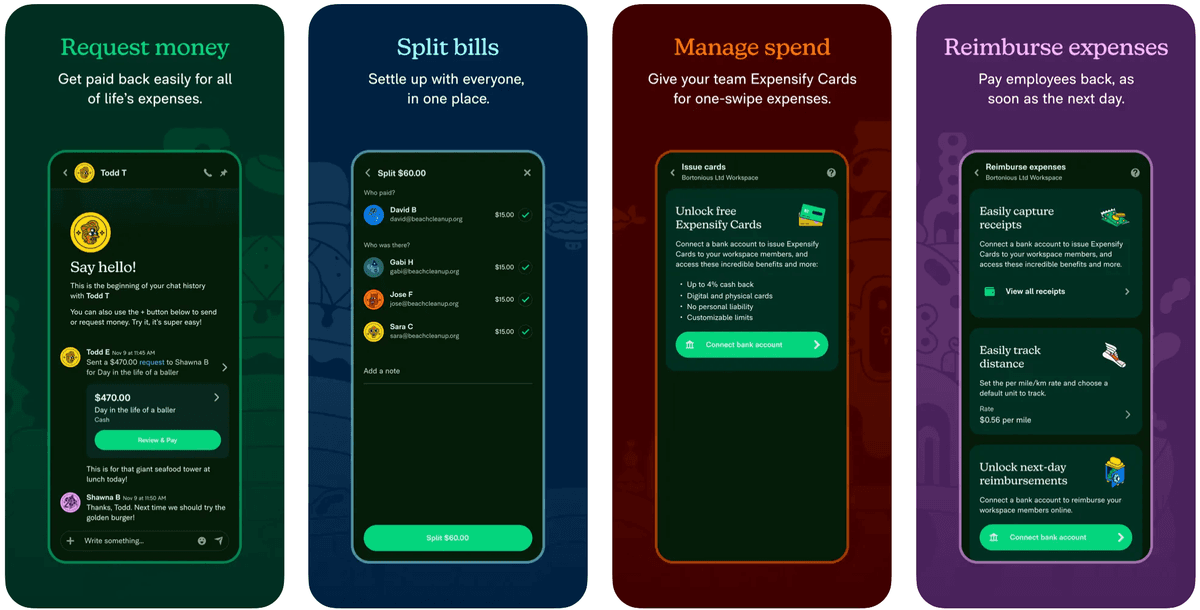
Hiring a senior React Native developer on a project or embedded basis typically costs $40K–$200K — the low end for a scoped three-month build or rescue, the high end for long-running product ownership across two platforms. I work at that senior level myself: Guest Engineer at Expensify on an expense platform used by millions, 20+ App Store launches, 7+ years of production delivery, and Top Rated on Upwork with $100K+ earned and verified client reviews. Engagements begin with a one-week paid discovery — codebase or spec review, risk map, milestone plan — so both sides commit to a schedule grounded in evidence rather than optimism.
Mid-level React Native talent is plentiful; what is scarce is the engineer who has debugged a native crash from a stack trace, kept an app at sixty frames per second under a redesign, and shipped through both stores enough times to know where the review process bites. Companies hire senior after learning the mid-level way that mobile mistakes compound silently until launch week. Delivery succeeds when that experience shapes the architecture before the code, not the post-mortem after.
Weekly demos, async Slack updates, production standards.
04
Ship
Store launch, documentation, knowledge transfer.
Engagements this covers
Taking over from an agency
A company's app was built by an agency that has rotated staff twice, and velocity has collapsed under nobody-really-owns-it architecture. I take ownership: audit the codebase, stabilize the release pipeline, fix the worst structural debt while still shipping features, and either run the app long-term or prepare it for an in-house team with documentation that actually reflects reality.
Scaling app hitting performance walls
An app that worked at ten thousand users stutters at half a million — slow launches, dropped frames on core screens, memory pressure crashes on older Android devices. I profile before promising anything, then execute the fixes: list virtualization, render discipline, startup work deferral, native-module hotspots. Performance becomes a tracked budget in CI, not a recurring emergency.
Senior embedded in an existing team
A team of capable web developers inherited the mobile app and is learning React Native's sharp edges in production. I embed part-time or full-time: building the genuinely hard features, reviewing PRs with reasoning attached, setting native-layer and release conventions, and deliberately transferring the mobile-specific judgment so the team stops needing me — on a defined timeline, not an open-ended retainer.
What senior actually means in React Native
React Native has a specific seniority test that generic years-of-experience filters miss: what happens when the JavaScript abstraction leaks. A mid-level developer is productive until the crash report is a native stack trace, the animation stutters only on Android, or the build breaks inside Xcode — then work stops until someone senior arrives. Senior means owning the full stack beneath the framework: native build systems, the bridge and its successor architecture, platform-specific behavior, and the profiling tools that turn "it feels slow" into a named cause.
It also means release scars — knowing what App Store review rejects, how staged rollouts and OTA updates interact, what a hotfix path looks like when a crash ships to a million devices. When you pay senior rates, this is the inventory you are buying. Verify it exists: plenty of resumes claim seniority that dissolves at the first native stack trace.
Engagement models and how each runs
Project ownership is the cleanest: a defined build or rescue with fixed milestones, weekly builds on your stakeholders' phones, and a hard handoff with documentation and a walkthrough. It suits companies without in-house mobile engineering who need the result more than the process. Embedded engagements put me inside your team's workflow — your repo, your standups, your PR reviews — building the hardest features while deliberately raising the team's mobile ceiling; these run monthly with a planned taper, because an embedded senior who makes themselves permanent is extracting rent, not adding value.
A third, smaller model: fractional oversight, a few hours weekly of architecture review and release supervision for teams that mostly manage but occasionally need the senior judgment call. Many clients start there after an audit and scale up only when the roadmap demands it, which is the cost-sane sequence.
What drives cost across $40K–$200K
Duration and depth of ownership set the band. A scoped twelve-week engagement — a rescue, a major feature arc, a performance overhaul — sits in the $40K–$70K zone. Six-to-twelve-month product ownership, where I am effectively your mobile lead across both platforms, occupies the upper half; you are buying continuity of judgment, not just hours.
Within any duration, three multipliers matter. App complexity: offline sync, real-time features, heavy media, or a large custom native surface demand more senior hours per feature than CRUD screens do. Codebase inheritance: taking over an undocumented app adds an archaeology tax that honest quotes name upfront. And team interface: pure delivery is efficient, while delivery-plus-mentoring costs more hours but leaves your organization permanently stronger — usually the better spend for funded teams. Rates below roughly half this range for claimed senior work generally mean mid-level talent wearing the title.
How to interview for this role
Make the interview concrete and native. Ask: "an ANR report shows the main thread blocked on your Android release — walk me through the next hour." Seniors narrate tooling and hypotheses immediately; resume-seniors stall. Ask for their worst store rejection and what it changed in their process. Ask how they keep a list of ten thousand items scrolling smoothly, and expect specifics about virtualization and render discipline rather than a library name recited as an answer.
Then verify shipped work: installable apps, and ideally open-source code or a walkthrough of a real PR they authored. My own Expensify work is public in exactly this way — insist on equivalent evidence from anyone. Finally, weight communication heavily: a senior who cannot explain a native-layer tradeoff to a non-technical founder will silently make architecture decisions you discover only when they hurt. The explanation quality in the interview is the explanation quality you will live with.
Red flags in the hiring process
Distrust portfolios without installable apps — screenshots and repo links prove interest, while store listings prove shipping, and the difference is the entire job. Distrust immediate rewrite recommendations: a senior who prescribes a rewrite before profiling your app is selling the project they enjoy, and most struggling React Native apps are weeks of targeted fixes away from healthy, not a rebuild.
Be careful with agencies fronting senior profiles: the person in the sales call is often not the person in your repo by month two — pin names into the contract if continuity matters. Distrust fluency about React Native that goes vague at the native boundary; ask one Xcode question and one Gradle question and watch what happens. And on rates: senior React Native talent has a real market price, and a quote at a third of it is not a bargain — it is a mid-level engineer about to learn on your launch.
When a senior React Native hire is the wrong purchase
If your app's core is deep native specialty work — professional audio pipelines, advanced AR, custom hardware integration — you need a native iOS or Android specialist, possibly alongside React Native for the surrounding product, and hiring RN-senior alone will not cover it. If your app is stable, feature-complete, and needs only maintenance, senior rates are wasted; a mid-level developer with occasional fractional senior review covers that at a fraction of the cost, and I have set up exactly that arrangement for former project clients.
And if you have not validated the product, no seniority level rescues a build that should not exist yet — validate first, spend on engineering after. The pattern worth avoiding is buying seniority as insurance against an undefined product: expensive engineers cannot compensate for undecided founders, and the good ones will tell you so before taking your money.
Low-risk to start
✓Fixed-scope proposal first
You approve milestones and a price before any build starts — no open-ended hourly surprises.
✓Working demos every week
You see running software each week, not status reports, so you can course-correct early.
✓One senior owner, no hand-offs
The person who scopes the work is the person who builds it — no junior layers, no agency markup.
✓A track record you can verify
Top Rated on Upwork with public client reviews and $100K+ earned, plus contributions to Expensify. Check the receipts before you commit.
How much does it cost to hire a senior React Native developer?
Project and embedded engagements run $40K–$200K: roughly $40K–$70K for a scoped three-month build, rescue, or performance overhaul, and into six figures for long-running ownership of a complex app across both platforms. Hourly, genuine senior independent talent runs $90–$180. Quotes dramatically below that usually mean mid-level skills behind a senior title — the gap surfaces at the first native-layer crisis.
How do I verify a React Native developer is actually senior?
Demand installable evidence: apps live on both stores they can walk you through, and ideally public code or real PRs. Then probe the native boundary — ask how they would diagnose a native crash, an Android ANR, or a failed store review. Seniors answer with tooling and process from lived experience; inflated resumes go abstract exactly there. Shipped-app history plus native-layer fluency is the combination that cannot be faked.
Should I hire a senior developer or an agency for my React Native app?
A senior independent wins when one strong owner can carry the work — true for most single-app engagements — because every billed hour is actually senior, communication is direct, and total cost is typically well below agency quotes for identical scope. Agencies win when you need design, backend, and parallel mobile workstreams under one contract. If you choose an agency, contractually pin the named engineers; staff rotation is the failure mode that erodes app quality silently.
How much does hire senior react native developer typically cost?
Projects typically fall in the $40K–$200K range depending on scope, integrations, and timeline. I provide a fixed-scope proposal after a 30-minute scoping call.
How long does a hire senior react native developer project take?
MVPs often ship in 8–12 weeks. Production systems with AI backends or RAG may run 12–20 weeks. Rescue and audit engagements can start within days.
Do you work with startups and enterprises?
Yes. I work with founders, CTOs, product teams, and agencies worldwide — US, UK, EU, and APAC time zones with async updates and weekly demos.
Can you own mobile and backend together?
Yes. I specialize in React Native + Python (FastAPI) + AI (RAG, agents, OpenAI/Claude) under one senior owner — fewer handoffs, faster shipping.
How do I get started?
Book a free 30-minute scoping call on this site, hire through Upwork, or email dhairyasenjaliya@gmail.com with your brief and timeline.