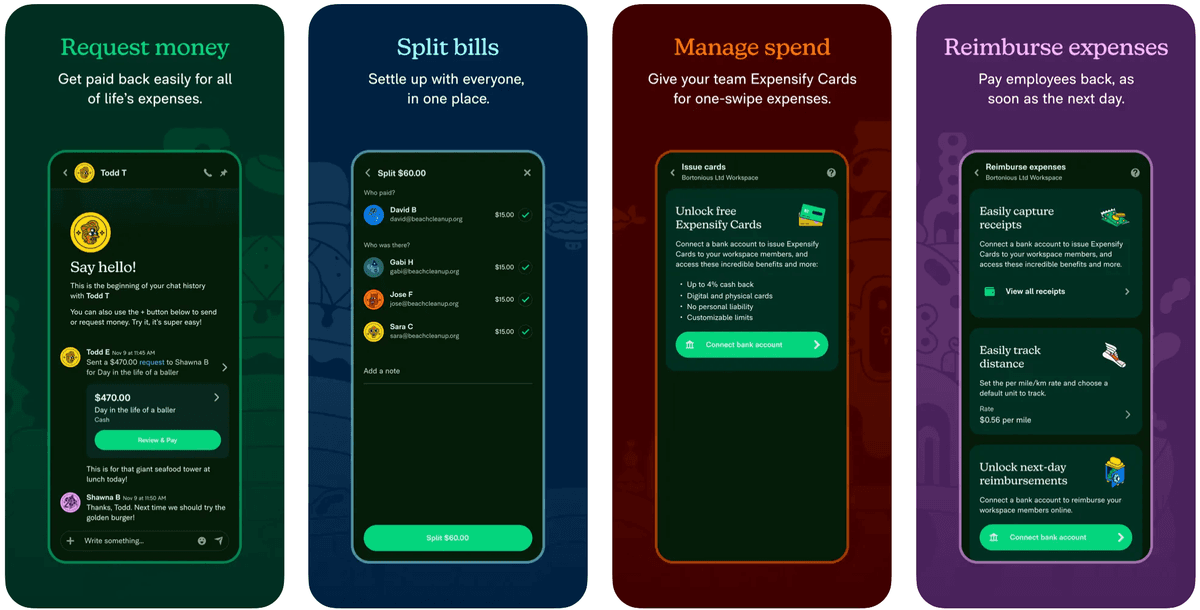
I offer React Native consulting — performance audits, architecture reviews, upgrade and migration planning, and team enablement — with engagements typically running $10K–$75K depending on whether you need a focused audit or months of embedded guidance. I've shipped 20+ App Store launches, worked as a Guest Engineer at Expensify on one of the largest React Native codebases in production, and bring 7+ years of production delivery. Most consulting starts with a one-to-two-week diagnostic that produces a prioritized, measured findings report — so you know exactly what to fix and in what order before committing to a larger engagement.
This service is for teams that already have a React Native app and a problem: performance users complain about, an upgrade they're afraid of, an architecture that's slowing every sprint, or a team that inherited a codebase nobody fully understands. Consulting done right transfers judgment, not just fixes — your team should be measurably stronger when I leave, not dependent on me staying.
Weekly demos, async Slack updates, production standards.
04
Ship
Store launch, documentation, knowledge transfer.
Engagements this covers
Performance audit on a janky app
An app stutters on scroll, starts slowly, and reviews mention it. I profile on real low-end devices — not simulators — trace the actual causes across re-renders, list virtualization, bridge traffic, and startup work, then deliver a prioritized fix list with measured before/after expectations. Teams usually recover most of the loss from a handful of causes, not a hundred small ones.
The upgrade nobody wants to touch
An app sits several React Native versions behind — old architecture, deprecated libraries, warnings ignored for a year — and each delay raises the cost. I map the dependency risk, sequence the migration into safe increments with working builds at every step, and either execute it or guide your team through it. Outcome: current tooling, New Architecture benefits, and an app that stops aging.
Team leveling-up on an inherited codebase
A team of capable web React developers inherited a React Native app and keeps hitting mobile-specific walls: native build failures, store rejections, memory issues, navigation state bugs. I embed part-time — reviewing PRs, pairing on the hard problems, establishing mobile-specific patterns and CI — until the walls stop recurring. Outcome: a team that ships mobile confidently without a permanent consultant attached.
How a consulting engagement is structured
Everything starts with a diagnostic, typically one to two weeks: I profile the app on real devices, read the codebase, review the build pipeline and dependency health, and interview the engineers about where their time actually goes. The output is a written findings report with every issue tied to evidence — a trace, a measurement, a concrete code reference — and ranked by impact against effort, not by how interesting the problem is.
From there, engagements take one of three shapes. Fix-focused: I execute the top findings myself, with measured before/after numbers. Guidance-focused: your team executes while I review, pair, and unblock — slower per fix, but the capability stays with you. Or advisory: a recurring cadence where I review architecture decisions, PRs, and upgrade plans over months. Most teams blend the first two — I fix the gnarliest items, the team handles the rest under review, and the patterns transfer.
What drives cost inside $10K–$75K
The diagnostic itself is bottom-of-range work and priced so that it's a safe first commitment — it either becomes the roadmap for a larger engagement or stands alone as a document your team executes without me; both outcomes are fine. Cost rises with execution depth: fixing findings myself costs more than guiding your team through them, and codebase scale matters because a 400-screen app takes longer to audit honestly than a 40-screen one.
The biggest multiplier is duration of involvement. A performance sprint is weeks; an embedded advisory relationship through a major migration — New Architecture adoption, a large upgrade chain, a re-architecture — runs months at a part-time cadence and lands at the top of the range. What doesn't drive cost: urgency theater. A production crisis gets triaged fast, but the price reflects the work, and consultants who surge-price panic are telling you something about their model.
Red flags when buying React Native consulting
The loudest one is the consultant whose diagnosis is a rewrite — to native, to Flutter, to anything — delivered before they've profiled your app. Rewrites are occasionally justified; recommended-in-week-one rewrites almost never are, and they conveniently convert a $30K consulting engagement into a $300K rebuild. Nearly every 'React Native is too slow' app I've audited was an unoptimized app, not a framework problem — the same mistakes would have sunk it in Swift.
Second: findings without measurements. 'Your re-renders are excessive' means nothing without a trace showing which ones, where, and what they cost. Third: fixes without transfer — a consultant who patches problems but leaves no patterns, docs, or review process behind has rented you an improvement rather than sold you one. Fourth: advice that never mentions your users' actual devices; performance verdicts formed on an iPhone simulator are fiction for an audience on mid-range Android.
How to evaluate a React Native consultant
Ask what they'd measure first on a slow app — the credible answer names tools and targets (real-device profiling, startup traces, render counts, list performance) rather than generic 'we'd optimize the code.' Ask about the largest React Native codebase they've worked in; scale changes the problems, and someone whose experience caps at small apps will misjudge a big one. My time as a Guest Engineer at Expensify — one of the largest open React Native codebases in production — is exactly the kind of verifiable answer you should push candidates for.
Ask them to explain a time the fix was not what the client expected — real consulting regularly discovers the stated problem isn't the actual one, and someone with no such stories has never looked deeply. Finally, require written, evidence-tied deliverables as a condition of the engagement: if the findings can't survive being written down with measurements attached, they're opinions wearing a consulting rate.
When you don't need consulting
If you know what's wrong and need it built, hire a builder — consulting overhead on top of a clear execution task is waste, and I'll take the engagement as straight development instead if that's what it is. If your app is early and small, most consulting-grade problems don't exist yet; the money is better spent shipping features, and a one-hour architecture conversation now beats a $20K audit of a codebase that will triple in shape by summer.
Consulting also fails without a receiver: if no one on your team has bandwidth to act on findings or absorb patterns, the report becomes shelf-ware — fix that constraint first, or buy execution rather than advice. And if the honest problem is that the team resents the codebase and wants permission to rewrite it, a consultant hired to bless that decision is a rubber stamp, not a service. The diagnostic exists precisely to sort these cases cheaply before anyone commits to a big number.
Low-risk to start
✓Fixed-scope proposal first
You approve milestones and a price before any build starts — no open-ended hourly surprises.
✓Working demos every week
You see running software each week, not status reports, so you can course-correct early.
✓One senior owner, no hand-offs
The person who scopes the work is the person who builds it — no junior layers, no agency markup.
✓A track record you can verify
Top Rated on Upwork with public client reviews and $100K+ earned, plus contributions to Expensify. Check the receipts before you commit.
Engagements run $10K–$75K. A one-to-two-week diagnostic — profiling, codebase review, prioritized findings with measurements — sits at the bottom of the range and stands alone as an executable roadmap. Fix-focused sprints where I execute the findings land mid-range. Long embedded advisory through a major upgrade or re-architecture, at part-time cadence over months, reaches the top. The diagnostic-first structure means your initial commitment is small.
How long does a React Native performance audit take?
One to two weeks for the audit itself: profiling on real devices including low-end Android, tracing startup time, render behavior, list performance, and bundle composition, then writing findings ranked by impact. Executing the fixes typically takes another two to six weeks depending on depth — most apps recover the bulk of their performance loss from a small number of root causes rather than dozens of micro-optimizations.
Should I rewrite my React Native app or fix it?
Fix it, almost always. Most 'React Native is too slow' apps are unoptimized apps — unprofiled re-renders, bad list virtualization, heavy startup work — and the same neglect would sink a native rewrite too. A rewrite costs multiples of a deep fix, freezes feature work for months, and reintroduces bugs you already paid to find. The rewrite case is real only when the foundation is unsalvageable, which a two-week diagnostic will tell you for a fraction of the cost of guessing.
How much does react native consulting typically cost?
Projects typically fall in the $10K–$75K range depending on scope, integrations, and timeline. I provide a fixed-scope proposal after a 30-minute scoping call.
How long does a react native consulting project take?
MVPs often ship in 8–12 weeks. Production systems with AI backends or RAG may run 12–20 weeks. Rescue and audit engagements can start within days.
Do you work with startups and enterprises?
Yes. I work with founders, CTOs, product teams, and agencies worldwide — US, UK, EU, and APAC time zones with async updates and weekly demos.
Can you own mobile and backend together?
Yes. I specialize in React Native + Python (FastAPI) + AI (RAG, agents, OpenAI/Claude) under one senior owner — fewer handoffs, faster shipping.
How do I get started?
Book a free 30-minute scoping call on this site, hire through Upwork, or email dhairyasenjaliya@gmail.com with your brief and timeline.