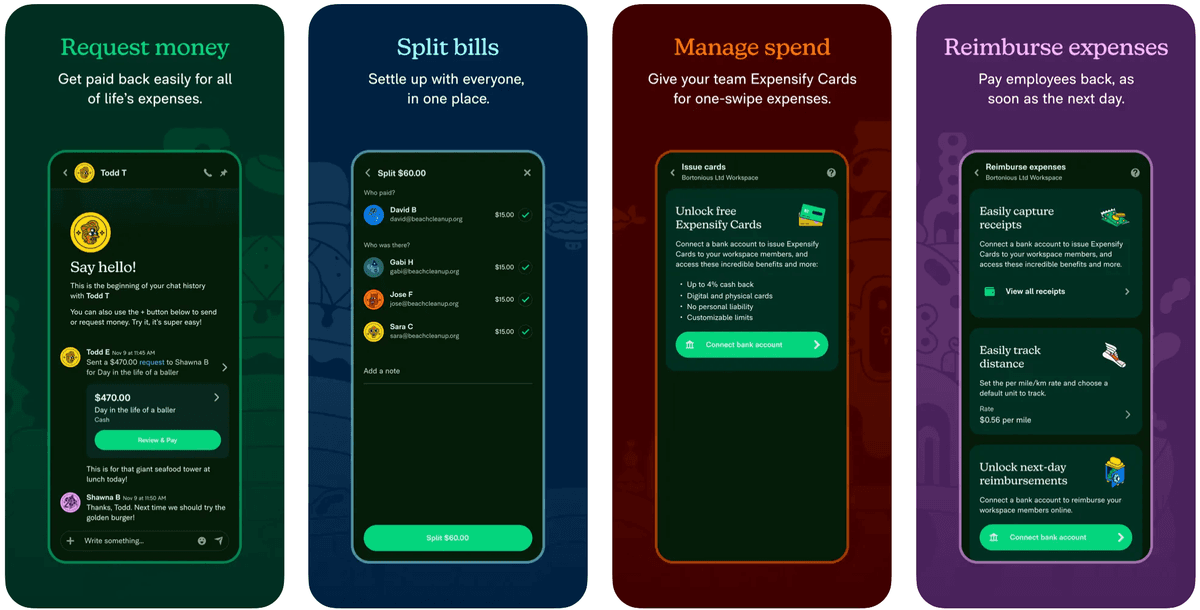
You can hire me as a remote React Native developer — embedded in your team or owning delivery end to end — with engagements typically running $25K–$150K depending on scope and duration. I work fully remote with 7+ years of production delivery, 20+ App Store launches, a stint as a Guest Engineer at Expensify (itself a remote-first team on a massive React Native codebase), and a Top Rated Upwork profile with $100K+ earned and verified client reviews — which means my remote work history is publicly reviewable, not just claimed. Engagements start with a paid first milestone in week one so you're evaluating real shipped work, not interviews.
Hiring remote for React Native is how you get senior, launch-proven talent without competing for it in your local market — but remote only works when the developer treats communication as part of the job, not an interruption to it. This service is for teams that need mobile delivery they can trust from someone they'll rarely meet in person, which makes verifiable track record and written-communication discipline the whole game.
Weekly demos, async Slack updates, production standards.
04
Ship
Store launch, documentation, knowledge transfer.
Engagements this covers
Embedded senior in an existing team
A product team has a React Native app and a delivery gap — a departed senior, a roadmap bigger than the team, a mobile skill ceiling. I join your repo, your standups, and your review process, take ownership of features end to end, and raise the codebase's patterns as I go. Outcome: velocity restored without a six-month hiring search, and code your team fully owns.
End-to-end remote delivery of an app
A company without mobile engineers needs an app built and shipped. I own the full arc remotely — architecture, weekly demo builds to your phone via TestFlight, written progress updates, store submission — with communication structured so you always know status without asking. Outcome: a launched app and a paper trail of decisions, not a black box that emits an app at the end.
Timezone-bridging long-term partnership
A team wants ongoing mobile capacity — features, maintenance, store releases, OS-version upkeep — without a full-time hire. I work a defined weekly commitment with overlap hours guaranteed for your timezone, async-first for everything else, and a documented handoff state at all times. Outcome: continuous mobile delivery at a predictable monthly cost, resilient to either side's schedule.
How remote engagement actually works
The first week establishes the operating rhythm, because remote succeeds or fails on rhythm: which hours overlap with your team, where decisions get written down, how builds reach your devices, and what a weekly update contains. I default to async-first — written proposals before meetings, recorded demos, decision logs in your repo — with guaranteed overlap hours for the conversations that genuinely need to be live.
Delivery is structured to be inspectable at all times: work lands in small reviewable pull requests rather than monthly code dumps, TestFlight and internal-track builds ship on a fixed cadence so progress is something you hold in your hand, and every week closes with a written summary of what shipped, what's blocked, and what's next. This isn't bureaucracy — it's the substitute for hallway visibility, and its absence is why most remote engagements that fail, fail.
What drives cost inside $25K–$150K
Duration and ownership level set the budget more than anything technical. A scoped three-month feature engagement inside an existing codebase sits near the bottom of the range. Full end-to-end delivery of a new app — where I own architecture, backend coordination, store launch, and post-launch stabilization — lands mid-range and up depending on product complexity, with the usual technical multipliers: offline sync, payments, native modules, real-time features.
Long-term embedded arrangements are priced by weekly commitment: a half-time ongoing engagement over six months reaches the upper range but replaces a full-time senior hire at well below fully-loaded cost, with none of the recruiting risk. One thing that does not drive my pricing: timezone. Overlap hours are part of the job, not a surcharge. What should drive yours: paying for verifiable seniority over cheap hours, because the remote market's real cost sink is rework from the developer who billed half the rate and shipped a codebase you had to replace.
Mistakes companies make hiring remote developers
The classic one is hiring on rate alone, which in remote markets is how you buy the same app twice — once cheaply and wrong, then again properly. The second is skipping the communication test: teams interview for coding skill and discover in month two that the developer goes silent for days, can't write a decision down, or treats questions as intrusions. For remote work, written communication is a core engineering skill, and you can evaluate it before signing anything by looking at how a candidate writes to you during the sales process.
Third: no trial structure. A small paid first milestone — one to two weeks, real work, real deadline — tells you more than any interview loop, and any confident remote developer will welcome it. Fourth: leaving ownership ambiguous — repos, store accounts, and credentials must live in your organization from day one. Fifth: measuring presence instead of output; remote works when the unit of trust is shipped, reviewed work, not green status dots.
How to evaluate a remote React Native candidate
Verify shipping history first: store links to apps they built, and specifics about their role — anyone who really carried an app to launch can talk about store rejections, crash triage, and release management without rehearsing. Independently verifiable reputation matters double for remote; my Upwork profile is Top Rated with $100K+ earned and verified client reviews precisely because public track record is what replaces the reference-checking you'd do for a local hire.
Then test the remote-specific skills. Give them a small ambiguous requirement and see what comes back: good remote developers respond with written clarifying questions and a proposed approach, not silence followed by the wrong thing. Check their async writing during the hiring conversation itself — clarity, responsiveness, and whether they surface risks unprompted. Finally, structure the start as a paid milestone with a defined deliverable. Two weeks of real collaboration outperforms any interview at predicting the next twelve months.
When a remote contractor is the wrong call
If mobile is becoming your company's core competency and you're building a multi-year team around it, contractors should be a bridge, not the plan — hire full-time and use remote help to keep shipping while the search runs; I've played exactly that bridge role and it works well when everyone names it honestly. If your codebase carries security constraints that genuinely prohibit external access — some fintech and health contexts — solve the compliance question before the hiring one.
And if what your project actually lacks is product direction rather than engineering hands, a remote developer will faithfully build the wrong thing faster; fix the decision-making gap first, or start with a small advisory engagement instead of a delivery one. Remote contracting shines for scoped deliveries, capacity gaps, and specialized expertise your team lacks — it's the wrong tool for outsourcing judgment about what to build.
Low-risk to start
✓Fixed-scope proposal first
You approve milestones and a price before any build starts — no open-ended hourly surprises.
✓Working demos every week
You see running software each week, not status reports, so you can course-correct early.
✓One senior owner, no hand-offs
The person who scopes the work is the person who builds it — no junior layers, no agency markup.
✓A track record you can verify
Top Rated on Upwork with public client reviews and $100K+ earned, plus contributions to Expensify. Check the receipts before you commit.
How much does it cost to hire a remote React Native developer?
Senior remote React Native engagements typically run $25K–$150K. A scoped three-month feature engagement in an existing codebase starts around $25K–$40K; full end-to-end delivery of a new app lands mid-range and up depending on offline, payments, and native-module complexity; long-term embedded arrangements at half-time cadence reach the top over six-plus months — still well below the fully-loaded cost of a full-time senior hire, with no recruiting risk.
How do I know a remote developer is actually making progress?
Structure makes it verifiable: small pull requests you can review continuously instead of month-end code dumps, TestFlight builds on a fixed cadence so progress reaches your own phone, and written weekly summaries covering what shipped, what's blocked, and what's next. If a remote developer resists that structure, that's your answer before any code is written. Ownership of repos and store accounts should sit with you from day one.
Should I hire a remote contractor or a full-time React Native developer?
Hire full-time when mobile is a core, multi-year competency you're building a team around. Hire a remote contractor for scoped deliveries, capacity gaps, launches, and specialized expertise — or as a bridge that keeps shipping while your full-time search runs, which typically takes three to six months for senior mobile talent. Many teams do both: a contractor delivers the near-term roadmap and hands off cleanly to the eventual hire.
How much does remote react native developer typically cost?
Projects typically fall in the $25K–$150K range depending on scope, integrations, and timeline. I provide a fixed-scope proposal after a 30-minute scoping call.
How long does a remote react native developer project take?
MVPs often ship in 8–12 weeks. Production systems with AI backends or RAG may run 12–20 weeks. Rescue and audit engagements can start within days.
Do you work with startups and enterprises?
Yes. I work with founders, CTOs, product teams, and agencies worldwide — US, UK, EU, and APAC time zones with async updates and weekly demos.
Can you own mobile and backend together?
Yes. I specialize in React Native + Python (FastAPI) + AI (RAG, agents, OpenAI/Claude) under one senior owner — fewer handoffs, faster shipping.
How do I get started?
Book a free 30-minute scoping call on this site, hire through Upwork, or email dhairyasenjaliya@gmail.com with your brief and timeline.