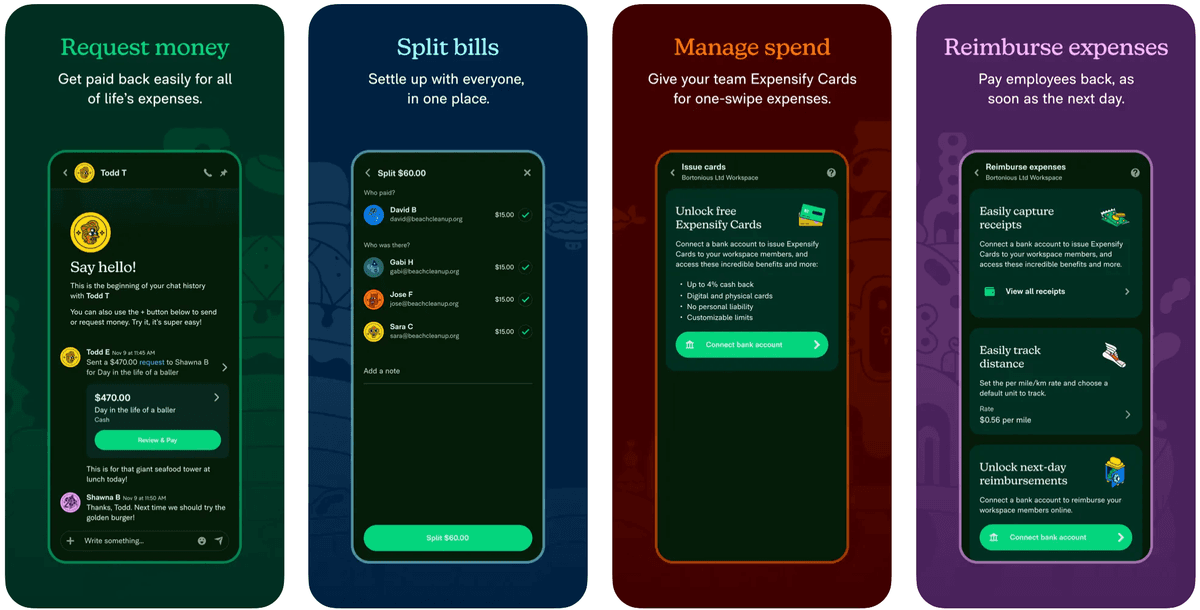
Real-time app development — chat, live collaboration, presence, live tracking, and anything where users must see changes the moment they happen — typically costs $25K–$120K depending on concurrency scale and how much offline tolerance the product needs. I build these systems across the full stack myself, with 7+ years of production delivery, apps used by millions of users, and experience as a Guest Engineer at Expensify. Engagements start by scoping the real-time surface precisely — which features genuinely need live delivery and at what latency — because that decision alone swings the budget more than any technology choice, and then run on fixed milestones with a working live demo in the first weeks.
Real-time is a product promise with an engineering tail: the moment users see live updates, they notice every dropped connection, duplicated message, and stale screen that batch-style apps get away with. Building it well means designing for reconnection, ordering, and conflicting edits from day one, not bolting sockets onto a request-response app. Delivery succeeds when the system degrades gracefully on terrible networks, because that is where your users actually are.
Weekly demos, async Slack updates, production standards.
04
Ship
Store launch, documentation, knowledge transfer.
Engagements this covers
Chat and messaging inside an existing product
A marketplace or service app needs in-app messaging between its users — typing indicators, read receipts, push when backgrounded, history that syncs across devices. I build the messaging layer end to end, on managed infrastructure or self-hosted depending on scale economics, and integrate it into the existing app so it feels native to the product rather than embedded from elsewhere.
Live collaborative state
A SaaS product wants multiple users working in the same workspace to see each other's changes instantly — shared boards, live-edited documents, synchronized planning views. I design the sync model with conflict resolution appropriate to the data, presence indicators, and reconnection recovery, so simultaneous edits merge sensibly instead of silently overwriting each other's work.
Live operations tracking
A logistics or delivery product needs dispatchers and customers watching vehicles, orders, or field status move on a live map or dashboard. I build the location and event ingestion pipeline, efficient fan-out so thousands of watchers get updates without the backend melting, and battery-conscious mobile publishing — turning a refresh-button experience into an ambient live view.
What makes real-time genuinely hard
The socket connection is trivial; everything around it is the project. Mobile networks drop constantly, so every client needs reconnection logic that resynchronizes state without duplicating or losing events — the gap between a demo and a product is almost entirely in that resync path. Ordering and idempotency matter next: messages arrive twice, or late, or out of order, and the system must converge to the same truth anyway.
Then concurrent writes: two users editing the same thing simultaneously forces a real decision — last-write-wins, operational transforms, CRDTs, or domain-specific merge rules — and choosing wrong for your data model creates bugs users describe as "it ate my work." Finally, scale changes shape: fanning one update out to ten watchers is a loop; to fifty thousand, it is an architecture. Teams that treat real-time as "add WebSockets" discover each of these in production, in order, expensively.
The build-versus-managed decision that shapes your budget
The first architectural fork is whether to run on managed real-time infrastructure — Firebase, Supabase Realtime, Ably, and their peers — or self-host WebSocket servers with your own pub/sub layer. Managed gets you to market weeks faster, handles connection scaling for you, and is almost always the right MVP call; its costs are per-connection pricing that grows with success and less control over delivery semantics. Self-hosted inverts that: more upfront engineering, full control, and flat infrastructure economics at high concurrency.
My default recommendation is managed until your connection volume or semantics genuinely demand otherwise, with the client architecture kept clean enough that migration later is a project, not a rewrite. Be wary of vendors who default to self-hosting everything — it doubles the budget for scale you may never see — and equally of those who cannot tell you where managed pricing crosses over, because at real volume it does.
Engagement timeline
Weeks one and two define the real-time contract: which features are genuinely live, target latency for each, offline behavior, and the conflict-resolution model for anything concurrently writable — written down, because these decisions drive everything downstream. A thin end-to-end slice ships in this phase too: one live feature working across two devices, however minimal, to validate the architecture with real network behavior early.
Weeks three through eight build the surface outward: the event model, client sync layer with reconnection and resync, presence, push integration for backgrounded users, and the server fan-out path, each feature demoed live weekly. The final phase is the part demos skip — chaos testing under packet loss and airplane-mode churn, load testing at your realistic concurrency, observability for connection health, and runbooks. Budgets toward $120K generally mean high concurrency targets, offline-first requirements, or collaborative editing semantics rather than more screens.
What drives cost inside $25K–$120K
Conflict complexity is the steepest driver. Broadcast-only features — live scores, tracking dots, notifications — are the affordable end, because data flows one way. Chat adds ordering, receipts, and multi-device sync. Collaborative editing of shared structures sits at the top, because merging simultaneous edits is a genuinely hard problem you must solve correctly for your specific data. Offline tolerance is the second driver: an app that must queue actions offline and reconcile on reconnect can add half again to the budget, and buyers rarely anticipate it.
Concurrency targets are third — a thousand simultaneous connections and half a million are different systems, though managed infrastructure softens this early. Integration context matters last: retrofitting live features into an app architected around request-response often costs more than the feature itself, because state management built for fetch-and-render resists live mutation. Precise scoping of which features truly need real-time is the cheapest optimization available.
How to evaluate a real-time developer
Ask one question first: "what happens in your design when a user's connection drops for ninety seconds and comes back?" Anyone who has shipped real-time answers immediately with resync strategy, missed-event recovery, and idempotency; anyone who has not says "it reconnects" and stops. Follow with concurrency: how their last system handled two users writing the same record simultaneously, and why that resolution model fit that data — the answer should reference a deliberate choice, not a framework default.
Ask for a system they have shipped that you can feel: an app with live features you can open on two phones and watch. Ask how they tested it — the credible answer involves simulated packet loss and connection churn, not just unit tests. And check they think in costs: real-time systems have per-connection economics, and a developer who has never seen the infrastructure bill will design you a beautiful architecture you cannot afford to scale.
When polling is honestly enough
A significant share of real-time inquiries do not need real-time, and the honest answer saves them tens of thousands. If your data changes every few minutes and users tolerate seconds of staleness — dashboards, order status, notification counts — polling on a sensible interval delivers the experience at a fraction of the engineering and infrastructure cost, with none of the connection-management complexity. Server-sent events cover the middle ground where updates flow one way and sub-second latency is nice but write-sync is not needed.
Reserve true bidirectional real-time for products where liveness is the value: conversation, collaboration, anything where two humans react to each other inside seconds. The test I apply on scoping calls: if the update arrived four seconds late, would the user notice or care? If not, you are buying architecture your product does not need — and I will scope you the simpler version instead.
Low-risk to start
✓Fixed-scope proposal first
You approve milestones and a price before any build starts — no open-ended hourly surprises.
✓Working demos every week
You see running software each week, not status reports, so you can course-correct early.
✓One senior owner, no hand-offs
The person who scopes the work is the person who builds it — no junior layers, no agency markup.
✓A track record you can verify
Top Rated on Upwork with public client reviews and $100K+ earned, plus contributions to Expensify. Check the receipts before you commit.
Typically $25K–$120K. One-way live features — tracking, live feeds, dashboards — sit at $25K–$50K. Full chat with multi-device sync, receipts, and push runs $40K–$70K. Collaborative editing with conflict resolution, offline queues, and high concurrency targets reaches $120K. The biggest drivers are conflict complexity and offline tolerance, not screen count — and features that tolerate a few seconds of staleness can often use far cheaper polling instead.
How long does it take to build real-time features?
A production messaging or live-tracking feature takes six to ten weeks: two to define the sync contract and prove an end-to-end slice on real devices, four to six building reconnection, ordering, presence, and push, then a hardening phase with chaos and load testing. Collaborative editing runs longer — twelve weeks or more — because conflict resolution demands careful design and testing. Demos take days; the resync path takes the calendar.
Should I use Firebase or build my own WebSocket backend?
Start managed — Firebase, Supabase Realtime, or Ably — unless you already know your scale. Managed infrastructure ships weeks faster and handles connection scaling, which is the right trade for almost every MVP. Self-hosting wins when per-connection pricing crosses over at high volume or you need delivery semantics managed platforms cannot express. Keep the client sync layer cleanly separated either way, so migrating later is a contained project rather than a rewrite.
How much does real-time app development typically cost?
Projects typically fall in the $25K–$120K range depending on scope, integrations, and timeline. I provide a fixed-scope proposal after a 30-minute scoping call.
How long does a real-time app development project take?
MVPs often ship in 8–12 weeks. Production systems with AI backends or RAG may run 12–20 weeks. Rescue and audit engagements can start within days.
Do you work with startups and enterprises?
Yes. I work with founders, CTOs, product teams, and agencies worldwide — US, UK, EU, and APAC time zones with async updates and weekly demos.
Can you own mobile and backend together?
Yes. I specialize in React Native + Python (FastAPI) + AI (RAG, agents, OpenAI/Claude) under one senior owner — fewer handoffs, faster shipping.
How do I get started?
Book a free 30-minute scoping call on this site, hire through Upwork, or email dhairyasenjaliya@gmail.com with your brief and timeline.