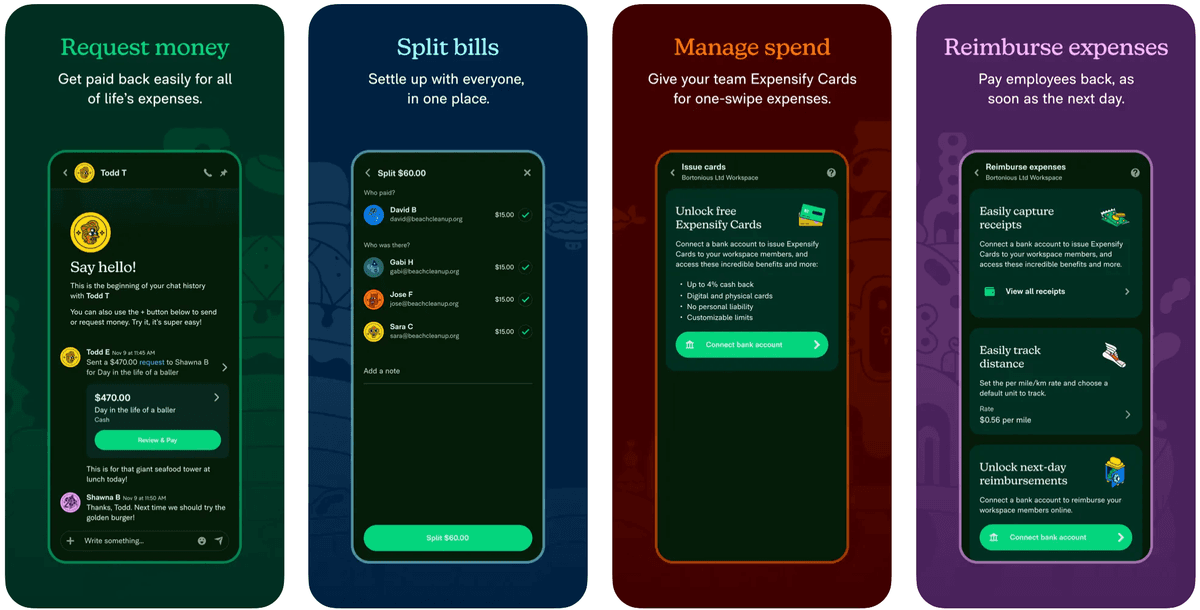
React Native team augmentation with me runs $15K–$80K per month depending on commitment level — from a part-time senior presence reviewing architecture and unblocking your engineers, up to full-time embedded delivery where I carry major workstreams inside your process. I've worked exactly this way as a Guest Engineer at Expensify, shipping inside the team of an expense platform used by millions, and I'm Top Rated on Upwork with $100K+ earned and verified client reviews across 7+ years of production delivery. Hiring means one call about your team's gap, then a first month that either proves the fit or ends cleanly — no long lock-in.
Your team has momentum but a gap: not enough senior React Native depth, a roadmap that outpaces headcount, or a hard workstream — native modules, performance, a version migration — nobody in-house has done before. Augmentation puts a senior engineer inside your existing process, shipping through your pipeline, without the months a hiring search takes.
Weekly demos, async Slack updates, production standards.
04
Ship
Store launch, documentation, knowledge transfer.
Engagements this covers
Web-strong team, mobile-shallow bench
A company's React web engineers were handed the mobile app, and velocity shows it — native build errors eat days, releases are frightening, platform conventions get missed. I embed as the senior mobile voice: unblocking native issues, establishing release discipline, reviewing PRs with teaching-quality feedback. Within a quarter the team ships mobile confidently, which was the actual deliverable.
Roadmap crunch with a hard deadline
A funded startup promised investors or a launch partner a date the current team can't hit. I take a defined workstream — a payments integration, a redesign, an offline mode — and carry it end to end inside their sprint process while their engineers keep their own lanes. The date gets hit without the team burning out or quality collapsing under crunch.
Fractional senior presence for a young team
A startup with two junior-to-mid mobile developers can't justify a staff engineer's salary but keeps paying for architecture mistakes. I join part-time: weekly architecture sessions, every significant PR reviewed, technical decisions pressure-tested before implementation. The juniors grow faster, the codebase stops accruing structural debt, and the company defers a $200K hire for a year.
How embedding actually works
I work inside your process, not beside it: your repository, your sprint board, your standups, your PR review flow, your release cadence. The first week is deliberately quiet — reading the codebase, shipping something small end to end through your pipeline, and learning where the real friction lives, which is never quite where the kickoff call said it was.
From week two I'm carrying planned work like any senior team member, with two standing differences. First, everything I touch gets documented as I go — architecture notes, decision records, runbooks — because a contractor whose knowledge leaves with them has quietly failed. Second, I bias toward unblocking others over maximizing my own ticket count; a senior engineer who makes four teammates faster is worth more than one who closes tickets alone in a corner. That trade-off is explicit and we tune it to what your team needs most.
What sets the monthly rate inside $15K–$80K
Commitment level is the main axis. The lower end buys a fractional arrangement — one to two days a week of architecture reviews, PR feedback, native-issue firefighting, and pairing with your engineers on the hard parts. The middle buys roughly half-time delivery ownership of a workstream plus that advisory layer. The upper end is full-time embedded senior delivery, on your standups daily, carrying major features through both app stores while raising the team's level as a side effect.
Two modifiers move the number within a tier. On-call and release responsibility — owning what happens when a rollout goes sideways — prices above advice. And mentoring intensity: if a core goal is leveling up your engineers, pairing and teaching-quality review take real hours that pure delivery wouldn't. What doesn't change the rate: your codebase being a mess. That's normal, expected, and part of the job.
Augmentation done badly, and how to avoid it
The classic failure is the silo: the contractor takes a workstream, disappears into it, and six months later ships a feature nobody in-house understands, in patterns nobody else uses. You've paid for software and acquired a dependency. Prevent it structurally — require the contractor's PRs to be reviewed by your team, not rubber-stamped, and require documentation as part of done, not a farewell gift.
The second failure is the unmanaged senior: companies assume seniority means no direction needed, so the contractor optimizes whatever they personally find interesting. Augmentation still needs an owner on your side setting priorities weekly — five minutes of direction, but a real five minutes. The third failure is scope creep in reverse: hiring a senior engineer and burying them in ticket triage a mid-level could do. Aim your most expensive hours at your hardest problems; everything else is overpaying.
How to evaluate an augmentation engineer
The skills bar is the same as any senior React Native hire — shipped apps you can download, production incident stories, native-layer depth on both platforms. But augmentation adds a second bar most interviews skip: integration behavior. Ask how they handled disagreeing with a team's established architecture on a past engagement; the right answer involves adapting to convention for consistency while flagging the concern in writing, not heroically rewriting to their own taste.
Ask what their offboarding looks like — a strong answer describes documentation, handover sessions, and a declining-involvement taper, because engagements that end with a cliff were structured wrong from the start. Then run a one-month trial with a real deliverable and full team integration before any longer commitment. One month reveals communication rhythm, review quality, and whether your engineers are better or merely busier with this person in the room.
When augmentation is the wrong instrument
If nobody permanent will own the mobile app after I leave, augmentation just defers the problem at a premium — for a long-horizon product with no mobile team at all, either hire full-time and use me to bootstrap and mentor, or scope a defined project engagement with a hard handover instead. Augmentation assumes there's a team to augment.
It's also the wrong buy when the gap is product direction rather than engineering capacity: more building velocity aimed at an unvalidated roadmap just produces the wrong thing faster. And if your need is one well-bounded deliverable — a feature, an upgrade, a rescue — fixed-price project work aligns incentives better than a monthly rate; you should pay for the outcome, not the calendar. I'll steer you to the cheaper structure when it fits, because a client on the correct engagement type renews, and one on the wrong type churns.
Low-risk to start
✓Fixed-scope proposal first
You approve milestones and a price before any build starts — no open-ended hourly surprises.
✓Working demos every week
You see running software each week, not status reports, so you can course-correct early.
✓One senior owner, no hand-offs
The person who scopes the work is the person who builds it — no junior layers, no agency markup.
✓A track record you can verify
Top Rated on Upwork with public client reviews and $100K+ earned, plus contributions to Expensify. Check the receipts before you commit.
How much does React Native staff augmentation cost per month?
Senior React Native augmentation runs $15K–$80K per month depending on commitment: fractional arrangements of one to two days weekly for architecture review and mentoring sit at the low end, half-time delivery ownership in the middle, and full-time embedded senior delivery with release responsibility at the top. Compare against a NYC-market staff engineer at $200K-plus fully loaded, with a multi-month hiring pipeline in front of it.
How long should a team augmentation engagement last?
Most productive engagements run three to nine months: the first month proves fit with a real deliverable, the middle months carry the roadmap or level up the team, and the final month is a deliberate taper with documentation and handover. Beyond a year, ask honestly whether you're deferring a full-time hire you actually need — good augmentation should conclude or convert, not quietly become permanent dependency.
Should I hire a contractor or a full-time React Native developer?
Hire full-time when mobile is core to your business long-term and you're building institutional knowledge; the search takes months but compounds. Bring in a senior contractor when the need is now — a deadline, a skills gap, a workstream your team hasn't done before — or when you can't yet justify a staff salary. The strongest pattern combines them: contractor delivers and mentors while your full-time search runs.
How much does react native team augmentation typically cost?
Projects typically fall in the $15K–$80K/mo range depending on scope, integrations, and timeline. I provide a fixed-scope proposal after a 30-minute scoping call.
How long does a react native team augmentation project take?
MVPs often ship in 8–12 weeks. Production systems with AI backends or RAG may run 12–20 weeks. Rescue and audit engagements can start within days.
Do you work with startups and enterprises?
Yes. I work with founders, CTOs, product teams, and agencies worldwide — US, UK, EU, and APAC time zones with async updates and weekly demos.
Can you own mobile and backend together?
Yes. I specialize in React Native + Python (FastAPI) + AI (RAG, agents, OpenAI/Claude) under one senior owner — fewer handoffs, faster shipping.
How do I get started?
Book a free 30-minute scoping call on this site, hire through Upwork, or email dhairyasenjaliya@gmail.com with your brief and timeline.