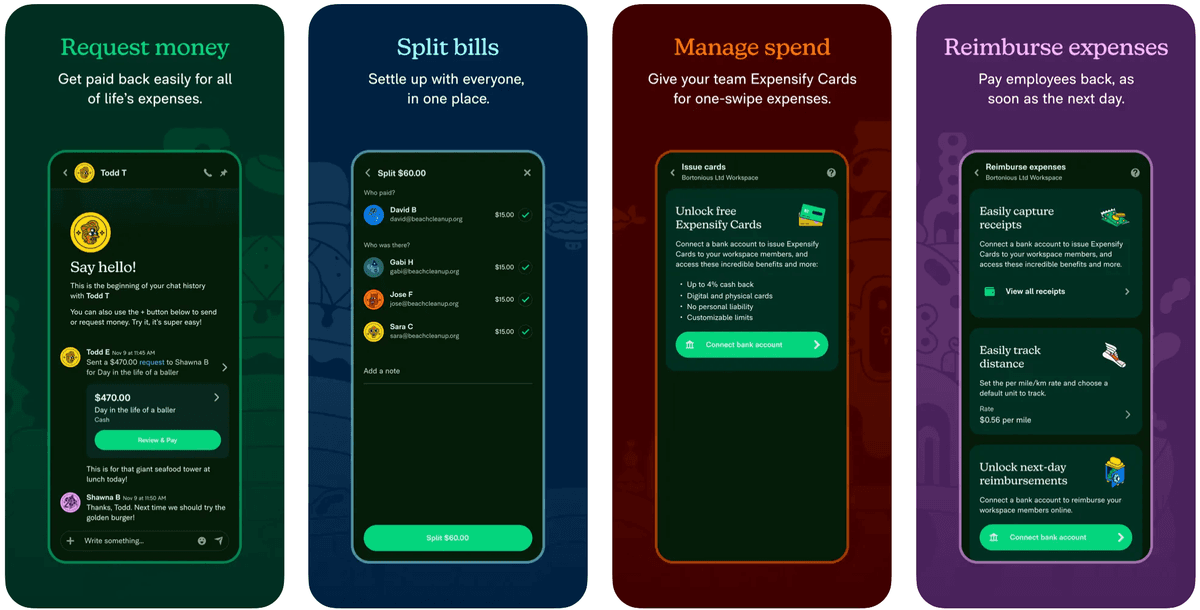
React Native performance optimization with me runs $8K–$40K: the low end covers a profiling audit with a prioritized fix list, the high end a full engagement where I implement the fixes, modernize the stack, and leave regression guardrails behind. I've spent 7+ years shipping production React Native — including as a Guest Engineer at Expensify, an expense platform used by millions, where performance is a feature, not a nice-to-have. My track record is independently verifiable: Top Rated on Upwork with $100K+ earned and verified client reviews, alongside direct clients worldwide. Every engagement starts with measurement on real devices, because quoting fixes before profiling is guesswork.
Slow React Native apps are almost never slow because of React Native — they're slow because of a handful of identifiable hot paths: unmemoized re-renders, bloated startup work, misused lists, and images nobody ever resized. This page explains how I find and fix those, what it costs, and when you shouldn't pay for this at all.
Weekly demos, async Slack updates, production standards.
04
Ship
Store launch, documentation, knowledge transfer.
Engagements this covers
Marketplace app with unusable list scrolling
A shopping app's category feeds stuttered badly on mid-range Android devices — the phones most of its customers actually owned. Profiling showed unmemoized item trees re-rendering on every scroll tick and full-resolution images decoded on the fly. I migrated the feeds to a recycling list, fixed the memoization boundaries, and rebuilt the image pipeline with proper sizing. Scrolling became smooth on the cheapest test device, and session length rose in the next release.
Eight-second cold start blocking a funding demo
A startup's Android app took roughly eight seconds to first interaction, and investors would be holding the phone. I profiled the startup path and found eager initialization of analytics, ads, and three SDKs the first screen never used. Deferring them behind first interaction and trimming the JS bundle cut cold start to well under half the original time — measured on the same low-end device, before the demo.
Killing an unnecessary native rewrite
An engineering team had concluded React Native "couldn't handle" their app and budgeted a six-figure native rewrite. Profiling told a different story: three hot paths — a chart screen, an over-subscribed global store, and a chatty native module boundary — caused nearly all the jank. Four weeks of targeted fixes made the app feel native, and the rewrite budget went back into features.
How an optimization engagement runs, week by week
Week one is measurement, not opinions. I profile your app on real devices — including the cheapest Android hardware your users actually own — and produce baseline numbers: cold start to interactive, frame drops on your worst screens, memory growth over a session, bundle size. Every complaint gets converted into a metric, because "the app feels slow" isn't fixable, but "the feed drops frames on a three-year-old mid-range phone" is.
Weeks two through four or five are fixes in strict priority order — biggest user-visible win per day of work first. You see the numbers move weekly against the same baseline, on the same devices. The final week is guardrails: performance assertions in CI, bundle-size budgets, and a written explanation of every root cause so your team understands why it was slow, not just that it's fast now. Audit-only engagements compress this into two weeks and end with the prioritized fix list your own team executes.
What moves the cost inside $8K–$40K
An audit with a prioritized, effort-estimated fix list sits at the low end — two weeks of profiling and analysis you can hand to your own developers. Full implementation engagements scale from there with four factors.
First, surface count: startup time, list performance, animations, memory, and app size are separate investigations, so an app with one problem area costs less than an app failing on all five. Second, codebase age: apps on old React Native versions or the legacy architecture often need upgrade work before modern tooling and fixes even apply, and that upgrade is real scope. Third, native involvement: when the problem lives in a native module or at the bridge boundary, the work spans Kotlin and Swift, not just TypeScript. Fourth, team integration: pairing with your developers and reviewing their fixes takes longer than fixing everything myself, but it leaves your team permanently faster — usually worth it for companies with in-house engineers.
Red flags when buying performance work
Distrust anyone who prescribes specific fixes before profiling your app — "you need to switch list libraries" might be right, but knowing it in the sales call is astrology, not engineering. Equally distrust guaranteed outcomes promised before baseline numbers exist; honest consultants set targets after the audit week, not before.
Watch for rewrite-pitching: a consultant who concludes React Native itself is the problem and proposes a native rewrite is often selling a bigger project, not solving yours — genuine ceilings exist, but they're rare and provable with profiles. Other flags: testing exclusively on flagship iPhones your users don't own; no mention of regression prevention, because fixes without guardrails decay within months; and reports full of generic advice — enable Hermes, add memoization — that could have been written without opening your codebase. A real audit names your files, your screens, and your numbers.
How to evaluate a performance consultant
Ask three questions. What do you measure, and on which devices? The answer should include low-end Android hardware and specific metrics — time to interactive, frame rate under scroll, memory over a session — not vibes. Can you show before-and-after numbers from past work? Real practitioners keep them, and the shape of the answer — baseline, cause, fix, result — matters more than the exact figures. And how do you stop it from regressing? Performance work without CI guardrails is a subscription, not a fix.
Then check that they've shipped, not just consulted: someone with twenty-plus store launches has watched slow apps get punished in reviews and fast apps rewarded in retention, and that changes how they prioritize. Finally, prefer consultants who offer a bounded audit first. It caps your risk at a small spend, and their willingness to let the audit stand alone — with your own team free to implement it — signals confidence rather than lock-in.
What good delivery looks like
Good performance work ends with numbers, not adjectives: a before-and-after table measured on identical devices — cold start, frames dropped on key screens, memory, bundle and binary size — plus honest notes about what didn't improve and why. Every fix comes with its root cause explained in writing, because a team that understands why the feed re-rendered forty times per scroll will never ship that bug again; a team that just received fast code will.
You should also inherit guardrails: performance checks in CI that fail the build when startup regresses, bundle-size budgets, and a short runbook for profiling future complaints. Six months later the test is simple — is the app still fast? If the consultant only moved the numbers and left no institutional knowledge or automation behind, the answer is usually no. That durability is the real deliverable; the initial speedup is just its most visible symptom.
When not to buy performance optimization
If your app is pre-launch with no users, skip this — ship first on sane defaults and optimize when real usage reveals real problems. Premature optimization spends runway on problems you may never have.
If the slowness is actually your backend — spinners waiting on three-second API responses — no amount of client-side work fixes it; I check for this in week one and will say so rather than bill four more weeks. If the codebase is genuinely unsalvageable — years of unmanaged dependencies, no upgrade path, architecture fighting every fix — a rebuild conversation is more honest than an optimization invoice, and I'd rather have it early. And if your problem is one slow screen your own senior developer could profile in an afternoon, do that first: this service exists for systemic performance problems, not for outsourcing a single day of profiler time at consulting rates.
Low-risk to start
✓Fixed-scope proposal first
You approve milestones and a price before any build starts — no open-ended hourly surprises.
✓Working demos every week
You see running software each week, not status reports, so you can course-correct early.
✓One senior owner, no hand-offs
The person who scopes the work is the person who builds it — no junior layers, no agency markup.
✓A track record you can verify
Top Rated on Upwork with public client reviews and $100K+ earned, plus contributions to Expensify. Check the receipts before you commit.
I won't promise numbers before profiling, and you should distrust anyone who does. What I can say from experience: most React Native performance problems trace to a small set of hot paths, and fixing them typically transforms how the app feels — cold starts cut by half or more and stutter-free scrolling are common outcomes. After the audit week you get concrete targets per metric, and we measure against them weekly on the same devices.
Do you need full access to our codebase?
Yes — read access to the repository and the ability to run debug and release builds locally, plus access to your crash and analytics dashboards if you have them. Profiling a build without source tells me what is slow but not why. I'm happy to sign an NDA, work inside your managed environment or VPN, and keep all findings in your systems rather than mine.
Should we upgrade React Native first or optimize first?
Usually together, and the audit decides the order. If you're on the legacy architecture or an old version, some of the best wins — Hermes improvements, the new renderer, modern list libraries — require upgrading, so the upgrade becomes part of the optimization rather than a separate project. If you're reasonably current, I optimize in place and skip the upgrade churn. Either way it's a data decision, not a preference.
How much does react native performance optimization typically cost?
Projects typically fall in the $8K–$40K range depending on scope, integrations, and timeline. I provide a fixed-scope proposal after a 30-minute scoping call.
How long does a react native performance optimization project take?
MVPs often ship in 8–12 weeks. Production systems with AI backends or RAG may run 12–20 weeks. Rescue and audit engagements can start within days.
Do you work with startups and enterprises?
Yes. I work with founders, CTOs, product teams, and agencies worldwide — US, UK, EU, and APAC time zones with async updates and weekly demos.
Can you own mobile and backend together?
Yes. I specialize in React Native + Python (FastAPI) + AI (RAG, agents, OpenAI/Claude) under one senior owner — fewer handoffs, faster shipping.
How do I get started?
Book a free 30-minute scoping call on this site, hire through Upwork, or email dhairyasenjaliya@gmail.com with your brief and timeline.