A React Native MVP with me runs $15K–$60K and typically ships in four to ten weeks: the low end covers a focused single-flow app that proves your core idea, and the high end adds payments, a purpose-built backend, and launches on both stores. I have 20+ App Store launches, 7+ years of production delivery, and Top Rated status on Upwork with $100K+ earned and verified client reviews. The deliverable is a real product in testers' hands — TestFlight builds every week, store submission at the end — not a prototype that dies on a demo phone.
MVPs fail in two opposite ways: over-scoped builds that spend the runway before reaching users, and slapdash builds whose foundations can't survive the success they were meant to test. The job is threading between them — shipping the smallest thing that produces a real market signal, on a codebase that's worth keeping if the signal is good.
Weekly demos, async Slack updates, production standards.
04
Ship
Store launch, documentation, knowledge transfer.
Engagements this covers
Idea to TestFlight for fundraising
A founder needs a working product for investor conversations in weeks, not quarters. We cut scope to the single core loop that demonstrates the vision, and I build it with real data and real polish on that one path. The outcome is a TestFlight link investors can try on their own phones — which lands differently than a deck — plus store submission when ready.
Validating with paying pilot customers
A B2B founder has a few pilot customers ready to pay for a workflow tool. I build the MVP around their actual workflow — auth, the core flow, and a minimal admin view for the founder to operate accounts — and get it onto pilots' devices fast. The outcome shape: real usage data and renewal conversations within the quarter, informing what gets built next.
Rebuilding a no-code prototype that hit its ceiling
A no-code prototype proved demand but can't deliver the performance, offline behavior, or store presence the product now needs. I rebuild the validated core in React Native with a real backend, keeping only what usage data proved valuable and dropping the rest. The outcome is a store-launched app that keeps the learning and sheds the platform ceiling.
Scoping an MVP that can actually ship in weeks
Every MVP conversation starts with the same question: what is the one loop that proves or disproves your idea? A marketplace MVP must let someone list, someone buy, and money move — it does not need reviews, referrals, chat, or a settings screen with dark mode. My first working session takes your feature list and sorts it ruthlessly into the core loop, week-one-after-launch, and someday.
Founders sometimes bristle at what gets cut; the same founders, eight weeks later, are grateful they're learning from users instead of still building. Scope discipline isn't about building less — it's about spending your entire budget on the part of the product that answers the question your runway depends on.
How the build runs week by week
Week one locks scope and settles the foundations: data model, auth approach, backend choice, and a design pass that borrows proven patterns instead of inventing new ones — MVPs are the wrong place for novel navigation. From week two, you get a TestFlight build every single week, each one adding a working slice of the core loop.
That weekly-build rhythm is the project's honesty mechanism: progress is something you tap through on your own phone, and course corrections happen while they're cheap. The final week or two covers store assets, review-guideline compliance, crash reporting, and analytics on the core loop — because an MVP that can't measure its own funnel can't do the one job it was built for.
What moves the cost within $15K–$60K
At $15K–$25K you get a single-flow app with standard auth, a backend-as-a-service like Supabase or Firebase, and an iOS launch — genuinely enough for many validation goals. Payments push cost up meaningfully: store-compliant subscriptions or marketplace payouts involve receipt validation, webhooks, and edge cases that resist shortcuts.
A purpose-built backend instead of BaaS adds more — justified when your data model or logic won't fit BaaS constraints, wasteful otherwise. Launching Android and iOS together, custom design work beyond a clean pattern library, and anything real-time or offline each add their share. The scoping session prices your specific combination before you commit, so the number you plan around is the number you pay.
Will you have to throw the MVP away later?
The 'MVPs are disposable' folklore mostly describes badly built MVPs. Done right, the expensive-to-change decisions — data model, auth, project structure — are made carefully, because they cost the same to do well and a fortune to redo. The corners I cut are deliberately the reversible ones: exhaustive test coverage beyond the core loop, admin polish, edge-case handling on rare paths, visual perfection on secondary screens.
I document every shortcut in the codebase as an explicit to-do with context, so your first hires inherit a map of the debt instead of discovering it. React Native MVPs I've built have grown into the production apps behind real businesses; the rewrite myth is usually an excuse for foundations that were never designed.
When you shouldn't build an MVP yet
If you have no distribution plan — no audience, no pilot customers, no channel hypothesis — an app in the store is a tree falling in an empty forest, and you should spend a fraction of this budget validating demand first: a landing page with sign-ups, a concierge version delivered manually, pre-sales conversations. An MVP tests whether people use the product; those tools test whether anyone wants it, and they come first.
Equally, if what you actually need is the full product — regulated industries, hardware dependencies, marketplaces needing liquidity from day one — a four-week MVP will just be an expensive way to look unfinished. I'd rather tell you which case you're in during the first conversation than build you the wrong thing competently.
Low-risk to start
✓Fixed-scope proposal first
You approve milestones and a price before any build starts — no open-ended hourly surprises.
✓Working demos every week
You see running software each week, not status reports, so you can course-correct early.
✓One senior owner, no hand-offs
The person who scopes the work is the person who builds it — no junior layers, no agency markup.
✓A track record you can verify
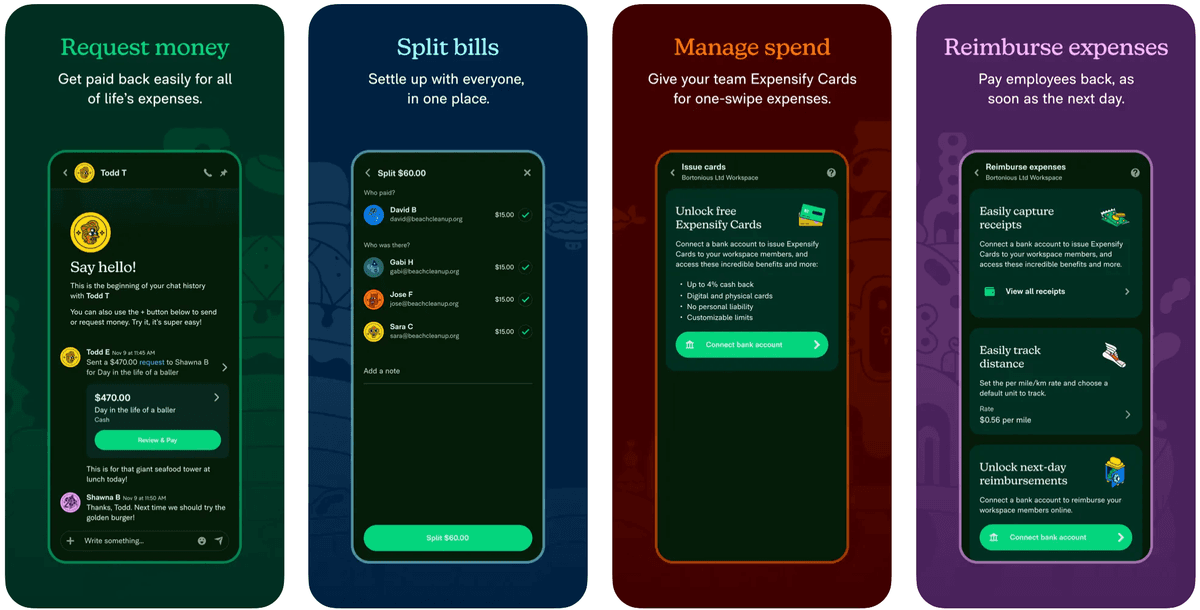
Top Rated on Upwork with public client reviews and $100K+ earned, plus contributions to Expensify. Check the receipts before you commit.
Expect $15K–$60K. A single-flow app with standard auth, a backend-as-a-service, and an iOS TestFlight-to-store launch runs $15K–$25K. Payments or subscriptions, a purpose-built backend, both platforms at launch, and custom design each add cost toward the $60K end. Be wary of dramatically cheaper quotes — they usually omit store submission, device testing, and analytics, which are the parts that make an MVP a market test rather than a demo.
How fast can an MVP realistically launch?
Four to ten weeks from kickoff to store submission. A tightly-scoped single-flow app on a backend-as-a-service reaches TestFlight within two to three weeks and the App Store around week four to six. Payments, custom backends, or dual-platform launches stretch toward ten weeks. The reliable predictor of speed is scope discipline in week one — every feature that survives the cut costs a multiple of its build time in integration and testing.
Will I need to rewrite my MVP if the product takes off?
Not if it's built with the right corners cut. The decisions that are expensive to change — data model, auth, project structure — get done properly from the start; the shortcuts go into reversible places like secondary-screen polish and non-critical test coverage, each documented in the code. React Native itself scales well past MVP stage. What forces rewrites is undocumented chaos in the foundations, and that's a choice, not a law of MVPs.
How much does react native mvp development typically cost?
Projects typically fall in the $15K–$60K range depending on scope, integrations, and timeline. I provide a fixed-scope proposal after a 30-minute scoping call.
How long does a react native mvp development project take?
MVPs often ship in 8–12 weeks. Production systems with AI backends or RAG may run 12–20 weeks. Rescue and audit engagements can start within days.
Do you work with startups and enterprises?
Yes. I work with founders, CTOs, product teams, and agencies worldwide — US, UK, EU, and APAC time zones with async updates and weekly demos.
Can you own mobile and backend together?
Yes. I specialize in React Native + Python (FastAPI) + AI (RAG, agents, OpenAI/Claude) under one senior owner — fewer handoffs, faster shipping.
How do I get started?
Book a free 30-minute scoping call on this site, hire through Upwork, or email dhairyasenjaliya@gmail.com with your brief and timeline.