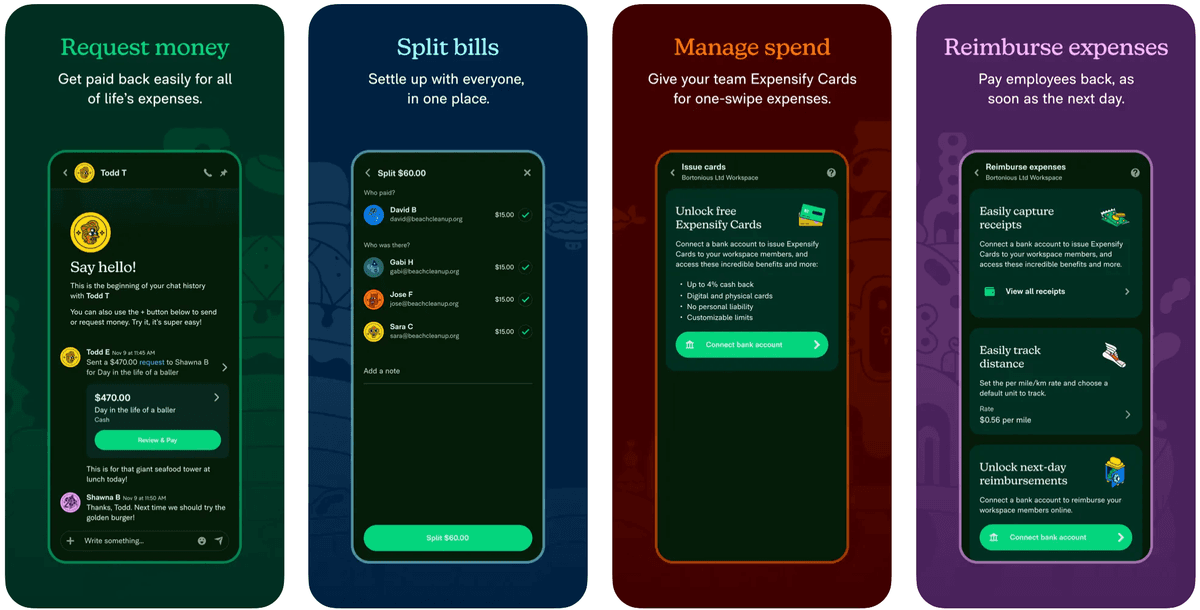
React Native app rescue projects with me run $15K–$80K depending on how deep the damage goes — a crashing release and a stuck upgrade sit at the low end, while a structural rebuild of a failing codebase under live traffic sits at the high end. I've shipped 20+ App Store launches, worked as a Guest Engineer at Expensify on an expense platform used by millions, and I'm Top Rated on Upwork with $100K+ earned and verified client reviews. Rescue starts with a fixed-price code audit, usually one week, that tells you exactly what's broken and what fixing it costs before you commit to anything larger.
Something has gone wrong: the app crashes for a chunk of users, the store rejected your last three submissions, the previous developers vanished, or every small change breaks two unrelated screens. Rescue work is its own discipline — stabilizing a live product while diagnosing it — and the worst thing you can do right now is pay someone to start a rewrite.
Weekly demos, async Slack updates, production standards.
04
Ship
Store launch, documentation, knowledge transfer.
Engagements this covers
Crashing in production with users watching
An app's crash rate spiked after a release and one-star reviews are arriving hourly. I get crash reporting properly wired within days, identify the leading crash signatures, ship a stabilization release addressing the top offenders, and set up staged rollouts so future releases hit 5% of users before 100%. Crash-free rate climbs back above 99% and the review tone follows.
Abandoned by the previous team
A founder's development shop disappeared — or was fired — leaving a codebase with no documentation, unclear signing credentials, and a half-finished feature branch. I recover control: accounts, certificates, and build pipeline first, then a week of code archaeology producing an honest map of what exists and what state it's in. The founder finally knows what they own and what it needs.
Too old to update, too alive to rewrite
An app running a years-old React Native version can't adopt new libraries, fails new store requirements, and scares every developer who quotes on it. I execute the upgrade incrementally — version by version, native modules replaced or patched, regressions caught by a device test pass at each step. The app rejoins the present without the shutdown a rewrite would have required.
Why rescue starts with an audit, not a quote
Anyone who quotes a rescue price without reading the code is guessing, and you'll pay for the guess either way — an inflated bid to cover their risk, or change orders when reality surfaces. I start every rescue with a fixed-price audit, typically one week: I read the codebase, run it, wire up crash and performance reporting if it's missing, check the native project health on both platforms, and review the release pipeline and store status.
You get a written report in plain language: what's actually broken, what's fragile but survivable, what's fine, and a prioritized fix plan with real prices attached to each tier. The audit is yours regardless — several clients have taken the report to their own teams and executed it in-house, which is a perfectly good outcome. If the codebase is genuinely beyond saving, the report says that too, with the rebuild math to prove it.
The stabilize-then-repair sequence
Rescues fail when they try to fix everything at once. My sequence is fixed: first, stop the bleeding — top crash signatures, broken release pipeline, anything blocking store submission — because a stable-but-flawed app buys the time everything else needs. This phase usually takes two to three weeks and shows up immediately in your crash-free numbers.
Second, repair the foundations in order of risk: the React Native version if it's blocking library or store requirements, the two or three architectural messes causing most regressions, and test coverage on the flows that break repeatedly — not everywhere, just where history proves it pays. Third, resume feature work, now on ground that holds weight. Buyers sometimes push to reverse the order and ship features first; I hold the line on sequencing, because features built on an unstable base are the reason we're both here.
What drives cost inside $15K–$80K
The low end covers focused surgery: a crash spike traced and fixed, a store rejection resolved, a release pipeline rebuilt, or a modest version upgrade. The middle covers compound problems — an old React Native version plus native module debt plus no tests — where each fix depends on the previous one. The high end is structural: state management rebuilt across the app, navigation redone, or effectively a strangler-pattern rebuild where new architecture grows inside the old app while it keeps serving users.
Two multipliers matter. First, whether the app must keep shipping during rescue — maintaining releases while renovating underneath adds coordination cost but is usually non-negotiable for live products. Second, knowledge availability: if anyone who wrote the original code can answer questions, weeks of archaeology become days. What doesn't multiply cost: app size. Big-but-consistent codebases rescue faster than small chaotic ones.
Red flags when hiring rescue help
The biggest red flag is the instant rewrite recommendation. Rewrites feel clean and quote well, but they mean months of zero user-visible progress, a guaranteed regression set, and — critically — the same team dynamics that produced the first mess producing the second one. Genuine rewrite cases exist; I've recommended a handful. But anyone prescribing one before reading your code is selling what's easiest for them, not what's right for you.
Second red flag: no interest in your release pipeline, crash data, or store history — a rescuer who only talks about code quality is missing the operational half of every rescue. Third: refusal to scope a small first engagement. An audit or a single stabilization milestone is the natural trust-building unit; someone who insists on a large upfront commitment before demonstrating value on your actual codebase is asking you to repeat the mistake that got you here.
When rescue is the wrong buy
If your app has no meaningful users and the codebase is bad, don't rescue it — the whole point of rescue economics is preserving live traffic, store rankings, reviews, and user trust that a shutdown would forfeit. With nothing to preserve, a clean rebuild is cheaper than surgery and I'll tell you so at the audit stage.
Rescue is also wrong when the product itself is the problem. If retention was poor before the technical trouble started, engineering can make the app stable and fast and still not make anyone want it; that money belongs in product work. And if the trouble is one specific bug rather than systemic decay, you need a week of senior debugging, not a rescue engagement — I take those too, but they're a different, much smaller purchase. The audit exists precisely to sort which of these situations you're actually in before serious money moves.
Low-risk to start
✓Fixed-scope proposal first
You approve milestones and a price before any build starts — no open-ended hourly surprises.
✓Working demos every week
You see running software each week, not status reports, so you can course-correct early.
✓One senior owner, no hand-offs
The person who scopes the work is the person who builds it — no junior layers, no agency markup.
✓A track record you can verify
Top Rated on Upwork with public client reviews and $100K+ earned, plus contributions to Expensify. Check the receipts before you commit.
How much does it cost to fix a broken React Native app?
A focused fix — crash spike, store rejection, broken build pipeline — typically runs $15K–$30K including stabilization and a staged re-release. Compound rescues involving version upgrades, native module debt, and architectural repair run $30K–$80K. Every rescue starts with a fixed-price one-week audit that gives you the exact number for your codebase before you commit, and the audit report is yours to use with any team.
How long does a React Native app rescue take?
Stabilization — stopping crashes and restoring your ability to ship releases — typically lands within two to three weeks. Foundation repair such as version upgrades and architectural fixes runs another four to eight weeks depending on depth, with the app continuing to serve users throughout. You see crash-free rates improving in the first weeks, not at the end; visible early progress is how you know the rescue is real.
Should I rewrite my app from scratch or fix the existing code?
Fix it, in roughly four cases out of five. A rewrite means months without user-visible progress and rebuilding bug fixes the old code already learned. Rescue preserves your store presence, reviews, and momentum while repairing foundations incrementally. Rewrites make sense when the codebase is small, the technology choice is fundamentally wrong, or there are no users to protect — an audit settles which case is yours in a week.
How much does react native app rescue typically cost?
Projects typically fall in the $15K–$80K range depending on scope, integrations, and timeline. I provide a fixed-scope proposal after a 30-minute scoping call.
How long does a react native app rescue project take?
MVPs often ship in 8–12 weeks. Production systems with AI backends or RAG may run 12–20 weeks. Rescue and audit engagements can start within days.
Do you work with startups and enterprises?
Yes. I work with founders, CTOs, product teams, and agencies worldwide — US, UK, EU, and APAC time zones with async updates and weekly demos.
Can you own mobile and backend together?
Yes. I specialize in React Native + Python (FastAPI) + AI (RAG, agents, OpenAI/Claude) under one senior owner — fewer handoffs, faster shipping.
How do I get started?
Book a free 30-minute scoping call on this site, hire through Upwork, or email dhairyasenjaliya@gmail.com with your brief and timeline.