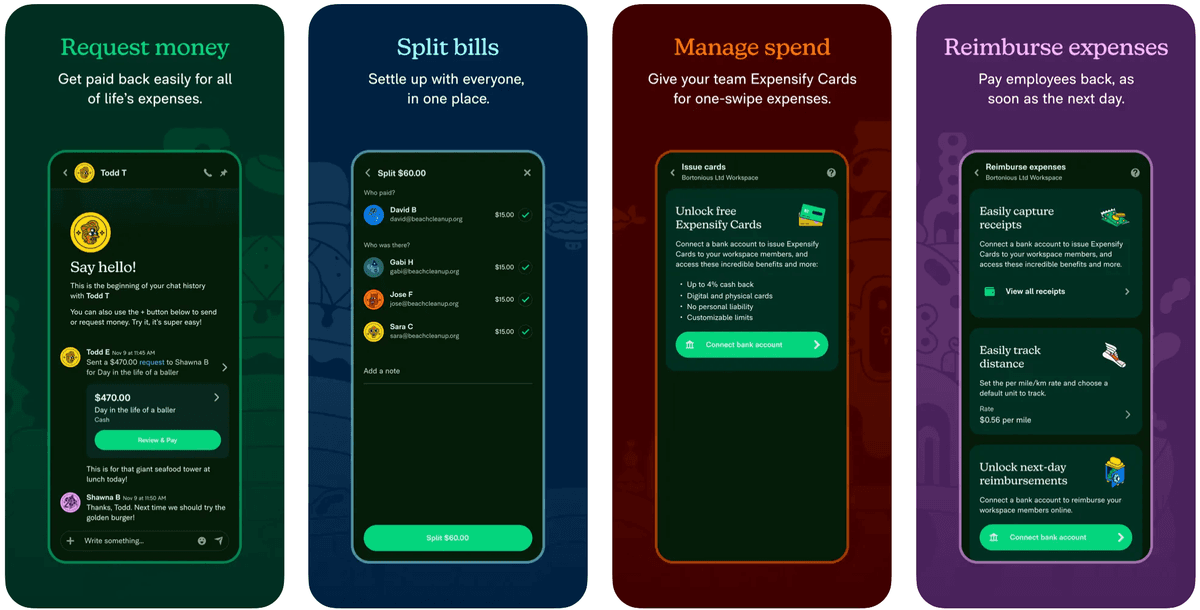
Hiring for React development services typically costs $15K–$90K — the low end for a focused dashboard or a performance rescue on an existing app, the high end for a full SaaS frontend built and shipped to production. I write the code myself rather than routing it through juniors, with 7+ years of production delivery, work as a Guest Engineer at Expensify, and a Top Rated Upwork profile with $100K+ earned and verified client reviews. Engagements start with a short scoping call and a fixed first milestone — usually a working slice of the real product in your repo within two weeks — so you judge the work by shipped software, not slide decks.
React projects rarely fail because React is hard — they fail because of unowned architecture decisions: state sprawled across the tree, a component library fighting the design, and a bundle nobody profiled until users complained. This service puts a senior owner on your frontend, whether that means building it, rescuing it, or accelerating the team already working on it. Delivery succeeds when the codebase gets easier to work in with every merged PR, not harder.
Weekly demos, async Slack updates, production standards.
04
Ship
Store launch, documentation, knowledge transfer.
Engagements this covers
SaaS product frontend from scratch
A funded startup has designs, a backend, and no frontend. I build the React application from architecture to production — routing, data layer, forms, auth flows, and the component foundations the team will extend for years. Ships incrementally to staging every week, lands in production with tests and CI, and the in-house hires who come later inherit a codebase with clear conventions.
Performance and stability rescue
An existing React app has grown slow — sluggish interactions, spinners everywhere, a bundle that takes seconds to load. I profile before touching anything, then fix the measured problems: render waterfalls, unnecessary client-side weight, data fetching shaped wrong for the UI. The deliverable is a faster app plus a written record of what changed and why, so regressions are catchable.
Embedded senior alongside your team
A team of two or three developers ships features but keeps re-litigating structure — state management, folder conventions, testing strategy. I embed for a few months as the senior hand: building the hard features, setting patterns through real PRs and reviews, and leaving behind conventions the team actually follows because they watched them work.
The three shapes this engagement takes
Almost every React inquiry I get is one of three shapes, and knowing yours before you talk to anyone saves weeks. Greenfield: designs and a backend exist, and you need the frontend built with architecture that will not need rewriting at the first pivot. Rescue: an app exists and something is wrong — performance, stability, or a codebase so tangled that every feature takes triple the estimate. Acceleration: your team is capable but junior-heavy, and features are stalling on decisions a senior would make in an afternoon.
Each shape prices and staffs differently. Greenfield rewards a fixed milestone plan; rescues must start with a paid diagnostic because quoting a fix before profiling is guessing; acceleration works best as a monthly embedded arrangement. Vendors who quote all three the same way have not noticed they are different jobs.
What a build looks like week by week
Week one is foundations, not features: repository setup, routing structure, the data-fetching layer, auth plumbing, CI, and deployment to a staging URL — the skeleton every future feature hangs on. Weeks two through four deliver vertical slices of the real product, each one production-quality: a complete flow from UI through data to persistence, demoed on staging at the end of every week.
From there the cadence is steady: features land weekly, tests accompany the logic worth testing, and the riskiest unknowns get pulled forward deliberately rather than discovered in the final stretch. The last weeks before launch are polish and hardening — error states, loading states, empty states, the unglamorous third of frontend work that separates products users trust from products users tolerate. You should never go more than a week without seeing the software run.
What moves cost across $15K–$90K
Screen count matters less than buyers think; interaction depth matters more. A ten-screen CRUD admin panel is cheaper than a three-screen product with real-time updates, drag-and-drop scheduling, and offline tolerance, because complexity lives in behavior, not page count. Design maturity is the second driver: pixel-perfect Figma files with defined states are cheap to build against, while "we'll figure out the design as we go" quietly doubles timelines.
Integration surface is third — every external API, auth provider, and payment flow adds edges to handle. Finally, the quality bar you actually need: an internal tool for twenty employees legitimately needs less test coverage, accessibility work, and browser support than a customer-facing product, and pretending otherwise wastes money. I scope these explicitly so you are paying for the bar your product requires.
How to evaluate a React developer in 2026
Ask how they decide what runs on the server versus the client — the React ecosystem has moved, and a candidate who treats everything as a client-side single-page app by default is building with five-year-old instincts. Ask what state management they would use for your app; the right answer starts with questions about your data, and the wrong answer is the same library for every problem. Ask for a performance war story with numbers: what was slow, how they measured it, what fixed it.
Then look at evidence over eloquence. A candidate's real merged PRs, a production app you can open, or a live walkthrough of code they wrote beats any portfolio page. And watch for the tell that predicts everything else: do they ask about your users and your team before proposing a stack, or do they arrive with the stack already decided?
Red flags when buying React work
Be suspicious of quotes delivered without anyone asking to see your designs, your API, or your existing code — a number produced without inputs is a number that will change. Be suspicious of the rewrite reflex: vendors who look at any existing codebase and prescribe starting over are selling the project that is most pleasant for them, not the one you need; most "unsalvageable" React apps are three focused weeks from healthy.
Watch for demo-driven delivery, where everything looks great in a screen share but there is no staging URL you can open yourself, no CI, and no tests — that gap surfaces in the final month as a schedule slip. And clarify who actually writes the code. Agencies routinely sell the senior in the sales call and staff the project with whoever is available; if that matters to you, get names into the contract.
When you should not hire a React contractor
If you have no designs and no settled product direction, a React developer is the wrong first hire — you will pay senior engineering rates to watch you decide, and the code will churn with every pivot. Get the product shaped first, even roughly. If your need is a simple marketing site or a basic internal form, modern no-code and template tools get you there for a tenth of the cost, and I will say so on the first call rather than take the project.
And if your real problem is a struggling in-house team, adding a contractor sometimes just adds coordination overhead — an architecture review or a short embedded mentoring engagement may fix the underlying issue for a fraction of a full build budget. The best money you spend on frontend is often the smallest engagement that unblocks your own people.
Low-risk to start
✓Fixed-scope proposal first
You approve milestones and a price before any build starts — no open-ended hourly surprises.
✓Working demos every week
You see running software each week, not status reports, so you can course-correct early.
✓One senior owner, no hand-offs
The person who scopes the work is the person who builds it — no junior layers, no agency markup.
✓A track record you can verify
Top Rated on Upwork with public client reviews and $100K+ earned, plus contributions to Expensify. Check the receipts before you commit.
Typically $15K–$90K for project-based work. A focused admin panel or dashboard runs $15K–$35K; a full customer-facing SaaS frontend with auth, billing flows, and real interaction depth runs $50K–$90K. Performance rescues usually start with a $3K–$8K paid diagnostic, then a scoped fix. Interaction complexity and design readiness move the number far more than screen count does.
How long does it take to build a React app?
A production dashboard or internal tool takes four to eight weeks; a full SaaS frontend takes ten to sixteen. Week one is architecture and deployment plumbing, then complete vertical slices ship to staging weekly until launch. Timelines stretch when designs are unfinished or the API is still moving — those two dependencies cause more delay than any engineering difficulty.
Should I hire a React freelancer or an agency?
A senior freelancer wins when the work fits one strong owner — most builds under $100K do — because you get the actual senior, direct communication, and no markup on juniors. An agency wins when you need parallel workstreams, design and engineering under one contract, or guaranteed staffing continuity. The failure mode to avoid is the agency that sells senior expertise and staffs the delivery with juniors; ask who writes the code, by name.
How much does react development services typically cost?
Projects typically fall in the $15K–$90K range depending on scope, integrations, and timeline. I provide a fixed-scope proposal after a 30-minute scoping call.
How long does a react development services project take?
MVPs often ship in 8–12 weeks. Production systems with AI backends or RAG may run 12–20 weeks. Rescue and audit engagements can start within days.
Do you work with startups and enterprises?
Yes. I work with founders, CTOs, product teams, and agencies worldwide — US, UK, EU, and APAC time zones with async updates and weekly demos.
Can you own mobile and backend together?
Yes. I specialize in React Native + Python (FastAPI) + AI (RAG, agents, OpenAI/Claude) under one senior owner — fewer handoffs, faster shipping.
How do I get started?
Book a free 30-minute scoping call on this site, hire through Upwork, or email dhairyasenjaliya@gmail.com with your brief and timeline.