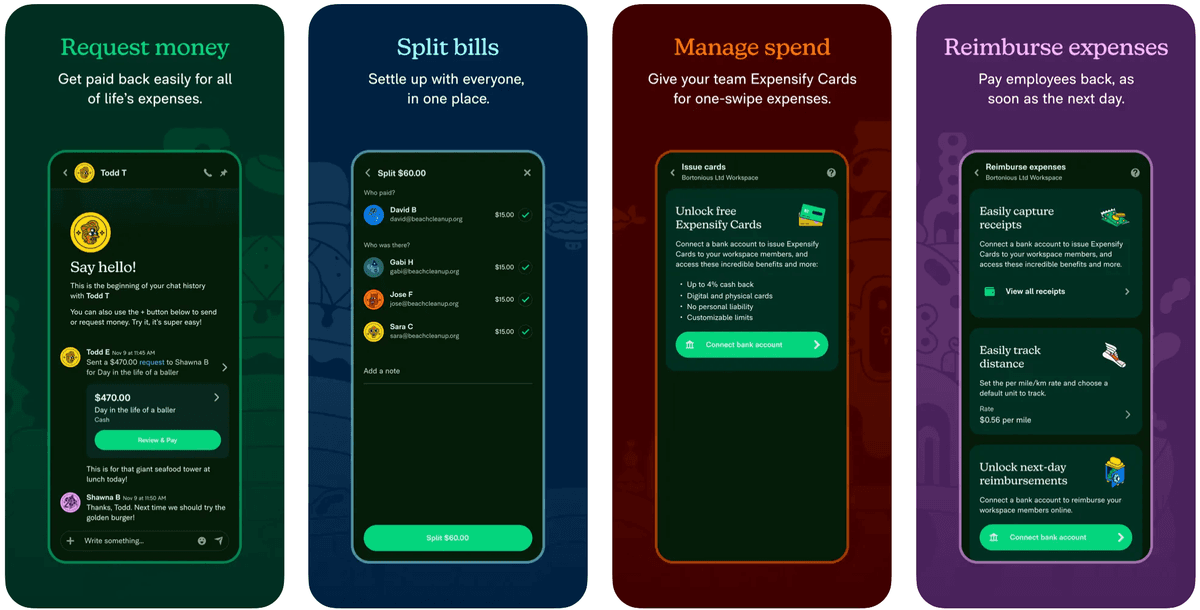
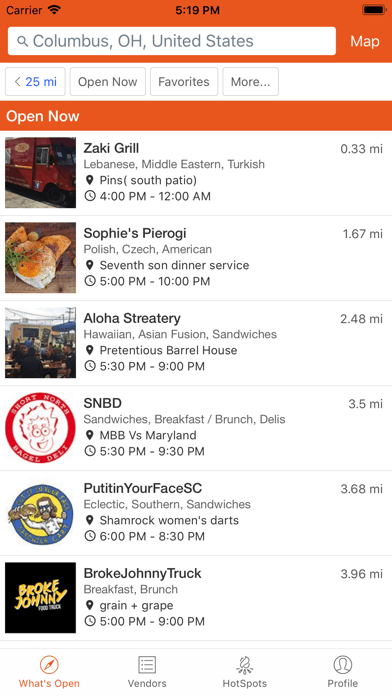
I offer product engineering services — taking a product from idea or struggling state to launched and growing, owning architecture, build, and release — with engagements typically between $30K and $150K depending on how much of the product surface I own and for how long. The judgment comes from 7+ years of production delivery and 20+ App Store launches, including work as a Guest Engineer at Expensify on a platform serving millions of users; I'm also Top Rated on Upwork with $100K+ earned and verified client reviews. Engagements begin with a one-to-two-week discovery that produces a scoped roadmap you own regardless of who builds it.
Product engineering is different from hiring a coder: it's hiring judgment about what to build, in what order, at what quality bar — alongside the ability to build it. It exists for teams that have a product goal and a budget but not the senior technical leadership to turn one into the other, and it succeeds when the engineer treats scope as something to challenge, not just implement.
Weekly demos, async Slack updates, production standards.
04
Ship
Store launch, documentation, knowledge transfer.
Engagements this covers
Idea to launched product with no technical co-founder
A domain-expert founder has validated demand and funding but no technical partner. I run discovery to cut the spec to a launchable core, make the architecture decisions a CTO would, build the product, and launch it — explaining every trade-off in business terms along the way. Outcome shape: a live product and a technical foundation that survives due diligence when investors or a CTO hire examine it.
Stalled build that needs senior ownership
A company's product has been in development for a year across two vendors and still hasn't launched — scope drifted, quality is unknown, and nobody owns the outcome. I audit what exists, salvage what's sound, cut the scope to a shippable line, and drive it to release with weekly demos. Outcome shape: a launch date that finally holds, and clarity about what was salvageable.
Feature-complete product that users find confusing
A product technically works but activation is poor: users sign up, wander, and leave. I instrument the funnel to find where users actually drop, rework the critical flows — onboarding, first value, core loop — and ship measured iterations weekly. Outcome shape: activation and retention numbers that move, with each change tied to evidence rather than opinion.
What product engineering means, versus hiring a developer
A developer implements a spec; a product engineer interrogates it. When a founder hands me forty features, my first job is to find the eight that constitute a launchable product and defend that line — because the most expensive thing in product development is building things users don't need yet, and no amount of code quality compensates for it. That judgment layer is the service: sequencing the roadmap by risk and learning value, choosing architecture that matches the next eighteen months rather than an imagined future scale, and knowing which corners are safe to cut before launch and which will be fatal.
In practice this means I say no more often than a hired implementer would, and I put reasoning behind every no in business terms — what the feature costs, what launching later costs, what we'd learn by shipping without it. Buyers who want a pure order-taker should hire one; they cost less. Product engineering earns its rate when there's no CTO in the room to make those calls, or when the existing team is too deep in the build to see the product from the outside.
The engagement arc: discovery, build, launch, iterate
Every engagement starts with discovery — one to two weeks, separately priced and useful on its own. We map the product goal, the user's critical path, and the constraint landscape: budget, timeline, existing systems, compliance. The output is a scoped roadmap with an architecture sketch, a launch definition, and a fixed quote for the build — a document you own outright and could hand to any competent team, which keeps me honest about its quality.
The build phase runs on a weekly demo rhythm: working software every week, prioritized so the riskiest and most learning-rich pieces surface earliest, with scope managed openly — when something grows, we decide together what shrinks. Launch is treated as a phase, not a date: release infrastructure, analytics wired to the metrics that define success, staged rollout, and rapid-response iteration in the first weeks when real usage starts contradicting our assumptions. The engagement typically ends with a measured iteration cycle and a handover — documentation, CI, and a working session with whoever inherits the system, whether that's your new hire or your existing team.
What drives cost between $30K and $150K
Ownership breadth is the primary driver. At the lower end, I'm the engineering owner of a bounded product — one app or platform surface, an existing backend or simple new one, a defined launch line. The middle of the range adds surfaces: mobile plus web, a backend built from scratch, admin tooling, integrations with your existing systems. The top of the range is full product ownership over multiple quarters — everything above, plus post-launch iteration cycles where the engagement's second half is driven by live metrics rather than the original spec.
Two other factors move the number materially. Ambiguity: a product whose requirements are genuinely unsettled needs more discovery, more prototyping, and more thrown-away work than one with a validated design — that's not waste, it's the cost of learning, but it should be budgeted honestly. And quality bar: an internal tool, a B2B product sold through demos, and a consumer app competing on feel have different polish economics, and the same feature list can differ by half depending on which bar applies. Discovery pins both factors down before the build quote.
Red flags when buying product engineering
The biggest red flag is a vendor who accepts your entire feature list without pushback and quotes it happily. Every product spec I've ever received contained features that shouldn't be built yet, and a vendor who doesn't find them is either not looking or is billing by the feature. The second is milestone opacity — proposals where the first demo is months away. Working software weekly is not a nice-to-have; it's the only reliable evidence that progress claims are true, and every failed project I've been called to rescue had a long dark period in common.
Third, watch for accountability laundering: agencies where the impressive person in the sales call never touches your product, and no individual owns the outcome. Ask directly who makes the architecture decisions and who you talk to when something breaks — if the answer is a role rather than a name, the outcome has no owner. Finally, be wary of proposals with no launch definition. Product engineering without a concrete, testable definition of launched becomes an open-ended retainer, and open-ended retainers drift.
When not to buy product engineering
If you already have strong senior engineers and clear product direction, you don't need this — you need hands, and staff augmentation or a specialist contractor is cheaper for pure execution. If your idea is unvalidated — no user conversations, no demand signal — a full build is premature no matter who does it; a one-to-two-week discovery engagement or even a landing-page test will teach you more per dollar than three months of engineering, and I've redirected prospects to exactly that when their spec was ahead of their evidence.
The other honest boundary is scale. One senior product engineer takes a product from zero to launched and through early growth extremely efficiently, but past a certain team size and traffic level the job becomes building the engineering organization itself — hiring, process, platform investment — and that's a full-time leadership role, not a contract. The healthy end state of a product engineering engagement is graduating out of it: the product live, the metrics instrumented, and a foundation your first full-time engineers inherit with documentation and momentum instead of archaeology.
Low-risk to start
✓Fixed-scope proposal first
You approve milestones and a price before any build starts — no open-ended hourly surprises.
✓Working demos every week
You see running software each week, not status reports, so you can course-correct early.
✓One senior owner, no hand-offs
The person who scopes the work is the person who builds it — no junior layers, no agency markup.
✓A track record you can verify
Top Rated on Upwork with public client reviews and $100K+ earned, plus contributions to Expensify. Check the receipts before you commit.
Typical engagements run $30K to $150K. A bounded product — one surface, a defined launch line — sits at the lower end; multi-surface products with a new backend land mid-range; full ownership across multiple quarters including post-launch iteration reaches the top. Discovery is priced separately at one to two weeks and produces a fixed build quote plus a roadmap you own even if you build elsewhere.
What is the difference between product engineering and hiring a developer?
A developer executes a spec you provide; a product engineer owns the outcome — challenging scope, sequencing the roadmap by risk, making architecture decisions, and defining what launch means. It substitutes for the senior technical leadership you don't have yet. If you already have a CTO or strong senior engineers setting direction, hire developers for execution instead; it's cheaper and you don't need the judgment layer twice.
How long does it take to go from idea to launched product?
For a focused product with disciplined scope, twelve to twenty weeks: one to two weeks of discovery, ten to sixteen weeks of building with weekly demos, and a launch phase with staged rollout and rapid iteration. The variable that stretches timelines most is scope discipline, not engineering speed — products defined as eight core features launch; products defined as forty features stall. Discovery exists to draw that line before money is spent.
How much does product engineering services typically cost?
Projects typically fall in the $30K–$150K range depending on scope, integrations, and timeline. I provide a fixed-scope proposal after a 30-minute scoping call.
How long does a product engineering services project take?
MVPs often ship in 8–12 weeks. Production systems with AI backends or RAG may run 12–20 weeks. Rescue and audit engagements can start within days.
Do you work with startups and enterprises?
Yes. I work with founders, CTOs, product teams, and agencies worldwide — US, UK, EU, and APAC time zones with async updates and weekly demos.
Can you own mobile and backend together?
Yes. I specialize in React Native + Python (FastAPI) + AI (RAG, agents, OpenAI/Claude) under one senior owner — fewer handoffs, faster shipping.
How do I get started?
Book a free 30-minute scoping call on this site, hire through Upwork, or email dhairyasenjaliya@gmail.com with your brief and timeline.