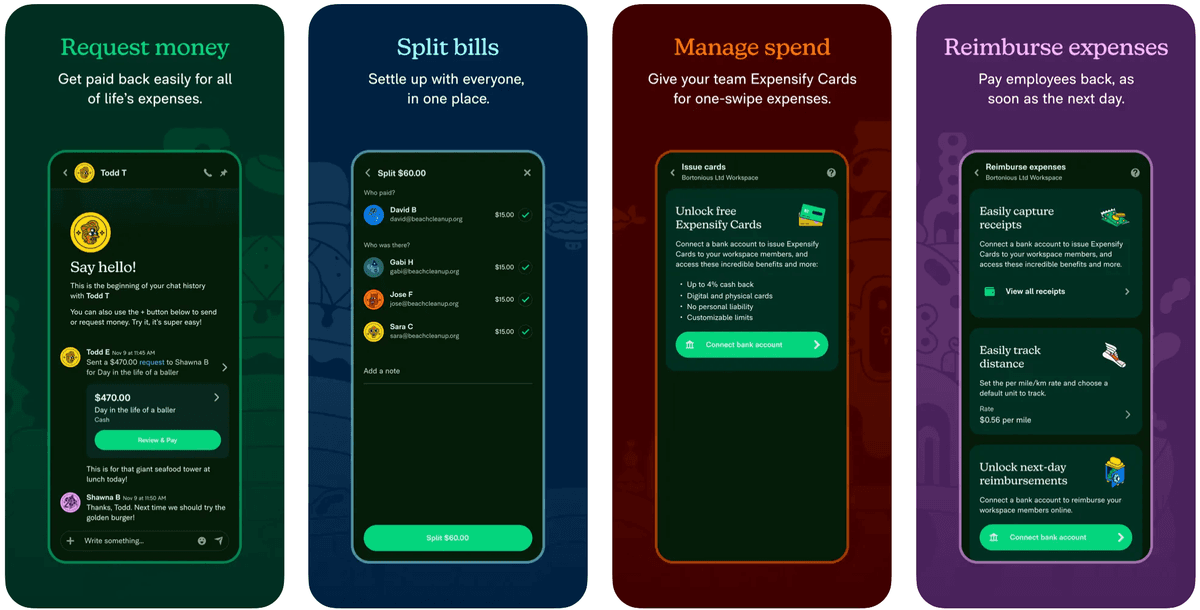
Hiring me as an offshore React Native developer typically costs $20K–$100K, covering anything from a focused three-month build to a year-long embedded engagement with your team. You get a senior engineer with 7+ years of production delivery and 20+ App Store launches — including work as a Guest Engineer at Expensify, an expense platform used by millions — without agency markup. If you want proof before a conversation, my Upwork profile is Top Rated with $100K+ earned and verified client reviews; that's one verification channel, and most of my long-term clients contract directly. Engagements start with a paid pilot week so you judge real output before committing.
Offshore development has a deserved reputation problem: bait-and-switch staffing, silent weeks, and code your next hire refuses to touch. This page explains how I run offshore engagements so none of that happens — and gives you the checklist to evaluate anyone else you're considering.
Weekly demos, async Slack updates, production standards.
04
Ship
Store launch, documentation, knowledge transfer.
Engagements this covers
Sole mobile engineer for a US startup with no mobile team
A B2B SaaS company had a strong web team and zero mobile experience. I joined as their only React Native developer, set up the repository, CI/CD, and release process from scratch, and shipped their iOS and Android apps in weekly increments demoed during their morning hours. Eighteen months later, their first in-house mobile hire onboarded from my documentation in under a week.
Overflow capacity for a European agency
A design-led agency kept winning mobile work its two developers couldn't absorb. I took over two client apps mid-flight under their brand, stabilized a release process that had been shipping hotfixes weekly, and handled store submissions. The agency kept its client relationships and margins, and the clients saw faster, calmer releases without ever needing to know the team had changed.
Recovery after an offshore agency went wrong
A founder had spent months with an agency that rotated junior developers through his project and missed three deadlines. I audited the codebase, gave him an honest keep-or-rewrite assessment, kept roughly seventy percent, and rebuilt the rest. Written daily updates and a weekly demo replaced the silence he'd been paying for, and the app reached both stores two months later.
What working with me offshore looks like, week by week
Every engagement runs on the same visible rhythm. Daily, you get a short written update — what shipped, what's blocked, what's next — in your project channel, not buried in email. Weekly, you get a demo on a real build you can install, not a screen recording. All code lands in your repository from day one via pull requests you can read, and I keep two to four hours of overlap with your timezone for synchronous conversation — US East Coast mornings and European afternoons both work.
Sprints follow whatever cadence your team already uses; if you don't have one, I default to weekly planning against a ranked backlog you control. Releases go out through CI/CD set up in your accounts, so shipping never depends on my laptop. The structural point: at any moment you can see exactly what your money bought this week, and ending the engagement would cost you nothing but the notice period.
What moves the cost inside $20K–$100K
Duration and weekly commitment are the main levers. The low end covers roughly three months of substantial part-time work — right for a defined feature set or a takeover-and-stabilize job. The high end covers six to twelve months of full-time embedded work: greenfield builds, ongoing product development, or acting as your entire mobile team while you hire.
Beyond hours, three things move the price. Scope of ownership: writing features against an existing backend is cheaper than also owning API design, releases, and production incidents. State of the codebase: taking over a messy inherited app carries an audit-and-stabilization phase that a clean start doesn't. And coordination load: being one developer inside your existing team is lighter than being the person who also runs planning, QA coordination, and store releases. I quote monthly, in writing, with the commitment level explicit — so comparing me against a local hire or an agency is honest math.
Red flags when hiring offshore React Native developers
The classic failure is bait-and-switch: a senior engineer runs the sales call, then juniors do the work behind an account manager who filters all communication. Test for it by asking, in the interview, who exactly writes the code and whether you'll have a direct channel to that person. Any hesitation is your answer.
Other warning signs: rates too low to be real — genuinely senior offshore engineers cost less than San Francisco, not pennies, and a rock-bottom rate buys you a queue, not a developer. No shipped apps they can point to in the stores. Insistence on keeping code in their repository "until final payment" — that's a hostage setup, not a process. Communication that's polished before the contract and vanishes after. And an inability to say no: an offshore developer who agrees to every deadline and every feature without pushback isn't agreeable, they're planning to disappoint you slowly.
How to evaluate an offshore developer before committing
Start with verifiable output: apps in the App Store and Play Store they will claim in writing, and a public review trail — Upwork history, GitHub, references you can actually call. Then interview the person, not the company, and do part of it in writing: offshore collaboration lives and dies on written communication, so a candidate whose messages turn vague under mild pressure will be vague at 11 p.m. your time when production is down.
Then run a paid pilot: one or two weeks, a real task from your backlog, full rate. It tells you more than any number of interviews — you'll see estimation honesty, pull request quality, how questions get asked, and what the daily communication rhythm actually feels like. I insist on pilots for my own engagements because they protect both sides; a vendor who resists a paid trial with a defined scope is telling you their process doesn't survive contact with real work.
What good offshore delivery looks like
Six months in, here's the test: could a competent new hire take over the codebase in a week using only what's written down? Good offshore work leaves you owning everything — repository, store accounts, CI/CD, service credentials — with architecture decisions documented when they were made, not reconstructed during handover.
Day to day, good delivery feels boring in the best way. Estimates hold often enough that you can plan around them. Releases are routine, not events. Problems surface early, in writing, with proposed options instead of surprises. The weekly demo matches what was promised the week before. And crucially, the relationship doesn't create dependency: I document myself out of being a single point of failure, because engagements that end with "we can't let him go, he's the only one who understands it" are failures dressed up as job security. You should be able to leave at any time — that's exactly what keeps the quality up.
When offshore is the wrong call
Don't hire offshore — me included — if the work genuinely requires physical presence: hardware integrations that need someone holding the device at your bench, or a culture where decisions happen at whiteboards and remote voices get forgotten. If your organization has never managed remote work at all, a solo offshore engineer will surface that weakness rather than fix it.
Regulatory constraints matter too: some government, defense, and health contracts require developers in specific jurisdictions — check before you shortlist anyone. And if what you actually need is ten minutes of real-time conversation scattered across every workday, a few hours of timezone overlap will chafe no matter how good the written communication is. In that case, pay the premium for a local senior engineer; it's the right tool. Offshore works brilliantly for teams that write things down and judge output rather than presence — and only for those teams.
Low-risk to start
✓Fixed-scope proposal first
You approve milestones and a price before any build starts — no open-ended hourly surprises.
✓Working demos every week
You see running software each week, not status reports, so you can course-correct early.
✓One senior owner, no hand-offs
The person who scopes the work is the person who builds it — no junior layers, no agency markup.
✓A track record you can verify
Top Rated on Upwork with public client reviews and $100K+ earned, plus contributions to Expensify. Check the receipts before you commit.
I keep two to four hours of overlap with your working day — enough for standups, planning, and any conversation that needs to be synchronous. Everything else runs async: written daily updates, recorded demos when schedules don't align, and pull requests you review on your own time. Most clients find the overlap constraint improves communication, because decisions get written down instead of living in hallway conversations.
Am I hiring you personally, or a team?
Me, personally — the person you interview writes the code. I never subcontract your work without telling you. When a project needs a specialist skill I don't carry, like a specific native SDK or backend scaling work, I'll say so and either recommend someone you contract directly or bring them in transparently with your approval. Bait-and-switch staffing is the single biggest offshore failure mode, so the engagement is structured to make it impossible.
What happens if the engagement isn't working out?
You end it with two weeks' notice — no long lock-in, no exit fees. Because all code, credentials, and documentation live in your accounts from day one, there is nothing to hand over and nothing to hold hostage. The paid pilot week exists precisely to surface a bad fit before either of us commits; most mismatches become visible within days once the process makes work visible, which mine does.
How much does offshore react native developer typically cost?
Projects typically fall in the $20K–$100K range depending on scope, integrations, and timeline. I provide a fixed-scope proposal after a 30-minute scoping call.
How long does a offshore react native developer project take?
MVPs often ship in 8–12 weeks. Production systems with AI backends or RAG may run 12–20 weeks. Rescue and audit engagements can start within days.
Do you work with startups and enterprises?
Yes. I work with founders, CTOs, product teams, and agencies worldwide — US, UK, EU, and APAC time zones with async updates and weekly demos.
Can you own mobile and backend together?
Yes. I specialize in React Native + Python (FastAPI) + AI (RAG, agents, OpenAI/Claude) under one senior owner — fewer handoffs, faster shipping.
How do I get started?
Book a free 30-minute scoping call on this site, hire through Upwork, or email dhairyasenjaliya@gmail.com with your brief and timeline.