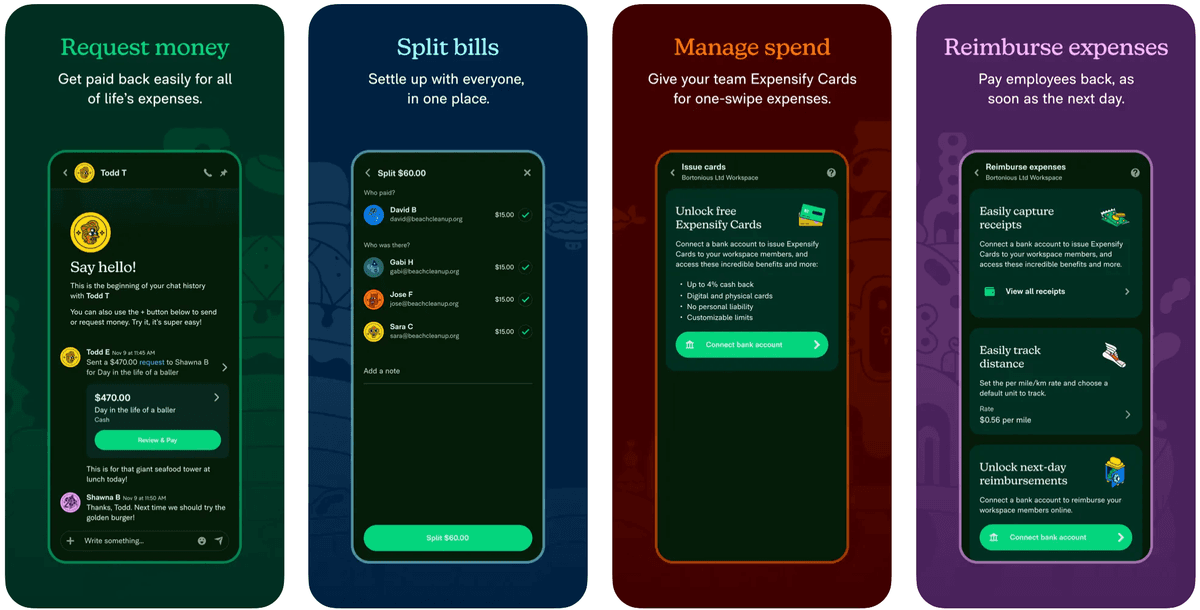
My mobile app architecture consulting engagements run $10K–$50K: the low end is a two-to-three-week architecture review with a written findings-and-roadmap document; the high end is a multi-month advisory where I design the architecture, review implementation as your team builds, and stay accountable for the outcome. This is judgment work, and the judgment comes from 20+ App Store launches, 7+ years of production mobile delivery, work as a Guest Engineer at Expensify, and apps used by millions of users. Most clients start with a review, because it's the cheapest way to find out how much of the bigger engagement they actually need.
Architecture mistakes in mobile are uniquely expensive because you can't hotfix your way out of them — every structural decision ships to devices you don't control and lives in app versions users may run for a year. This service exists for the moments where a decision is about to become very hard to reverse: stack choices, rewrites, scaling a codebase past its first team, or a performance ceiling nobody can diagnose. Good consulting here is measured in expensive mistakes not made.
Weekly demos, async Slack updates, production standards.
04
Ship
Store launch, documentation, knowledge transfer.
Engagements this covers
Pre-build architecture for a funded team
A startup is about to build its first serious app and faces stack decisions — native versus React Native versus Flutter, state management, offline strategy, module boundaries. I run a structured review of their product roadmap and team skills, then deliver a written architecture with the reasoning, trade-offs, and first-90-days plan. They start building on decisions made deliberately instead of by default.
Codebase that stopped scaling
An app that worked fine at five screens and two developers is now fifty screens and eight developers: build times balloon, features collide, regressions multiply. I audit the codebase and delivery pipeline, identify the structural causes — usually tangled state, missing module boundaries, and no testing seams — and deliver a staged refactoring plan the team executes without stopping feature work.
Rewrite decision under pressure
Leadership is debating rewriting an aging app — different framework, different vendor's mess, or accumulated debt — and the estimates range from three months to two years. I evaluate the existing code, quantify what's actually salvageable, and give an evidence-based recommendation: rewrite, strangler-pattern migration, or targeted remediation. Either way, the decision gets made on findings rather than frustration.
What an architecture review actually produces
The core deliverable is a written document your team still uses a year later, produced in two to three weeks. Week one is evidence gathering: I read your codebase, build and run the app, profile its performance, examine the CI/CD pipeline and crash reports, and interview the engineers — who always know where the bodies are buried and rarely get asked.
Week two is analysis and writing. The document covers findings ranked by risk, not by pet peeve; an explicit map of what's good (teams deserve to know what not to break); recommended target architecture with the reasoning and rejected alternatives; and a sequenced roadmap where each step is shippable without freezing feature work. I present it live, defend it under questioning, and revise where your team's context proves me wrong. What you should not accept from any consultant: a findings deck with no sequencing, no effort estimates, and no opinion about what to do first — that's a diagnosis sold without a treatment plan.
What sits behind the $10K–$50K range
The review-only engagement — audit, written architecture, roadmap, presentation — runs $10K–$18K depending on codebase size and how many platforms and repos are involved. The middle of the range adds design-and-embed work: I don't just recommend the architecture, I design it in detail, pair with your senior engineers on the first implementations of each pattern, and review pull requests during the transition. That's typically $20K–$35K over two to three months at advisory intensity.
The top of the range is sustained fractional architecture ownership: I attend planning, own the technical decision log, review continuously, and carry accountability for the architecture through a launch or major migration. Cost drivers within any tier: number of platforms and codebases, team size (more engineers means more alignment work), and how contested the decisions are — a team that agrees the app is struggling costs less to help than one where the architecture debate is a proxy war between factions.
Red flags when buying architecture consulting
The biggest red flag is the consultant whose answer doesn't depend on your inputs — who recommends the same microfrontend pattern, the same framework migration, or the same rewrite to every client. Architecture is contextual by definition; if the recommendation arrives before the code has been read, it's a template with your logo on it. Related: beware the rewrite reflex. Recommending a rewrite is the easiest way for a consultant to seem decisive, and it conveniently generates a large follow-on project for them. Demand that any rewrite recommendation come with an explicit analysis of the strangler-pattern alternative.
Also be wary of deliverables that are all diagrams and no sequencing — real architecture advice says what to do in which order while shipping continues, because 'stop everything for six months' is not a plan any working product can follow. Finally, check that the consultant has operated their own advice: architecture opinions from people who haven't lived with the consequences through app-store releases are systematically too clever.
How to evaluate an architecture consultant
Give candidates a real, thorny decision from your context and listen to the shape of their reasoning. Strong consultants ask about your team's skills, your release cadence, your product roadmap, and your tolerance for risk before offering a direction — because the right architecture for a two-person startup and a forty-person scale-up differ even with identical products. Weak ones pattern-match to whatever they built last.
Ask for an architecture decision they got wrong and what it cost; anyone with real scars answers instantly, and the ones who claim a clean record are either green or unreflective. Ask what they'd leave alone in your codebase — a consultant who can't identify what's working is optimizing for billable findings. And insist on written artifacts as the deliverable, not workshops alone: talk evaporates, documents get cited in arguments for years. The consultants worth their fee are the ones whose documents win arguments they're not in the room for.
When you don't need architecture consulting
If you're pre-product-market-fit with a small app and a small team, most architecture questions answer themselves later — take sensible defaults (boring stack, thin abstractions), ship, and buy this service when the codebase or the team is about to grow past what defaults handle. If your problem is really a staffing problem — no senior mobile engineer on the team at all — a review document can't raise your team's ceiling; hire or contract the seniority first, and I'll sometimes recommend exactly that instead of a consulting engagement.
And if leadership has already committed to a decision and wants a consultant's letterhead to bless it, I'm the wrong hire; a review whose conclusion is predetermined is theater at consulting rates. The right time to buy is when a genuinely open, expensive-to-reverse decision is on the table — that's when two weeks of outside judgment routinely saves a quarter of engineering time.
Low-risk to start
✓Fixed-scope proposal first
You approve milestones and a price before any build starts — no open-ended hourly surprises.
✓Working demos every week
You see running software each week, not status reports, so you can course-correct early.
✓One senior owner, no hand-offs
The person who scopes the work is the person who builds it — no junior layers, no agency markup.
✓A track record you can verify
Top Rated on Upwork with public client reviews and $100K+ earned, plus contributions to Expensify. Check the receipts before you commit.
How much does a mobile app architecture review cost?
A thorough review from a senior consultant runs $10K–$18K and takes two to three weeks: codebase audit, performance and pipeline analysis, engineer interviews, and a written document with ranked findings, a target architecture, and a sequenced roadmap. Longer advisory engagements — where the consultant designs the architecture and reviews implementation over months — run $20K–$50K. Judge cost against the decision at stake: reviews usually precede choices worth many multiples of the fee.
Should we rewrite our mobile app or refactor it?
Refactor is the right default: full rewrites routinely take twice their estimate while the old app stagnates, and they discard years of embedded edge-case fixes. Rewrites earn consideration when the platform itself is dead (unsupported framework, unhirable stack), when the codebase actively blocks the roadmap, or when a strangler-pattern migration has been honestly evaluated and still loses. Any consultant who recommends rewriting before reading your code is selling a project, not advice.
How do I know if my app has an architecture problem or just needs better developers?
Look at the symptoms' shape. Architecture problems are systemic: every feature takes longer than the last, changes in one area break another, build and release times keep growing, and new hires stay unproductive for months. Skill problems are local: specific features are buggy while the structure holds. They compound — weak structure makes good developers look bad. A short external review is the cheapest way to separate the two before you spend on the wrong fix.
How much does mobile app architecture consulting typically cost?
Projects typically fall in the $10K–$50K range depending on scope, integrations, and timeline. I provide a fixed-scope proposal after a 30-minute scoping call.
How long does a mobile app architecture consulting project take?
MVPs often ship in 8–12 weeks. Production systems with AI backends or RAG may run 12–20 weeks. Rescue and audit engagements can start within days.
Do you work with startups and enterprises?
Yes. I work with founders, CTOs, product teams, and agencies worldwide — US, UK, EU, and APAC time zones with async updates and weekly demos.
Can you own mobile and backend together?
Yes. I specialize in React Native + Python (FastAPI) + AI (RAG, agents, OpenAI/Claude) under one senior owner — fewer handoffs, faster shipping.
How do I get started?
Book a free 30-minute scoping call on this site, hire through Upwork, or email dhairyasenjaliya@gmail.com with your brief and timeline.