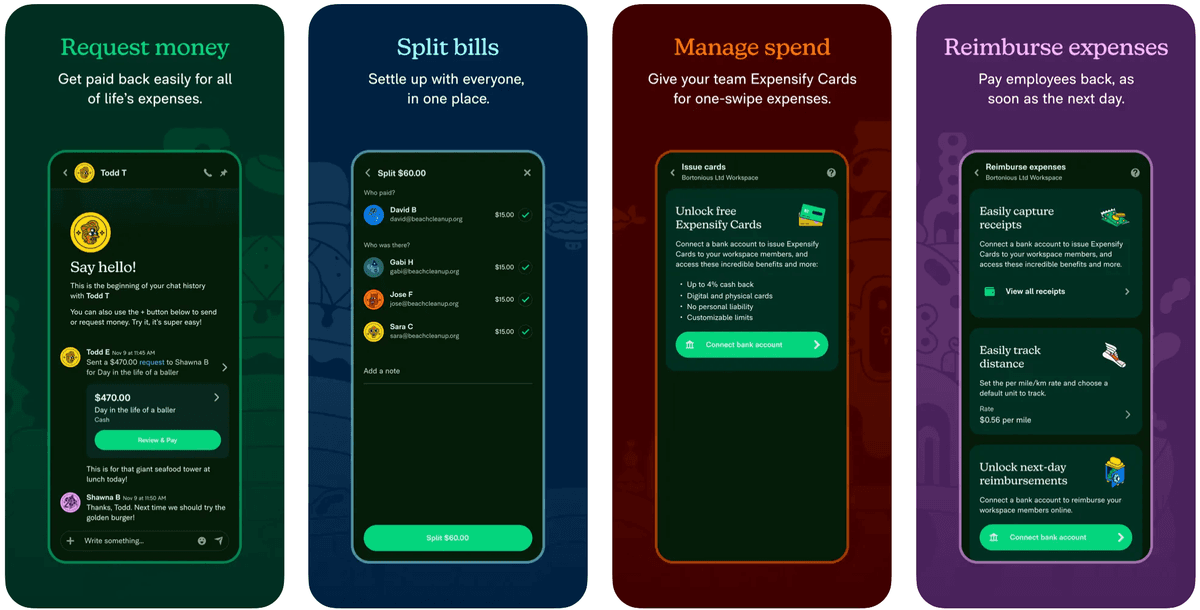
Marketplace app development with me runs $40K–$200K: the low end is a tightly scoped two-sided MVP in one city or category, the high end is a full platform with split payments, seller tooling, reviews, and an admin operation. I bring 20+ App Store launches, 7+ years of production delivery, experience as a Guest Engineer at Expensify, and Top Rated status on Upwork with $100K+ earned and verified client reviews. Hiring starts with a scoping session focused on the question that decides everything: what is the smallest marketplace that can prove liquidity in your category?
A marketplace is three products pretending to be one — a buyer app, a seller app, and an operations platform — plus a payments system that moves other people's money. The build is genuinely harder than a normal app, but the more common failure is strategic: teams build both sides fully before proving anyone will transact at all.
Weekly demos, async Slack updates, production standards.
04
Ship
Store launch, documentation, knowledge transfer.
Engagements this covers
Services marketplace from scratch
A founder is connecting local service providers with customers — booking, quotes, payment on completion. I build the two-sided flow: provider onboarding with identity verification, request and booking mechanics, split payments holding funds until the job completes, and mutual reviews. Launch targets one city and one service category, because proving liquidity narrowly beats launching broadly and thin.
Product marketplace with seller payouts
A niche commerce community wants a buy-and-sell app with the platform taking a commission. I build listings with search and filters, checkout with the platform fee split automatically, seller payout accounts with onboarding and tax-information capture, and dispute mechanics for the inevitable order gone wrong. Sellers get a dashboard worth returning to; the platform gets its margin on every transaction from day one.
Rescuing a marketplace that cannot handle real money
A startup launched a marketplace where payments were wired up naively — no escrow, refunds handled by hand, payouts reconciled in a spreadsheet that no longer reconciles. I rebuild the money path on a proper split-payment architecture with a ledger the accountant can audit, migrate live sellers without freezing transactions, and add the dispute tooling that support has been improvising.
Why marketplaces cost more than the app you can see
Founders budget for the buyer experience because that is the app they picture. But the seller side is a full product too — onboarding, listing management, order handling, earnings dashboards — and sellers abandon platforms whose tools waste their time. Beneath both sits the operations layer: an admin surface for approving sellers, mediating disputes, issuing refunds, and removing bad actors, which your team will live in daily and which no one budgets for.
Then the money. Marketplace payments are split payments: the platform takes a commission, sellers get payouts, funds may need holding until service completion, and refunds must unwind all of it correctly. Providers like Stripe Connect make this tractable, but onboarding flows, webhooks, edge cases, and reconciliation remain weeks of careful work — and mistakes here are not bugs, they are money lost and trust destroyed. That triple surface is why serious marketplace builds start around $40K rather than $15K.
Scoping the MVP: prove liquidity, not features
The marketplace graveyard is full of beautifully built apps that never got a second transaction. The existential question is liquidity — enough supply that buyers find what they want, enough demand that sellers keep showing up — and your MVP should be the smallest product that tests it. That usually means one category, one geography, and manual operations behind the scenes: founder-approved sellers instead of automated verification, concierge matching instead of algorithms, a spreadsheet where the recommendation engine will someday be.
In scoping I push hard to cut anything that does not affect the core transaction loop: post, discover, book, pay, review. Ratings can launch simple. Chat can launch minimal. The algorithmic feed can wait a year. What cannot be cut is the money path and trust mechanics, because a marketplace that mishandles either dies on contact with users. This discipline is the difference between spending $60K to learn your market is real and $180K to learn it is not.
How the build runs and what drives the price
The first two weeks fix the transaction model — who pays whom, when funds release, what happens on cancellation and dispute — because every screen downstream depends on it. Then delivery runs in vertical slices: seller onboarding and listings first so supply can seed before launch, then the buyer discovery and checkout loop, then reviews, notifications, and the admin panel, with payments integration threaded throughout. A lean two-sided MVP runs four to six months; full platforms run nine to twelve.
Within the $40K–$200K range, the big multipliers are payment complexity (simple checkout versus escrowed release versus multi-party splits), whether booking involves scheduling logistics, identity verification depth, real-time features like chat and live availability, and how much admin tooling your operation needs at launch. Geography adds cost too — multi-currency and cross-border payouts are their own project. I quote after the transaction-model session because that is when these numbers stop being guesses.
Red flags when hiring for a marketplace build
The loudest red flag is a payments hand-wave. Ask any candidate to sketch your money flow — commission, payout timing, refund unwinding, what happens when a seller's account fails verification after they have orders in flight. Builders who have shipped marketplaces answer in specifics; builders who have shipped brochure apps change the subject. Second: no questions about your supply side. Anyone who quotes a marketplace without asking how sellers onboard and why they will stay has not thought past the buyer demo.
Third: a quote with no admin panel in it, which means either they forgot the operations layer or they are planning to sell it to you later as a surprise. Fourth: promises of a full two-sided platform in eight weeks. And insist on seeing a live marketplace they have shipped — not designs, not a demo video — because this category punishes first-timers harder than almost any other app type.
When you should not build a custom marketplace app
If you have not yet proven that both sides want this transaction, do not commission custom software at all. Run the marketplace manually first — a form, a spreadsheet, payments by invoice, matching done by you. It is unglamorous and it answers the only question that matters for a few hundred dollars instead of a hundred thousand. If your model fits a template — standard rentals, standard services — no-code marketplace platforms can carry you to your first real transactions, and graduating to custom later is a good problem to have.
Build custom when the platforms genuinely cannot express your model: unusual transaction mechanics, mobile-first experience as a competitive edge, verification workflows specific to your category, or fee structures the templates do not support. I have told founders in scoping calls to go validate manually and come back in six months; the ones who return build much better products with the same budget.
Low-risk to start
✓Fixed-scope proposal first
You approve milestones and a price before any build starts — no open-ended hourly surprises.
✓Working demos every week
You see running software each week, not status reports, so you can course-correct early.
✓One senior owner, no hand-offs
The person who scopes the work is the person who builds it — no junior layers, no agency markup.
✓A track record you can verify
Top Rated on Upwork with public client reviews and $100K+ earned, plus contributions to Expensify. Check the receipts before you commit.
A disciplined two-sided MVP — seller onboarding, listings, discovery, booking or checkout with split payments, reviews, and a basic admin panel — typically runs $40K–$80K. Platforms with escrowed payments, identity verification, chat, and serious seller tooling land $80K–$140K, and multi-region platforms reach $200K. Payments complexity and admin tooling are the two drivers founders most often underestimate.
How long does it take to build a two-sided marketplace app?
Four to six months for a lean MVP, sequenced so seller onboarding ships first and supply can seed before public launch. Full platforms run nine to twelve months. The transaction model — who pays whom, when funds release, how refunds unwind — gets fixed in the first two weeks because everything downstream depends on it. Add store review time for both apps at the end.
Should I build one app or separate apps for buyers and sellers?
Start with one app and role-based experiences — it halves your store-review surface, simplifies maintenance, and many users eventually act on both sides anyway. Split into a dedicated seller app when seller workflows grow deep enough to crowd the buyer experience, which is a scale problem, not a launch problem. Built with clean role separation from the start, splitting later is straightforward rather than a rewrite.
How much does marketplace app development typically cost?
Projects typically fall in the $40K–$200K range depending on scope, integrations, and timeline. I provide a fixed-scope proposal after a 30-minute scoping call.
How long does a marketplace app development project take?
MVPs often ship in 8–12 weeks. Production systems with AI backends or RAG may run 12–20 weeks. Rescue and audit engagements can start within days.
Do you work with startups and enterprises?
Yes. I work with founders, CTOs, product teams, and agencies worldwide — US, UK, EU, and APAC time zones with async updates and weekly demos.
Can you own mobile and backend together?
Yes. I specialize in React Native + Python (FastAPI) + AI (RAG, agents, OpenAI/Claude) under one senior owner — fewer handoffs, faster shipping.
How do I get started?
Book a free 30-minute scoping call on this site, hire through Upwork, or email dhairyasenjaliya@gmail.com with your brief and timeline.