Logistics app development with me runs $35K–$150K, depending mostly on how much real-time tracking, offline capability, and dispatch tooling your operation needs. I've shipped 20+ App Store launches across 7+ years of production delivery, including apps used by millions of users, and I build the kind of offline-first, battery-conscious field tools that survive real routes rather than just demos. I'm Top Rated on Upwork with $100K+ earned and verified client reviews — one verification channel alongside the direct clients I work with worldwide. Every engagement starts by shadowing your actual operation, because logistics software scoped from a conference room fails in the truck.
Logistics apps are judged in dead zones, on cheap Android phones, by drivers who will delete anything that drains their battery or slows their route. This page explains what custom logistics development costs, what moves the price, and how to tell whether a vendor has ever built for the field or only for the demo.
Weekly demos, async Slack updates, production standards.
04
Ship
Store launch, documentation, knowledge transfer.
Engagements this covers
Last-mile driver app with proof of delivery
A delivery company runs its routes on paper manifests and group chats, and disputes over failed deliveries are eating margin. I build a driver app with stop lists, background GPS, photo-and-signature proof of delivery, and an offline queue that syncs when coverage returns. The outcome is a timestamped, geotagged record for every stop and a dispatcher who can see the day in real time.
Offline-first warehouse scanning
An operations team tracks inventory on paper because the warehouse Wi-Fi dies between racking aisles. I build a barcode-scanning app that treats the local database as the source of truth, syncing opportunistically and resolving conflicts by rule rather than by overwrite. It runs on the inexpensive rugged Android devices they already own, and the paper process finally retires.
Rescue of a battery-hungry fleet app
A fleet app tracks vehicles well in the demo and terribly in production: drivers' phones die by mid-afternoon, so they delete it, so dispatch goes blind. I rework the location strategy — motion-triggered sampling, batched uploads, platform-correct background modes — and rebuild sync to tolerate hours offline. Battery stops being the reason the rollout fails.
What a logistics engagement looks like, week by week
Week one is fieldwork, not code. I shadow the actual operation — ride a route, walk the warehouse, sit with dispatch — because the gap between how managers describe a workflow and how workers execute it is where logistics software goes to die. We also inventory devices: the budget Android phones and rugged scanners already in your fleet define the performance budget more than any spec document does.
Weeks two through six build the core loop offline-first from day one — offline is an architecture, not a feature you bolt on later. Weeks seven through ten wire in tracking, dispatch visibility, and integrations with your TMS or ERP. Then comes the part most vendors skip: a pilot with a handful of real drivers or warehouse staff for a week or two, measuring battery drain per shift, sync failures, and where people actually get stuck. Full rollout happens only after the pilot data says the app survives the field.
What moves the price inside $35K–$150K
The bottom of the range buys one role done well: a driver or warehouse app with offline support, sync, and a simple admin view. The price climbs with each additional role — a dispatcher dashboard, a customer-facing tracking page, a manager reporting layer — because each one is effectively its own product sharing a backend.
After roles, the big drivers are: real-time tracking versus periodic check-ins, which turns the backend from a CRUD API into an event pipeline; offline conflict resolution, cheap when one person owns a record and expensive when multiple parties can edit the same shipment; integrations with your TMS, ERP, or telematics provider, which cost whatever the quality of their API dictates; and hardware — Bluetooth scanners, label printers, vehicle-mounted devices — where every peripheral adds native integration work and a testing matrix. Route optimization is its own budget line: consuming an existing optimization API is affordable, while building proprietary routing logic is not a bottom-of-the-range conversation.
Red flags when buying logistics software
The biggest red flag is a vendor who demos only on Wi-Fi. If the pitch never mentions what happens during three hours in a dead zone, you are looking at an app that will collect its first offline bug in production, on a truck, with a customer waiting.
Others worth taking seriously: no battery numbers — anyone who has shipped a GPS-heavy app has been burned by drain and will talk about it unprompted; testing exclusively on flagship phones when your fleet runs three-year-old budget Android devices; polling loops where platform background-location APIs belong; a rollout plan that goes straight from acceptance testing to every driver at once, with no pilot cohort; and treating drivers like office users who will read instructions. Field workers give an app one shift to prove itself. A vendor who hasn't internalized that will build something operationally correct and practically deleted.
How to evaluate any logistics developer
Ask three questions. First: walk me through what your app does during a three-hour coverage gap, and what happens to the queued data if the phone dies at hour two. You want to hear about local persistence, idempotent sync, and conflict rules — not 'it retries.' Second: what is your battery budget for an eight-hour shift, and how do you measure it? Third: what is the cheapest device you've shipped on?
Then verify. Install something they've launched — I can point you to mine among 20+ App Store launches from 7+ years of production delivery. Check reviews somewhere payment is verified; my Upwork profile is Top Rated with $100K+ earned and verified client reviews, and it exists precisely so buyers outside my direct network can check me independently. Finally, ask which part of your requirements they would push back on. Logistics scope always contains a feature the field will never use; a good vendor finds it before you pay for it.
What good delivery looks like
Good delivery in logistics is measured in the field, not the demo. Concretely: a pilot report with real numbers — battery drain per shift, sync success rates, events captured offline and reconciled — before full rollout; a driver app a new hire can use without training, because your onboarding cost scales with every screen that needs explaining; and dispatch visibility that degrades gracefully, showing last-known state with honest timestamps instead of pretending a silent phone is a parked truck.
Structurally, you own the repositories, the store accounts, and the backend from day one, with CI producing signed builds so releases never depend on my machine. You also get runbooks for the operational questions that will actually come up: how to onboard a new device, what to do when a driver's sync is stuck, how to read the tracking data. When I hand over, your operations manager — not just your engineers — should be self-sufficient.
When you should not buy custom logistics software
If an off-the-shelf dispatch or fleet platform covers ninety percent of your workflow, buy it. Custom development earns its cost only when your operation's competitive edge is the workflow itself — a picking process, a delivery promise, a dispatch model that generic tools would force you to abandon. Paying custom-software money to rebuild a commodity product is the most common mistake in this category, and a vendor who never asks what you've already evaluated is optimizing for their invoice, not your operation.
Other bad fits: your process is still changing weekly — stabilize it on spreadsheets and off-the-shelf tools first, because custom software freezes process decisions into code; your leadership hasn't committed to enforcing app usage in the field, since software can't fix an adoption mandate that doesn't exist; or the budget only covers the build with nothing reserved for the pilot-and-iterate phase, which is where logistics apps actually become good.
Low-risk to start
✓Fixed-scope proposal first
You approve milestones and a price before any build starts — no open-ended hourly surprises.
✓Working demos every week
You see running software each week, not status reports, so you can course-correct early.
✓One senior owner, no hand-offs
The person who scopes the work is the person who builds it — no junior layers, no agency markup.
✓A track record you can verify
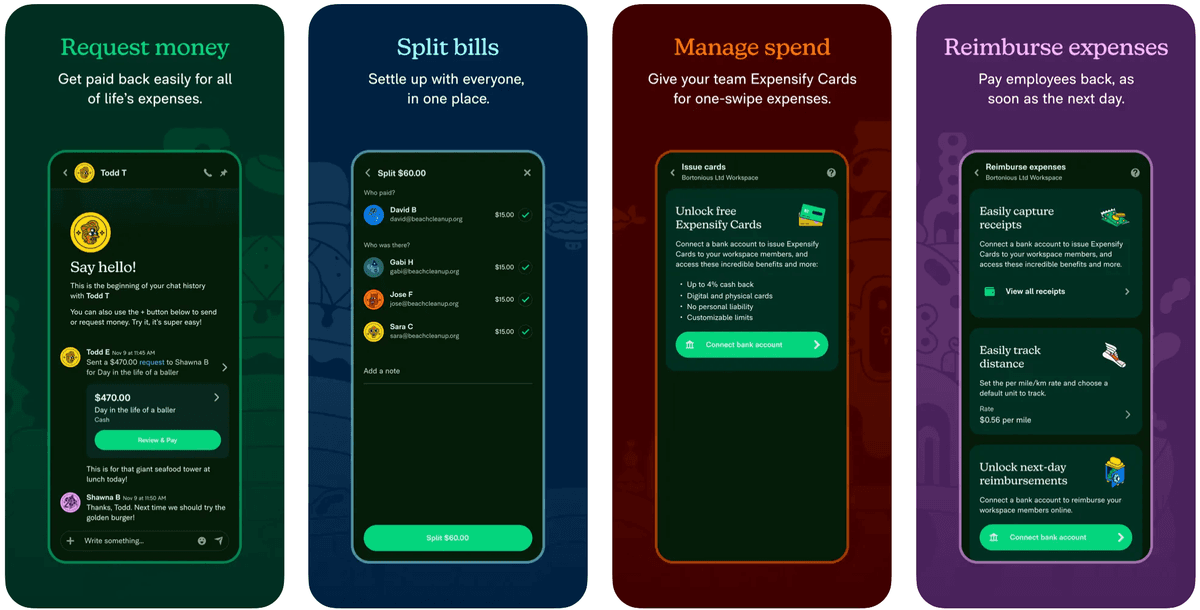
Top Rated on Upwork with public client reviews and $100K+ earned, plus contributions to Expensify. Check the receipts before you commit.
Yes, if it is architected that way from the start — which is why I build logistics apps offline-first, with a local database as the source of truth and sync as a background process. Drivers can complete stops, capture proof of delivery, and scan inventory with zero connectivity; everything queues and reconciles when coverage returns. What can't be retrofitted cheaply is bolting offline onto an app built assuming a connection, so ask this question before the build, not after.
Can you integrate with our existing TMS, ERP, or telematics system?
Yes — most logistics engagements are integrations, not islands. I've spent 7+ years building against third-party and in-house APIs, and the practical constraint is usually the quality of your existing system's interface: modern APIs integrate quickly, while legacy systems sometimes need a small middleware layer, which I build in Python. During scoping I review your systems' documentation and tell you honestly which integrations are cheap, which are expensive, and which are worth deferring.
How long until our drivers are actually using it?
Plan for three to five months to full rollout: several weeks of core build, integration work, then a deliberate pilot with a small cohort of real drivers before fleet-wide release. The pilot is non-negotiable in my process — it is where battery, sync, and usability problems surface while they are still cheap to fix. Vendors promising fleet-wide deployment straight from acceptance testing are moving risk from their schedule onto your operation.
How much does logistics app development typically cost?
Projects typically fall in the $35K–$150K range depending on scope, integrations, and timeline. I provide a fixed-scope proposal after a 30-minute scoping call.
How long does a logistics app development project take?
MVPs often ship in 8–12 weeks. Production systems with AI backends or RAG may run 12–20 weeks. Rescue and audit engagements can start within days.
Do you work with startups and enterprises?
Yes. I work with founders, CTOs, product teams, and agencies worldwide — US, UK, EU, and APAC time zones with async updates and weekly demos.
Can you own mobile and backend together?
Yes. I specialize in React Native + Python (FastAPI) + AI (RAG, agents, OpenAI/Claude) under one senior owner — fewer handoffs, faster shipping.
How do I get started?
Book a free 30-minute scoping call on this site, hire through Upwork, or email dhairyasenjaliya@gmail.com with your brief and timeline.