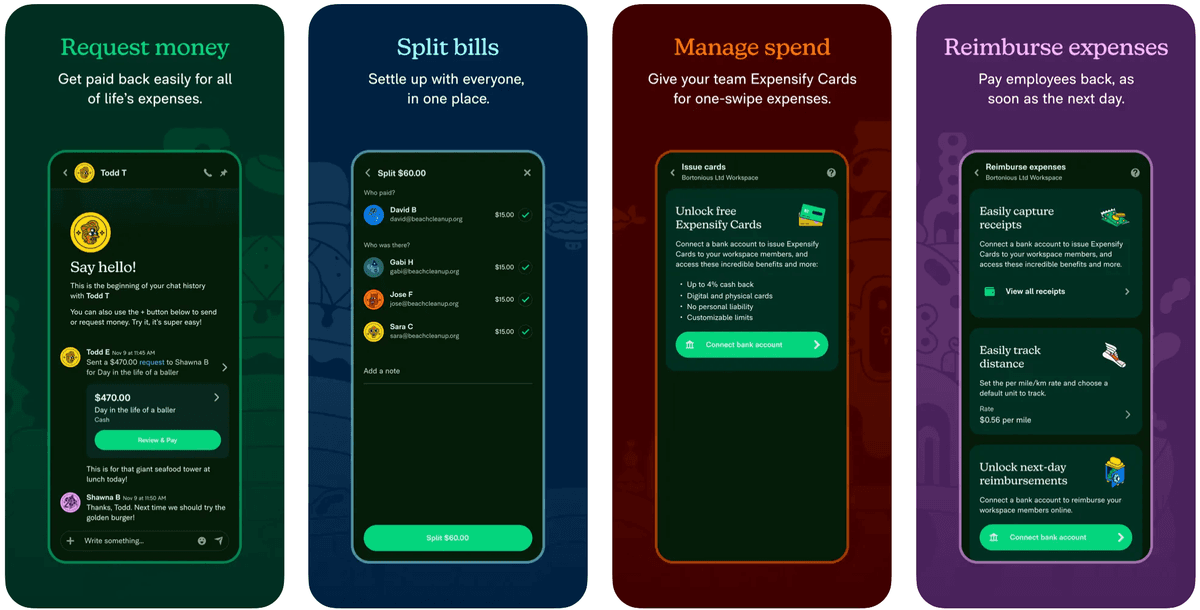
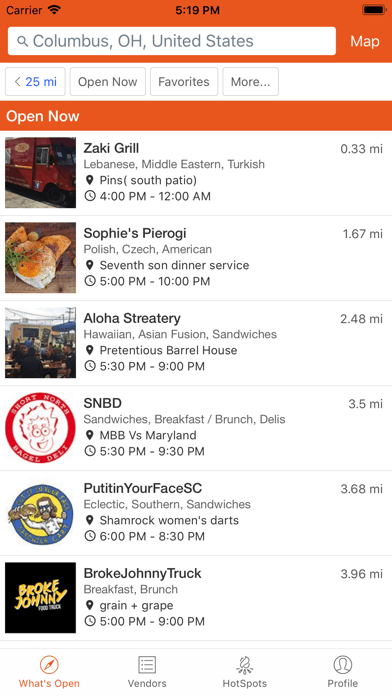
You can hire me to build your iOS and Android app from one React Native codebase — design implementation, backend integration, beta testing, and submission to both stores — with full builds typically running $25K–$150K depending on feature depth, backend scope, and offline requirements. I've shipped 20+ App Store launches, built apps used by millions of users, worked as a Guest Engineer at Expensify, and bring 7+ years of production delivery. A typical project reaches TestFlight within the first month and both stores in ten to twenty weeks, with the beta period treated as a real phase rather than a checkbox.
Building for iOS and Android no longer means two teams and two budgets — one well-built React Native codebase serves both stores with genuinely native feel, which is why companies from startups to Meta and Shopify ship this way. What separates apps that launch and grow from apps that launch and stall is rarely the framework: it's scope discipline, a real beta, and treating the stores' review and ranking systems as part of the engineering problem.
Weekly demos, async Slack updates, production standards.
04
Ship
Store launch, documentation, knowledge transfer.
Engagements this covers
First app for a funded startup
A founder has validated demand and needs a real product in both stores. I run the full arc: scope-cutting workshop first (the kindest thing anyone does for a v1), then design implementation, backend integration, analytics and crash reporting from day one, a structured beta, and both store submissions. Outcome: a launched app with the instrumentation to learn from its first thousand users.
Mobile app for an existing web product
A SaaS or marketplace has a web product whose users keep asking for an app. I build the mobile experience against the existing API — rethinking flows for touch and interruption rather than shrinking web pages — with push notifications and offline reading where they earn their place. Outcome: a companion app that raises retention instead of merely existing in the stores.
Replacing an underperforming app
An existing app — often agency-built years ago — has poor ratings, crashes, and a codebase nobody wants to touch. I audit whether to rescue or rebuild, then execute either path with a migration plan that preserves users, accounts, and store history. Outcome: crash rates and review scores that stop undermining the business, on a codebase a normal team can maintain.
What the engagement looks like phase by phase
The first two weeks are scope and foundations: cutting the feature list to a real v1 — the highest-leverage work of the whole project — then setting up the codebase, CI, build pipeline, and app store accounts, because store setup surprises (enrollment delays, entity verification) are free to absorb in week one and expensive in week twelve. TestFlight and Play internal builds start early and never stop.
The middle phase, roughly weeks three through ten, is feature delivery in weekly visible increments against real devices. The final phase is the one inexperienced teams skip: a structured beta with real users, crash and analytics data feeding fixes, performance passes on startup time and scroll smoothness, store asset preparation, and submission to both stores — including the review-feedback rounds I've handled across 20+ launches. Launch is not the end of the engagement; the first two post-launch weeks of monitoring and rapid fixes are in scope, because that's when reality files its bug reports.
What drives cost inside $25K–$150K
Backend scope is the largest and least-visible driver: an app against your existing, documented API sits at the bottom of the range, while an app whose backend must be designed and built alongside it can double the budget — which is why my quotes separate the two lines explicitly. Offline-and-sync is the second driver: an app that must work without connectivity and reconcile conflicting edits later is a different architecture, not a feature toggle.
After those come the predictable increments: payments and subscriptions (store billing rules included), real-time features like chat or live tracking, native integrations (camera pipelines, Bluetooth, health data), multi-language support, and accessibility depth. Design maturity matters too — implementing finished designs is cheaper than discovering the product screen by screen. What should not drive cost: screen count as a headline number, and platform count — the second platform is nearly free with React Native, which is much of the point.
Mistakes companies make hiring app developers
The most common is specifying by screenshots — 'make it like this app' — without deciding the underlying product behavior, so decisions surface mid-build at engineering rates. The second is choosing purely on price: app development quotes range wildly, and the cheap quote usually externalizes its true cost into the months after launch — crashes, unmaintainable code, and a rebuild that erases the savings. I've audited enough inherited codebases to say this pattern is near-universal.
Third: skipping the beta to hit a date, which means your first thousand real users are your QA team and your early reviews record the experience. Store ratings compound; a 3.2-star launch haunts acquisition for a year. Fourth: no analytics or crash reporting at launch, leaving you blind exactly when learning matters most. Fifth: not securing ownership — app store accounts, code repositories, and signing credentials should be in your name from day one, no exceptions, no matter who builds it.
How to evaluate any app developer
Start with shipped apps, not portfolios: names you can download from the store right now, and what role the developer actually played in them. Then ask process questions that reveal operational experience. How do they handle a store rejection — anyone with real launches has stories and a playbook. What happens in the first week after launch — the right answer involves crash monitoring, a hotfix path, and someone watching the dashboards, not 'the project is delivered.'
Ask what they would cut from your feature list; senior builders shrink v1 scopes on instinct, and a contractor who accepts your entire wishlist without pushback is optimizing for contract size over your launch. Ask who owns the accounts, code, and signing keys — the only correct answer is you, from day one. Finally, gauge communication in the sales process itself: the responsiveness and clarity you see before signing is the best sample you'll ever get of what the engagement will feel like.
What launch-ready actually means
An app is launch-ready when it survives contact with real conditions, not when its features are done. Concretely: crash-free rate above 99.5% across the device spread your beta revealed; cold start fast enough that users don't see a blank stare; graceful behavior on bad networks, denied permissions, and interrupted flows; and analytics answering the questions you'll ask in week two — where users drop off, what they actually use.
It also means the store layer is done properly: screenshots and descriptions that convert, privacy declarations that pass review, metadata aligned with how people actually search, and a demo account that gets your reviewer through the app without a rejection. And it means operational readiness — a hotfix path measured in hours, dashboards someone is watching, and version-update strategy for the installed base. Feature-complete apps that fail these checks launch anyway all the time; their ratings record the decision permanently.
When you should not build an app
If your product has no validated demand yet, the app stores are an expensive place to find that out — a landing page, a concierge test, or a web MVP will answer the demand question for a tenth of this budget, and the app you eventually build will be better for what you learned. If your use case is occasional — something people need a few times a year — the install-an-app ask exceeds the value, and mobile web wins.
If the experience is content and forms with no device capabilities — no push, no camera, no offline, no location — a responsive web app delivers it without surrendering 15–30% of revenue to store fees or waiting on review cycles. The app is the right call when you need what only apps have: home-screen presence, push re-engagement, device hardware, offline reliability, or store discovery in a category people actually browse. Roughly a fifth of the app inquiries I get should be websites first, and I say so in the first call.
Low-risk to start
✓Fixed-scope proposal first
You approve milestones and a price before any build starts — no open-ended hourly surprises.
✓Working demos every week
You see running software each week, not status reports, so you can course-correct early.
✓One senior owner, no hand-offs
The person who scopes the work is the person who builds it — no junior layers, no agency markup.
✓A track record you can verify
Top Rated on Upwork with public client reviews and $100K+ earned, plus contributions to Expensify. Check the receipts before you commit.
How much does it cost to build an iOS and Android app?
With one React Native codebase serving both platforms, production apps typically run $25K–$150K. An app against an existing backend with a focused feature set lands at $25K–$50K. Building the backend alongside the app, offline-first sync, payments, or real-time features push into the middle and upper range. The second platform adds almost nothing — the real cost drivers are backend scope and offline requirements, not iOS-versus-Android.
How long does it take to build and launch a mobile app?
Ten to twenty weeks from kickoff to availability in both stores for most products. Expect a TestFlight build in the first month, weekly visible progress through the middle phase, a two-to-three-week structured beta, and one to two weeks for store review including possible rejection rounds. Compressed timelines are possible by cutting scope — never by cutting the beta, which is the phase that protects your launch ratings.
Should I build iOS first or launch on both platforms at once?
With React Native, both-at-once is usually the right call because the marginal cost of the second platform is small — the codebase is shared and only store setup and device testing differ. Launch iOS-first when your beta audience is concentrated there or you want one review process during a fragile launch window. What you shouldn't do is pay double for two native codebases to achieve what one shared codebase delivers.
How much does ios android app developer typically cost?
Projects typically fall in the $25K–$150K range depending on scope, integrations, and timeline. I provide a fixed-scope proposal after a 30-minute scoping call.
How long does a ios android app developer project take?
MVPs often ship in 8–12 weeks. Production systems with AI backends or RAG may run 12–20 weeks. Rescue and audit engagements can start within days.
Do you work with startups and enterprises?
Yes. I work with founders, CTOs, product teams, and agencies worldwide — US, UK, EU, and APAC time zones with async updates and weekly demos.
Can you own mobile and backend together?
Yes. I specialize in React Native + Python (FastAPI) + AI (RAG, agents, OpenAI/Claude) under one senior owner — fewer handoffs, faster shipping.
How do I get started?
Book a free 30-minute scoping call on this site, hire through Upwork, or email dhairyasenjaliya@gmail.com with your brief and timeline.