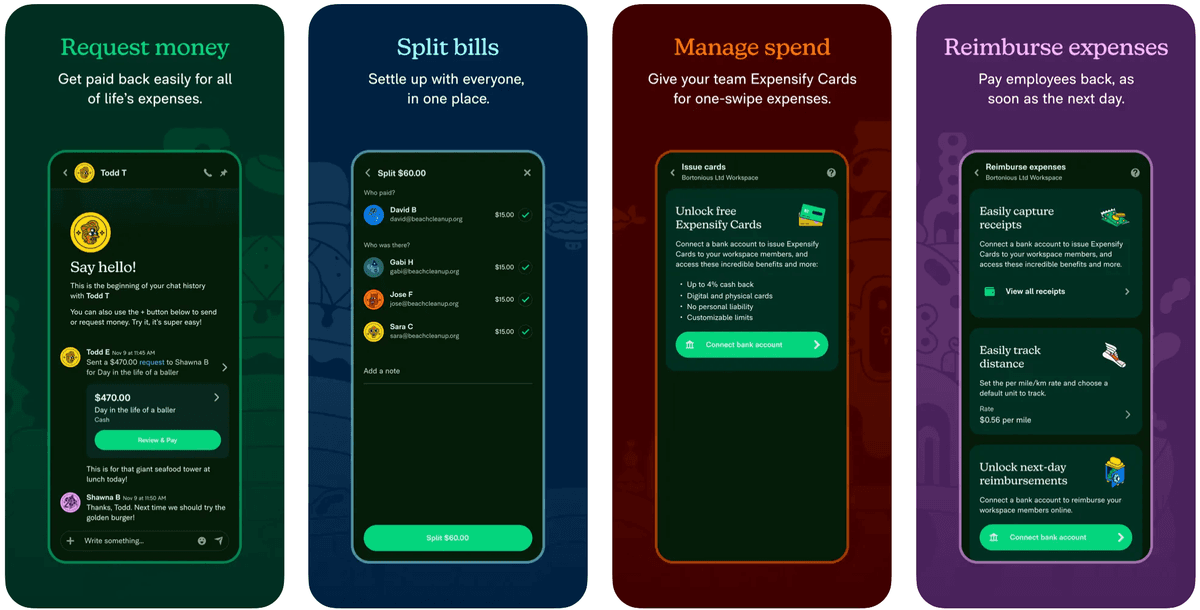
Healthcare app development with me typically runs $50K–$200K, depending on regulatory scope, integrations, and whether you launch on one platform or both. I bring 7+ years of production delivery and 20+ App Store launches, including time as a Guest Engineer at Expensify — an expense platform used by millions. If you want independent verification, I'm Top Rated on Upwork with $100K+ earned and verified client reviews, though that's just one channel; most healthcare engagements come to me as direct contracts. Hiring starts with a scoping conversation that maps your features against compliance requirements, followed by a written proposal with a fixed phase plan.
Healthcare software fails differently from other software: a crashed screen can mean a missed medication dose or a clinician locked out of a chart. This page covers how I build patient-facing and clinician-facing apps, what actually drives cost, and how to evaluate anyone you consider hiring for this work — including me.
Weekly demos, async Slack updates, production standards.
04
Ship
Store launch, documentation, knowledge transfer.
Engagements this covers
Telehealth companion for a multi-location clinic group
A clinic network wanted patients to book visits, join video consults, and receive aftercare instructions without phoning the front desk. I built a React Native app with role-based access, integrated their existing scheduling backend, and selected video and messaging vendors that would sign BAAs. Both store launches shipped on schedule, and booking traffic moved steadily from phone lines into the app.
Digital therapeutics MVP under an investor deadline
A funded startup with clinical advisors needed a medication-adherence app ready before a funding milestone. I designed encrypted local storage, explicit consent flows, and an analytics setup that never touches identifiable health data, then handled both store reviews. The team walked into their investor meeting with a live, downloadable product instead of a prototype video.
Rescuing a patient portal after repeated App Review rejections
An agency-built patient app had been rejected by Apple twice and crashed for a measurable share of Android users. I audited the codebase, replaced a fragile WebView shell with native navigation, fixed the privacy disclosures that triggered the rejections, and set up crash reporting that excludes health data. The resubmission passed, and the crash rate dropped to normal levels.
How a healthcare engagement runs, week by week
Weeks one and two are discovery and compliance mapping. We identify exactly which data counts as protected health information, which third-party services will touch it, who needs to sign a business associate agreement, and what the consent model looks like. You get a data-flow diagram before any code exists — it becomes the artifact your compliance officer, and later auditors, actually use.
Weeks three through ten are the core build, shipped in weekly demo increments so clinicians and stakeholders react to real screens, not mockups. Authentication, audit logging, and encryption go in first, not last, because retrofitting them is where healthcare projects blow their budgets. The final two to four weeks cover store submission — healthcare apps get extra review scrutiny — plus penetration-test remediation if you run one, documentation, and handover. A typical scope lands between twelve and twenty weeks; EHR integration or both-platform launches extend that.
What moves the price inside $50K–$200K
The lower end of the range covers a single-platform app with a defined feature set, no EHR integration, and a backend that already exists — think a patient companion app for an established clinic. The upper end covers both platforms, custom backend work, and integrations with electronic health records via FHIR, video infrastructure, or pharmacy systems.
The biggest cost drivers, in order: EHR integration (Epic and Cerner integrations each behave differently, and sandbox access alone takes weeks to arrange), offline requirements (clinicians in low-connectivity settings need sync logic that is genuinely hard), the number of user roles (patient, clinician, and admin each multiply screens and permission logic), and compliance depth (HIPAA technical safeguards are the baseline; adding GDPR, regional health-data laws, or a formal security audit adds weeks). Video visits, e-prescribing, and wearable-device data each add meaningful scope. I quote in phases so you can cut or defer any of these consciously.
Red flags when buying healthcare app development
The loudest red flag is any vendor claiming they will make your app "HIPAA certified." No such certification exists — HIPAA compliance is a property of your organization and its processes, not a stamp on an app. A vendor who says this either doesn't understand the regulation or is hoping you don't.
Other warning signs: no mention of business associate agreements when discussing third-party services like analytics, push notifications, or crash reporting — each of those can leak health data if configured naively. A portfolio with zero shipped healthcare apps in the stores. No questions about your consent model or data retention. Proposals that treat audit logging as a nice-to-have. And pricing far below this range for equivalent scope — it usually means the compliance work is simply not being done, and you'll pay for it during your first security review or, worse, your first breach.
How to evaluate any vendor for this work — not just me
Ask to see healthcare apps they've shipped, then actually download them. Check crash behavior, sign-up flow quality, and whether the privacy disclosures in the store listing look competent — sloppy disclosures predict sloppy data handling.
Then ask three technical questions and listen for specifics. First: how do you keep protected health information out of crash logs and analytics? A real answer names tools and scrubbing strategies. Second: which of your third-party vendors sign BAAs, and what do you do when one won't? Third: what does your audit logging capture, and where does it live? Vendors who answer fluently have done this before; vendors who redirect to their project manager have not. Finally, talk to a past client — not about whether they liked the vendor, but about what broke after launch and how fast it was fixed. Post-launch behavior is where healthcare vendors differentiate.
What good delivery looks like
At the end of a good engagement you own everything: the code sits in your repository, the apps are published under your developer accounts, and the third-party services are contracted in your name with BAAs on file. There is a data-flow diagram that matches reality, a runbook for incidents, and documentation a future hire can onboard from without calling me.
On the product side: both apps pass store review without drama because the privacy questionnaire answers were designed in, not reverse-engineered. Crash reporting is live and scrubbed of health data. Audit logs answer "who saw what, when." Sessions time out sensibly, biometric login works, and the app behaves correctly when a token expires mid-visit. None of this is exotic — it's the baseline for software that touches health data, and if a vendor treats any of it as an upsell, that tells you something.
When you should not hire me for this
If your product is software as a medical device — diagnosis, dosing calculations, or anything heading for FDA Class II or III clearance — you need a team running a formal IEC 62304 development process with regulatory specialists, not a senior independent engineer. I'll say so in the first call and can help you scope what to look for instead.
You should also hold off if your budget is meaningfully below $50K: the honest move is to narrow scope until it fits, not to hire someone who claims full scope at half price. And if you haven't yet validated that clinicians or patients want this workflow, spend a fraction of this budget on prototypes and interviews first. Healthcare apps are expensive precisely because cutting corners isn't an option — make sure the idea deserves the spend before you commit to it.
Low-risk to start
✓Fixed-scope proposal first
You approve milestones and a price before any build starts — no open-ended hourly surprises.
✓Working demos every week
You see running software each week, not status reports, so you can course-correct early.
✓One senior owner, no hand-offs
The person who scopes the work is the person who builds it — no junior layers, no agency markup.
✓A track record you can verify
Top Rated on Upwork with public client reviews and $100K+ earned, plus contributions to Expensify. Check the receipts before you commit.
I can build the technical safeguards HIPAA requires — encryption at rest and in transit, role-based access control, audit logging, automatic session timeouts — and select vendors that sign business associate agreements. But compliance is organizational: your policies, training, and agreements matter as much as the code. I work alongside your compliance officer or recommend one; I won't pretend an app alone makes you compliant, and you should distrust anyone who does.
Do you integrate with EHR systems like Epic or Cerner?
Yes, where the health system exposes FHIR APIs — that's now the common path for patient-facing integration. The practical constraint is access: getting sandbox credentials and production approval from a health system often takes longer than building the integration itself. I scope EHR work as its own phase with the access timeline stated explicitly, so it can't silently stall the rest of the build.
How long does a healthcare app take to launch?
Twelve to twenty weeks is typical for a first release: two for compliance mapping and architecture, eight to twelve for the build, and the remainder for store review, security fixes, and handover. EHR integration, both-platform launches, or a formal penetration test extend that. I won't quote six weeks for this category — vendors who do are deferring the compliance work, and it resurfaces later at a much higher price.
How much does healthcare app development typically cost?
Projects typically fall in the $50K–$200K range depending on scope, integrations, and timeline. I provide a fixed-scope proposal after a 30-minute scoping call.
How long does a healthcare app development project take?
MVPs often ship in 8–12 weeks. Production systems with AI backends or RAG may run 12–20 weeks. Rescue and audit engagements can start within days.
Do you work with startups and enterprises?
Yes. I work with founders, CTOs, product teams, and agencies worldwide — US, UK, EU, and APAC time zones with async updates and weekly demos.
Can you own mobile and backend together?
Yes. I specialize in React Native + Python (FastAPI) + AI (RAG, agents, OpenAI/Claude) under one senior owner — fewer handoffs, faster shipping.
How do I get started?
Book a free 30-minute scoping call on this site, hire through Upwork, or email dhairyasenjaliya@gmail.com with your brief and timeline.