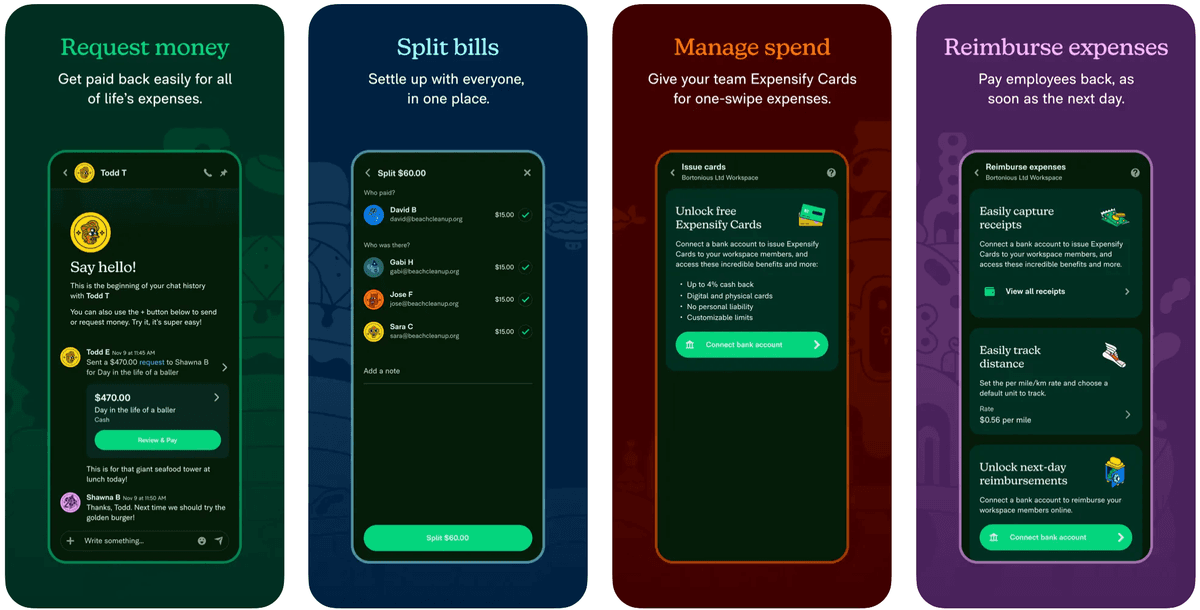
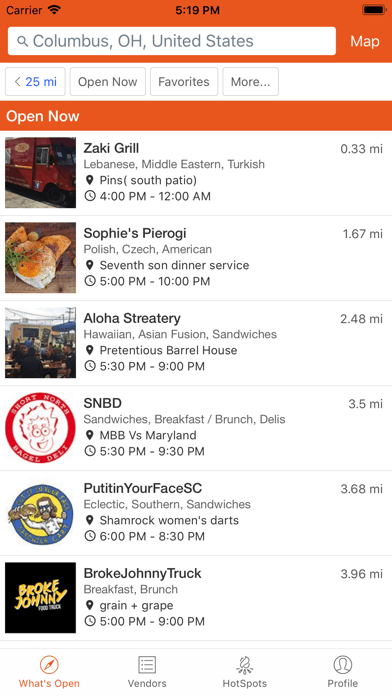
Hiring me as a full stack mobile developer runs $35K–$180K: the low end covers one app plus the backend that powers it, and the high end covers a complete product — iOS and Android apps, API, admin tooling — built and launched as one system. I have 20+ App Store launches, experience as a Guest Engineer at Expensify, and my apps have been used by millions of users. One engineer owning both the app and its API means the contract between them is designed once, correctly, instead of negotiated across two contractors' Slack channels.
Mobile products die at the seam between the app and its API — version mismatches, breaking changes shipped to clients that can't hot-fix, offline states nobody designed for. Hiring one senior engineer who owns both sides eliminates the seam, which is where most of the schedule and most of the bugs actually live.
Weekly demos, async Slack updates, production standards.
04
Ship
Store launch, documentation, knowledge transfer.
Engagements this covers
App and API built together from scratch
A funded team needs a marketplace or booking product: mobile app, backend, payments, push notifications, and store launches. I design the API contract first, then build both sides against it in parallel with TestFlight builds from the early weeks. The outcome is a launched app on both stores with a backend that was designed for it, not bolted underneath it.
Purpose-built backend for an app outgrowing BaaS
An app built on a backend-as-a-service is hitting its walls — query limits, pricing cliffs, logic that can't be expressed. I design a purpose-built API, migrate data and auth without a user-visible cutover, and move the app over screen by screen behind flags. The outcome shape: the same app, a backend the business owns, and no downtime story to apologize for.
Companion app for an existing web product
A SaaS team wants a mobile app but their web stack and API weren't built for mobile clients. I extend the API where mobile needs it — auth flows, pagination, push — and build the app with offline behavior that respects how people use phones. The outcome is a store-launched companion app that shares one backend truth with the web product.
Why the app-API seam is where projects die
A web frontend can be redeployed the moment the backend changes; a mobile app cannot. Every version you've ever shipped is still running on someone's phone, which means API changes must be backward compatible for months, breaking changes need versioning and forced-upgrade mechanics, and offline behavior has to be designed rather than discovered.
When the app and the backend are built by different people, this discipline lives in the gap between them — which is to say, nowhere. The bugs that follow are the worst kind: only on old versions, only offline, only after resume. Having one engineer own both sides isn't a staffing convenience; it's the structural fix for that entire bug class.
How I run the engagement week by week
The first week produces the API contract — every endpoint the app needs, typed and documented — plus the data model and a milestone plan. Contract-first matters because it lets backend and app work proceed in parallel against a shared source of truth instead of blocking each other.
From weeks three or four onward you get TestFlight builds on your own phone every week or two, each backed by deployed backend changes — you're evaluating working product, not screenshots. The final milestones cover the unglamorous launch layer people forget to budget: store assets and review compliance, crash reporting, analytics, push certificates, and the forced-upgrade mechanism you'll be very glad exists eighteen months from now.
What drives cost within $35K–$180K
Offline sync is the single most underestimated line item. An app that reads and writes cleanly while offline and reconciles conflicts on reconnect is a different engineering project than an online-only app — often adding a third or more to app-side effort. Payments and subscriptions are next: store billing rules, receipt validation, webhooks, and refund handling touch both sides of the stack.
Real-time features like chat and live updates add persistent connection infrastructure. Admin tooling — the web dashboard your ops team will run the business from — is a small product of its own. One app, one backend, online-only with straightforward auth is the $35K–$60K zone; add offline, payments, real-time, and admin, and you're describing the top half.
How to evaluate a full stack mobile candidate
Start with shipped apps — actual store listings they can point to, not portfolio screenshots. Then ask the question that separates mobile-experienced backend developers from the real thing: 'How do you change an API when old app versions will keep calling the old one for a year?' Anyone who has lived through mobile release cycles answers with versioning strategy, deprecation windows, and forced-upgrade mechanics.
Follow with release management: ask them to walk through a store rejection they've handled and how they triage a crash spike after a release. Mobile has operational rhythms — review queues, phased rollouts, crash-free-rate monitoring — that only show up in people who've shipped and then kept shipping.
When to hire specialists instead
If the core of your product is deep native work — augmented reality, on-device ML, real-time audio processing, Bluetooth hardware integration — hire platform specialists for that core; a full stack generalist will deliver a compromised version of the hard part, and the hard part is your product. The full-stack shape also stops fitting once you have a real engineering team: past a handful of engineers, you want dedicated mobile and backend owners with depth.
The honest scope for this hire is the stretch from zero to a launched, revenue-earning product with its first few thousand users — which is exactly the stretch where most products live or die, and where paying for two coordinated specialists buys you mostly coordination overhead.
Low-risk to start
✓Fixed-scope proposal first
You approve milestones and a price before any build starts — no open-ended hourly surprises.
✓Working demos every week
You see running software each week, not status reports, so you can course-correct early.
✓One senior owner, no hand-offs
The person who scopes the work is the person who builds it — no junior layers, no agency markup.
✓A track record you can verify
Top Rated on Upwork with public client reviews and $100K+ earned, plus contributions to Expensify. Check the receipts before you commit.
How much does it cost to build a mobile app with its own backend?
With one senior engineer owning both sides, expect $35K–$180K. A single app with a straightforward API and auth runs $35K–$60K. Offline sync, in-app payments and subscriptions, real-time features like chat, an admin dashboard, and launching on both stores each add materially, with fully-loaded products reaching $180K. Two separate contractors quote lower per person but the integration overhead between them routinely erases the difference.
Is hiring one developer for both app and backend risky?
The honest risk is bus factor: one person holds the context. I mitigate it structurally — the repository is yours from day one, the API contract and architecture decisions are written documents, and handover with documentation is part of every engagement, so your future hires inherit a map rather than a mystery. What you get for accepting that managed risk is the elimination of the app-API seam, where most two-contractor projects lose their schedule.
How long does it take to launch an app and backend together?
Ten to twenty weeks for most products. The first week fixes the API contract so both sides build in parallel; TestFlight builds start around week three or four and continue every week or two. A focused product — one app, clean scope, no offline or payments — can reach store submission near week ten. Offline sync, subscriptions, and both stores push toward twenty. Store review itself typically adds only days, but budget a buffer for a rejection round.
How much does full stack mobile developer typically cost?
Projects typically fall in the $35K–$180K range depending on scope, integrations, and timeline. I provide a fixed-scope proposal after a 30-minute scoping call.
How long does a full stack mobile developer project take?
MVPs often ship in 8–12 weeks. Production systems with AI backends or RAG may run 12–20 weeks. Rescue and audit engagements can start within days.
Do you work with startups and enterprises?
Yes. I work with founders, CTOs, product teams, and agencies worldwide — US, UK, EU, and APAC time zones with async updates and weekly demos.
Can you own mobile and backend together?
Yes. I specialize in React Native + Python (FastAPI) + AI (RAG, agents, OpenAI/Claude) under one senior owner — fewer handoffs, faster shipping.
How do I get started?
Book a free 30-minute scoping call on this site, hire through Upwork, or email dhairyasenjaliya@gmail.com with your brief and timeline.