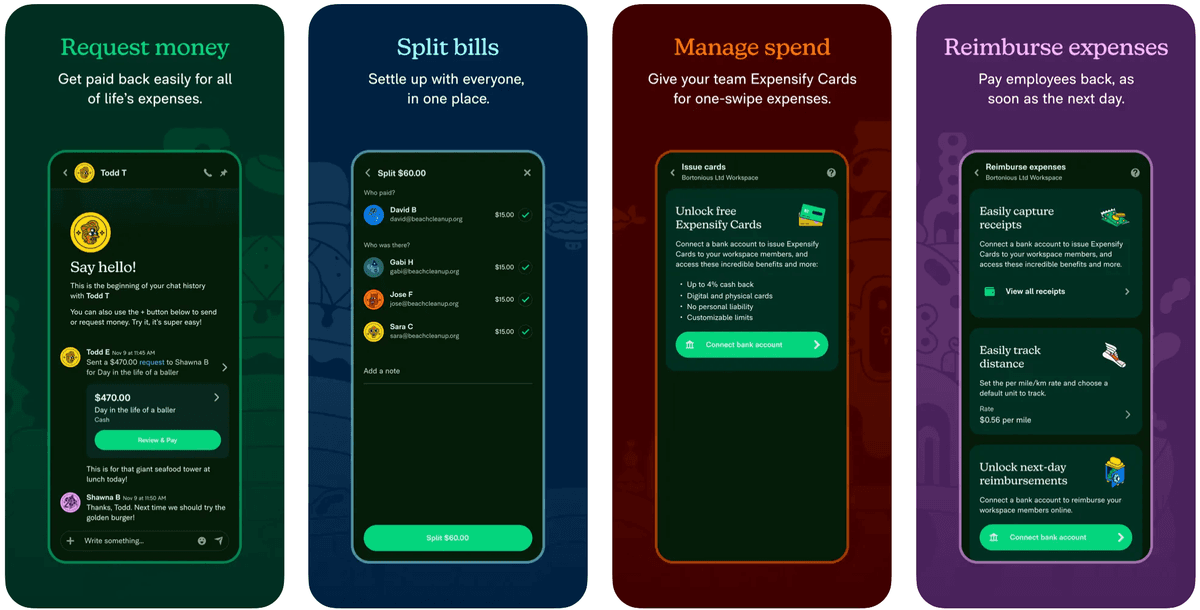
I work as a technical advisor to non-technical and semi-technical founders for $5K–$25K: the low end covers an intensive engagement around one decision — a tech-stack call, a technical co-founder search, an agency proposal review — and the high end covers six to twelve months of fractional advisory through an MVP build and launch. I've shipped 20+ App Store launches across 7+ years, worked as a Guest Engineer at Expensify on software used by millions, and earned Top Rated status on Upwork with $100K+ and verified reviews — so the advice comes from someone who still builds, not someone who stopped. The job is simple: you stop making six-figure technical decisions alone.
Non-technical founders lose money in predictable places: agency proposals they can't evaluate, developers they can't vet, scope they can't push back on, and architectures chosen by whoever they happened to hire first. An advisor closes that information gap for a fraction of what the gap costs. This works when the advisor is independent — paid for judgment, with no stake in selling you the build.
Weekly demos, async Slack updates, production standards.
04
Ship
Store launch, documentation, knowledge transfer.
Engagements this covers
Pre-build sanity check
A founder has designs, some savings or a pre-seed check, and three wildly different agency quotes. I review the product scope, cut it to a genuine MVP, define the stack and milestones, and rewrite the brief so vendors bid on the same thing. The founder typically spends meaningfully less than the original quotes — and knows what they're buying.
Ongoing advisory through an MVP build
A founder has hired a dev shop or freelancers and needs someone on their side of the table. I review milestones and code quality, join the key calls, translate vendor-speak into decisions, and flag padding or drift early — a few hours a month, structured. The build stays on rails, and the founder learns to run technical vendors themselves.
Technical diligence and hiring help
A founder is choosing a technical co-founder, a first engineering hire, or an acquisition of someone else's codebase. I run the technical evaluation — interviews, code review, architecture assessment — and deliver a plain-language read on strengths, risks, and fair terms. The founder makes a people-and-code decision with actual information instead of charisma.
What a founder advisory engagement looks like
The single-decision engagement ($5K–$8K) runs two to three weeks: I get deep on your product and constraints, do the specific work — dissect the agency proposal line by line, design the MVP scope, interview the co-founder candidate — and deliver a written recommendation you can act on and reread. Founders reread these documents for months; that's deliberate.
The ongoing engagement ($1.5K–$2.5K monthly, usually six to twelve months) is fractional: a standing call, async access for the week's technical questions, review of vendor deliverables and milestones, and presence in the meetings where being alone is expensive — vendor negotiations, investor technical questions, hiring decisions. Between calls I'm reading the pull requests and builds your vendor ships, which is what turns advice from plausible to grounded. Every engagement has a stated goal — usually 'launch the MVP without a six-figure mistake' — and a planned end, because a good advisor works toward your independence, not your dependence.
Where founders lose money without advice
The losses cluster in five places, and I've seen each many times. Overscoped MVPs: building twelve features to validate one hypothesis, doubling cost and halving learning speed. Unvettable vendors: agencies chosen on portfolio polish, discovered to be subcontracting to juniors only after the milestones slip. Contract asymmetry: paying 50% upfront for code that lives in the vendor's repo, with no IP assignment and no handoff clause — a hostage situation signed voluntarily.
Wrong-stack lock-in: exotic technology chosen by the first developer, making every subsequent hire harder and pricier. And the quiet one: not knowing what's normal — whether three months is a reasonable timeline, whether $60K is a fair price, whether 'we need two more sprints' is truth or drift. None of these require a founder to learn to code. They require someone in your corner who has run these projects and has no financial interest in the answer. That gap between what vendors know and what founders know is precisely what this service prices against.
Why independence is the entire product
The structural problem with most technical advice available to founders: it comes from people selling the next step. The agency's free consultation concludes you need the agency. The freelancer's assessment concludes you need the freelancer. Even well-meaning developer friends anchor on the stack they happen to know. Advice bundled with delivery is a sales channel wearing advice's clothes.
My advisory engagements are structured to stay clean: when I advise, I'm not bidding on the build, and if you later want me to build something, that's a separate conversation you initiate — stated upfront in writing. This matters practically, not just ethically: the most valuable calls I make as an advisor are 'this quote is fair, take it,' 'you don't need an app yet, validate with a landing page,' and 'your vendor is doing fine, leave them alone.' An advisor with a stake in the outcome can't say those sentences profitably. One who's paid only for judgment says them all the time.
How to choose a technical advisor
Filter first on recency of shipping: advice from someone who hasn't built in five years is confidently outdated, because costs, tooling, and what a small team can do have all shifted — especially post-AI. Ask what they've shipped lately and verify it exists. Filter second on communication: have them explain a technical trade-off from your own project; if you understand it fully and could repeat it to an investor, that's the skill — an advisor you only half-understand is overhead, not leverage.
Filter third on incentive structure, per the section above: ask directly whether they or their firm would bid on your build. Then check for range. Founder questions jump from mobile stacks to hosting bills to hiring to AI features in one call; a narrow specialist will silently steer you toward their specialty. Finally, expect pushback in the first conversation. An advisor who agrees with everything you've already decided is either not listening or not needed — you're buying the disagreements.
When you don't need an advisor
If you have a genuinely technical co-founder who has shipped production software, you're covered — spend the money on the product, and use spot advice only for domains outside their experience. If you're pre-idea-validation, your risk is demand, not technology: talk to fifty potential customers before paying anyone to discuss architecture, including me. And if your build is truly small — a landing page, a simple no-code workflow — the tooling has gotten good enough that advisory overhead outweighs the decision risk.
The service earns its fee in a specific corridor: real money about to be spent (an MVP build, a first hire, an agency contract), no senior technical judgment on your side of the table, and decisions that are expensive to reverse. In that corridor, $5K–$25K of advice regularly redirects sums many times larger. Outside it, I'll say you don't need me — which is, not coincidentally, the kind of sentence you're paying an independent advisor to be able to say.
Low-risk to start
✓Fixed-scope proposal first
You approve milestones and a price before any build starts — no open-ended hourly surprises.
✓Working demos every week
You see running software each week, not status reports, so you can course-correct early.
✓One senior owner, no hand-offs
The person who scopes the work is the person who builds it — no junior layers, no agency markup.
✓A track record you can verify
Top Rated on Upwork with public client reviews and $100K+ earned, plus contributions to Expensify. Check the receipts before you commit.
How much does a technical advisor cost for a startup founder?
Fractional technical advisory for founders typically runs $1.5K–$2.5K per month for a structured few-hours-a-week arrangement, or $5K–$8K for an intensive engagement around a single decision like an agency selection or MVP scoping. A six-to-twelve-month advisory through an MVP build totals $10K–$25K. Compare that to the stakes: the median mistakes it prevents — overscoped builds, bad vendor contracts, wrong hires — each cost several times the annual fee.
Do I need a technical co-founder or is an advisor enough?
For getting an MVP built and launched with vendors or freelancers, an advisor plus good contractors is often enough — and far faster than a co-founder search. A technical co-founder becomes necessary when technology is your durable moat, when investors require one, or when the product needs constant in-house iteration. Many founders use an advisor to survive the MVP stage, then recruit the co-founder from a position of traction rather than desperation.
How do I know if my development agency is overcharging me?
Warning signs: quotes that won't break down into milestones, estimates that grow after signing, 'senior team' pitches followed by junior output, and resistance to putting code in your repository as it's written. Calibration points: a well-scoped MVP is usually a $30K–$80K project, not $200K; two-week milestones with demoable output are normal; 50% upfront with no IP assignment is not. An independent review of one proposal typically costs under $5K and settles the question.
How much does founder technical advisor typically cost?
Projects typically fall in the $5K–$25K range depending on scope, integrations, and timeline. I provide a fixed-scope proposal after a 30-minute scoping call.
How long does a founder technical advisor project take?
MVPs often ship in 8–12 weeks. Production systems with AI backends or RAG may run 12–20 weeks. Rescue and audit engagements can start within days.
Do you work with startups and enterprises?
Yes. I work with founders, CTOs, product teams, and agencies worldwide — US, UK, EU, and APAC time zones with async updates and weekly demos.
Can you own mobile and backend together?
Yes. I specialize in React Native + Python (FastAPI) + AI (RAG, agents, OpenAI/Claude) under one senior owner — fewer handoffs, faster shipping.
How do I get started?
Book a free 30-minute scoping call on this site, hire through Upwork, or email dhairyasenjaliya@gmail.com with your brief and timeline.