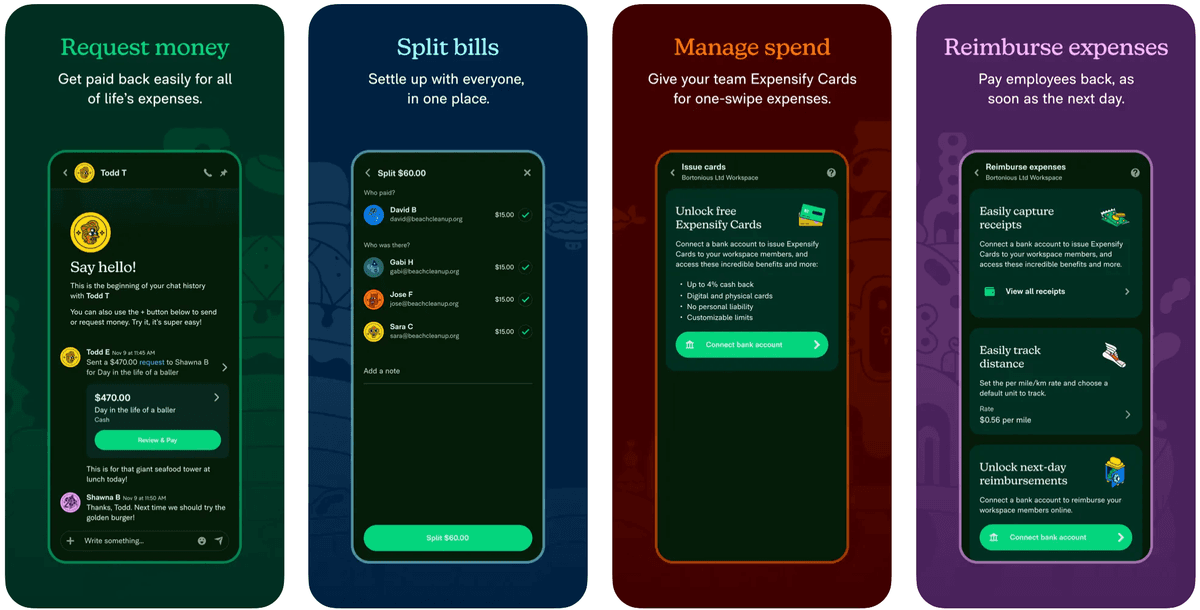
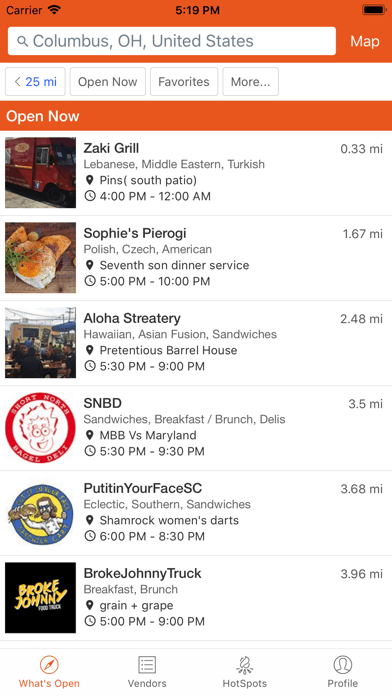
I build food delivery platforms — customer app, restaurant-facing tools, driver app, and the dispatch backend — for $40K–$180K depending on how many sides of the marketplace you need at launch and how much ordering logic is custom. A single-restaurant or small-chain ordering app lands near the low end; a multi-restaurant marketplace with live driver tracking reaches the high end. I've delivered 20+ App Store launches over 7+ years, worked as a Guest Engineer at Expensify, and shipped apps used by millions — relevant here because delivery apps are real-time, payment-heavy systems where production discipline is the product.
Food delivery is deceptively hard software: three user types, real-time state that must agree across all of them, payments with refunds and edge cases, and users who are hungry — the least patient users in software. This service covers the full system, scoped honestly to what your market actually needs at launch. The builds that succeed start narrower than founders want and expand from live order data.
Weekly demos, async Slack updates, production standards.
04
Ship
Store launch, documentation, knowledge transfer.
Engagements this covers
Restaurant chain escaping marketplace commissions
A multi-location restaurant group paying double-digit commissions to aggregators wants direct ordering. I build branded iOS and Android apps with menu management, order-ahead and delivery flows, payment processing, and kitchen-facing order screens. The chain keeps its margin and its customer relationship, and the app pays for itself against commission savings on a calculable timeline.
Regional delivery marketplace
A founder sees an underserved city or niche — local restaurants, halal, late-night — that big platforms ignore. I build the three-sided system in stages: customer app and restaurant tablet first, manual dispatch early, then the driver app with live tracking once order volume justifies it. They launch months earlier by sequencing the marketplace instead of building it all at once.
Delivery layer for an adjacent business
A grocery, tiffin service, cloud kitchen, or catering business wants ordering and delivery logistics without marketplace features it doesn't need. I adapt the delivery-app pattern to their model — scheduled slots, subscriptions, route batching — and integrate their existing POS or inventory. They get delivery software shaped to their operation instead of a Uber-Eats clone with features turned off.
The three-sided build, sequenced honestly
A delivery platform is at minimum three products: a customer app (browse, cart, checkout, live order status), a restaurant surface (accept orders, adjust menus and availability, manage prep times), and a driver app (assignment, navigation handoff, proof of delivery) — plus the backend that keeps all three agreeing about a single order in real time. That last part is the actual hard problem: an order is a state machine crossing three parties, and every transition needs to handle failure, timeout, and dispute.
I sequence builds to reach revenue fast: weeks one through six deliver the customer app and restaurant surface with manual or simplified dispatch — enough to run real orders. Weeks seven through twelve add the driver app, live tracking, and automated assignment. Payments, refunds, and payout logic thread through the entire timeline because they touch every side. Launching with manual dispatch isn't a compromise; it's how you learn your market's real logistics before encoding assumptions into software.
What drives cost between $40K and $180K
Marketplace sides are the biggest lever. A single-brand ordering app — one restaurant or chain, their own drivers or third-party fulfillment — is a $40K–$70K project. A true multi-restaurant marketplace with onboarding, commissions, payouts, and a driver fleet is $100K–$180K, because each side multiplies flows, edge cases, and support tooling.
Second lever: dispatch sophistication. Manual assignment is nearly free; automated assignment by distance and load is moderate; optimized batching and routing is genuinely hard and rarely justified at launch volume. Third: payments complexity — split payments between platform, restaurant, and driver, tips, refunds, and payout schedules involve real engineering and compliance care, and marketplace payouts (Stripe Connect or similar) are a project within the project. Real-time tracking, POS integrations, and promotions engines each add their own line. The pattern across this range: cost follows operational complexity you choose to automate, so automate only what your launch volume demands.
Mistakes founders make buying delivery app development
The classic mistake is buying an Uber Eats clone — feature parity with a platform that has thousands of engineers — instead of the minimum system their actual market needs. Clone-script vendors feed this: the demo looks complete, and then real orders expose that refunds, partial availability, rush-hour prep times, and driver no-shows were never actually engineered, just screenshotted. If a quote seems impossibly cheap for a three-sided platform, you're buying the demo, not the system.
Second mistake: automating logistics before understanding them. Founders pay for algorithmic dispatch, then discover their city's dynamics — driver density, restaurant prep variance — don't match the algorithm's assumptions. Run manual dispatch for your first months; the data teaches you what to automate. Third: underestimating the operational tooling. Support staff need to see order state, issue refunds, and contact all three parties; platforms without an admin panel do customer support through database queries, which collapses at a few hundred orders a day.
What good delivery looks like — and how to verify it
Judge a delivery platform by its worst five minutes, not its demo. Before accepting any build, walk these scenarios: a restaurant loses connectivity mid-order; a customer cancels after the kitchen starts; a driver's phone dies with food in transit; two drivers get assigned the same order; a payment succeeds but the order-creation call fails. Production-grade systems have designed answers — state reconciliation, refund flows, reassignment, idempotent payment handling. Demos have crashes.
Also verify the unglamorous surfaces exist: the admin panel, payout reports a bookkeeper can use, menu bulk-editing that doesn't require a developer, and notification reliability — because an order alert a restaurant doesn't hear is a one-star review from a hungry customer. When I hand over a platform, it includes these scenario tests executed and documented, load behavior at your projected peak (dinner rush, not average), and runbooks for the operational failures that will happen in month one regardless of code quality.
When not to build a delivery app
If you're a single restaurant doing modest delivery volume, white-label ordering platforms cost a few hundred dollars a month and beat custom development until commission savings or brand requirements genuinely exceed that — I'll do that arithmetic with you honestly in the first call. If your marketplace idea has no supply-side wedge — no committed restaurants, no differentiated selection — software won't create one; sign your first twenty restaurants with a spreadsheet and phone calls before building.
And if your budget only covers the build with nothing left for operations — driver acquisition, restaurant onboarding, support staff, marketing — the app will be the best-engineered ghost town in your city. Delivery is an operations business with a software layer, not the reverse. The founders I most enjoy building for understand that, arrive with supply relationships forming, and buy software that matches their operational maturity rather than their ambition slide.
Low-risk to start
✓Fixed-scope proposal first
You approve milestones and a price before any build starts — no open-ended hourly surprises.
✓Working demos every week
You see running software each week, not status reports, so you can course-correct early.
✓One senior owner, no hand-offs
The person who scopes the work is the person who builds it — no junior layers, no agency markup.
✓A track record you can verify
Top Rated on Upwork with public client reviews and $100K+ earned, plus contributions to Expensify. Check the receipts before you commit.
How much does it cost to build a food delivery app like Uber Eats?
A realistic range with a senior engineer is $40K–$180K. A branded ordering app for one restaurant or chain runs $40K–$70K. A three-sided marketplace — customer app, restaurant tools, driver app with live tracking, and payouts — runs $100K–$180K. Actual Uber Eats parity is thousands of engineer-years and the wrong goal; the right purchase is the minimum system your specific market needs for its first thousand orders.
How long does it take to build a food delivery platform?
Sequenced sensibly, first revenue comes early: a customer app plus restaurant order surface with simplified dispatch takes 6–10 weeks. The driver app, live tracking, and automated assignment add another 6–8 weeks. A full marketplace is realistically 4–6 months to complete launch. Building all three sides before processing a single real order is the slower and riskier path — live order data should shape the second half of the build.
Should my restaurant build its own delivery app or stay on marketplace platforms?
Do the arithmetic: multiply your monthly marketplace commission by 24 months and compare it to a $40K–$70K build plus modest running costs. Chains and high-volume independents often cross the threshold where a branded app pays for itself well within two years — and they keep customer data and the direct relationship. Below meaningful delivery volume, white-label ordering services or staying on marketplaces is genuinely the better deal, and I say so when asked.
How much does food delivery app development typically cost?
Projects typically fall in the $40K–$180K range depending on scope, integrations, and timeline. I provide a fixed-scope proposal after a 30-minute scoping call.
How long does a food delivery app development project take?
MVPs often ship in 8–12 weeks. Production systems with AI backends or RAG may run 12–20 weeks. Rescue and audit engagements can start within days.
Do you work with startups and enterprises?
Yes. I work with founders, CTOs, product teams, and agencies worldwide — US, UK, EU, and APAC time zones with async updates and weekly demos.
Can you own mobile and backend together?
Yes. I specialize in React Native + Python (FastAPI) + AI (RAG, agents, OpenAI/Claude) under one senior owner — fewer handoffs, faster shipping.
How do I get started?
Book a free 30-minute scoping call on this site, hire through Upwork, or email dhairyasenjaliya@gmail.com with your brief and timeline.