I build React Native apps on Firebase for $20K–$100K: the low end covers a focused MVP with authentication, Firestore, and push notifications, the high end covers full products with Cloud Functions, payments, and offline-first behavior. I have 20+ App Store launches, 7+ years of production delivery, and Top Rated status on Upwork with $100K+ earned and verified client reviews. Hiring starts with an architecture session where I map your features to a Firestore data model and give you a fixed quote — data modeling is where Firebase projects succeed or fail, so it comes first.
React Native plus Firebase is the fastest legitimate path from idea to a real app in users' hands — no backend team, no server operations, real-time sync out of the box. The catch is that Firebase punishes casual data modeling with slow screens and shocking bills, so the stack rewards exactly the experience it appears to make unnecessary.
Weekly demos, async Slack updates, production standards.
04
Ship
Store launch, documentation, knowledge transfer.
Engagements this covers
MVP to the stores on a startup budget
A founder needs a real app — accounts, live data, push notifications — without funding a backend team. I build React Native screens over Firebase Auth, Firestore, and Cloud Messaging, with security rules written and tested from day one. The result ships to both stores in about three months, and the serverless backend scales through early growth without an operations hire.
Real-time features that would cost a backend team
A product needs live collaboration — shared lists, presence, instant updates across devices — and quotes for a custom websocket backend came in frightening. I model the feature on Firestore listeners with local-first writes, so updates render instantly and sync in the background. Users get real-time behavior indistinguishable from a bespoke backend at a fraction of the build and running cost.
A Firebase app with a runaway bill
An app built by a previous developer works, but the Firebase invoice grows faster than the user base. I audit the read patterns — typically unbounded queries, listeners left mounted, and a data model that forces fan-out reads — then restructure the hot paths with aggregation documents and pagination. Bills drop severalfold and the same audit usually uncovers security rule holes worth fixing anyway.
Why this stack, honestly
React Native gives you iOS and Android from one codebase; Firebase removes the backend from your critical path. For a product whose needs map onto documents, users, and real-time updates — social features, marketplaces at early stage, productivity tools, anything collaborative — the combination gets you to market in months, not quarters, with zero servers to operate. The real-time sync that would take a backend team weeks is a listener subscription.
The honest caveats: Firestore is not a relational database, and features that are natural in SQL — complex joins, ad hoc reporting, transactions across many entities — require deliberate workarounds. Pricing is per-operation, so an inefficient data model is not just slow, it is expensive at scale. And you are coupling to Google's platform. None of these are reasons to avoid the stack; they are reasons the data model deserves senior attention before the first screen is built.
How the build runs, week by week
Week one is data modeling and security rules — the two decisions that are expensive to change later. I map every screen to the queries that power it and design collections so each screen loads in a small, predictable number of reads. Weeks two through four deliver the skeleton: authentication flows, navigation, the core Firestore-backed screens, push notifications wired end to end, and a TestFlight build in your hands.
The middle weeks are feature delivery in vertical slices, with Cloud Functions added only where server-side logic is genuinely required — payments webhooks, notifications fan-out, data validation beyond what rules express. The final stretch covers offline behavior testing, security rules testing against adversarial access patterns, store assets, and submission to both stores. A focused MVP lands in ten to fourteen weeks; a fuller product with payments and complex roles runs four to six months, which maps to the upper half of the budget.
What moves the price between $20K and $100K
Feature count matters less than feature type. Screens that read and write documents are cheap. Features that cut across the data model — search across collections, feeds ranked by multiple signals, reporting — cost real design work because Firestore does not give them to you. Payments push cost up reliably: checkout alone is moderate, but marketplace-style flows with payouts involve Cloud Functions, webhooks, and reconciliation logic. Multi-role products — admin, vendor, customer, each with different access — multiply security rule and testing effort.
Offline-first as a hard requirement, rather than best-effort caching, is another genuine multiplier: conflict handling and sync-state UX are product work, not configuration. What keeps projects at the low end: single role, straightforward document-shaped data, standard auth providers, and a willingness to launch with the boring version of search. I price after the data-modeling session because that session is where these multipliers become visible.
The mistakes that sink Firebase projects
The classic failure is treating Firestore like a SQL database — normalizing everything into small documents joined at read time. Firestore charges per read and offers no joins, so this design produces screens that issue hundreds of reads each: slow at demo scale, ruinous at production scale. The fix is modeling around your screens, duplicating data deliberately, and maintaining aggregates — decisions that must happen before launch, because live-migrating a Firestore schema under traffic is genuinely painful.
The second killer is security rules as an afterthought. Firebase clients talk to the database directly; the rules are your entire server-side authorization layer, and apps ship every week with rules that let any authenticated user read any document. I write and test rules alongside each feature, not at the end. Third: leaving listeners mounted on unmounted screens, which silently multiplies both reads and your bill. None of these appear in tutorials; all of them appear in production.
When Firebase is the wrong backend for your app
If your product is analytical at its core — dashboards, reporting, ad hoc queries across large datasets — Firestore will fight you daily, and a SQL backend will make you happier for years. If your domain has heavy relational integrity — inventory, bookings with cascading constraints, financial ledgers — the discipline required to fake transactions across documents costs more than a conventional backend would. If regulatory requirements dictate where data lives and how it is auditable, verify Firebase's story for your jurisdiction before committing, not after.
And if you have a strong backend team already, adding Firebase mostly adds a second platform to operate. The honest frame: Firebase is a superb default for document-shaped, real-time, client-heavy products built by small teams — which is why I recommend it often, and say clearly when I will not. Part of the first session is testing your product against exactly this list.
Low-risk to start
✓Fixed-scope proposal first
You approve milestones and a price before any build starts — no open-ended hourly surprises.
✓Working demos every week
You see running software each week, not status reports, so you can course-correct early.
✓One senior owner, no hand-offs
The person who scopes the work is the person who builds it — no junior layers, no agency markup.
✓A track record you can verify
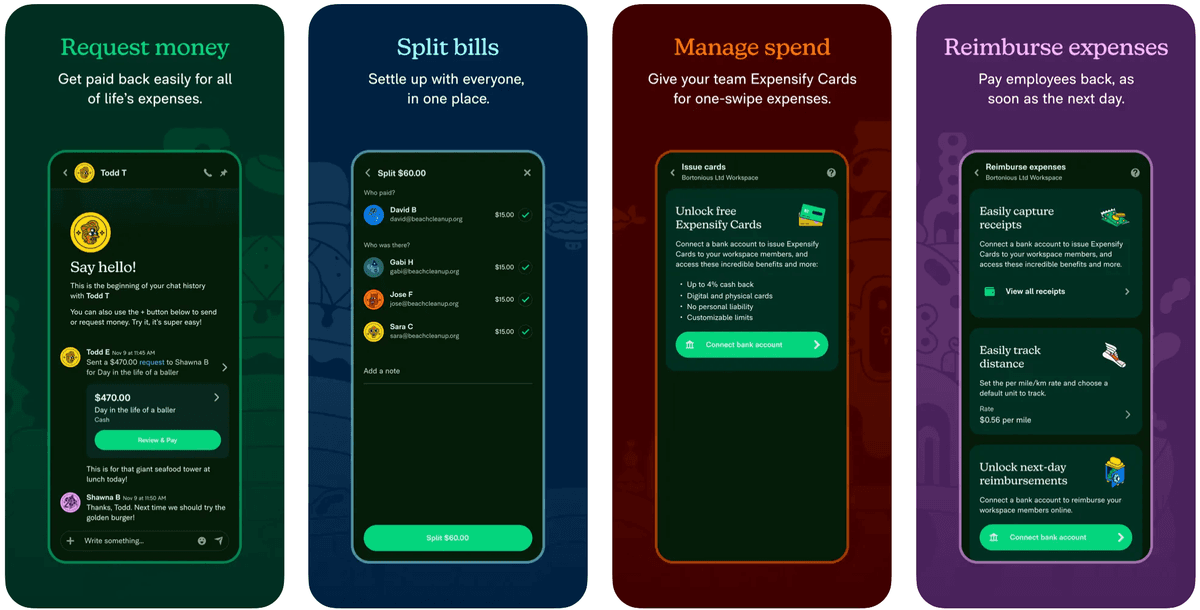
Top Rated on Upwork with public client reviews and $100K+ earned, plus contributions to Expensify. Check the receipts before you commit.
How much does it cost to build a React Native app with Firebase?
A focused MVP — authentication, Firestore-backed core screens, push notifications, shipped to both stores — typically runs $20K–$40K. Products adding payments, multiple user roles, or offline-first requirements land $40K–$70K, and full products with marketplace-style flows reach $100K. Firebase itself costs almost nothing at MVP scale; the budget is engineering, and the data model drives it.
How long does a React Native Firebase app take to build?
Ten to fourteen weeks for an MVP: one week of data modeling and security rule design, a TestFlight build in your hands by week four, then vertical feature slices through store submission. Fuller products with payments and complex roles run four to six months. Because Firebase eliminates backend setup, the timeline is dominated by product screens — and by the store review process at the end.
Will Firebase scale if my app takes off, or will I have to rebuild?
Firebase infrastructure scales further than most startups ever need — the platform serves apps with millions of users. What fails at scale is not Firebase but bad data models, whose per-read pricing turns inefficiency into invoices. Designed well from the start, the common evolution is not a rebuild but a gradual one: moving specific workloads like search or analytics to purpose-built services while Firebase keeps serving the app core.
How much does firebase react native development typically cost?
Projects typically fall in the $20K–$100K range depending on scope, integrations, and timeline. I provide a fixed-scope proposal after a 30-minute scoping call.
How long does a firebase react native development project take?
MVPs often ship in 8–12 weeks. Production systems with AI backends or RAG may run 12–20 weeks. Rescue and audit engagements can start within days.
Do you work with startups and enterprises?
Yes. I work with founders, CTOs, product teams, and agencies worldwide — US, UK, EU, and APAC time zones with async updates and weekly demos.
Can you own mobile and backend together?
Yes. I specialize in React Native + Python (FastAPI) + AI (RAG, agents, OpenAI/Claude) under one senior owner — fewer handoffs, faster shipping.
How do I get started?
Book a free 30-minute scoping call on this site, hire through Upwork, or email dhairyasenjaliya@gmail.com with your brief and timeline.