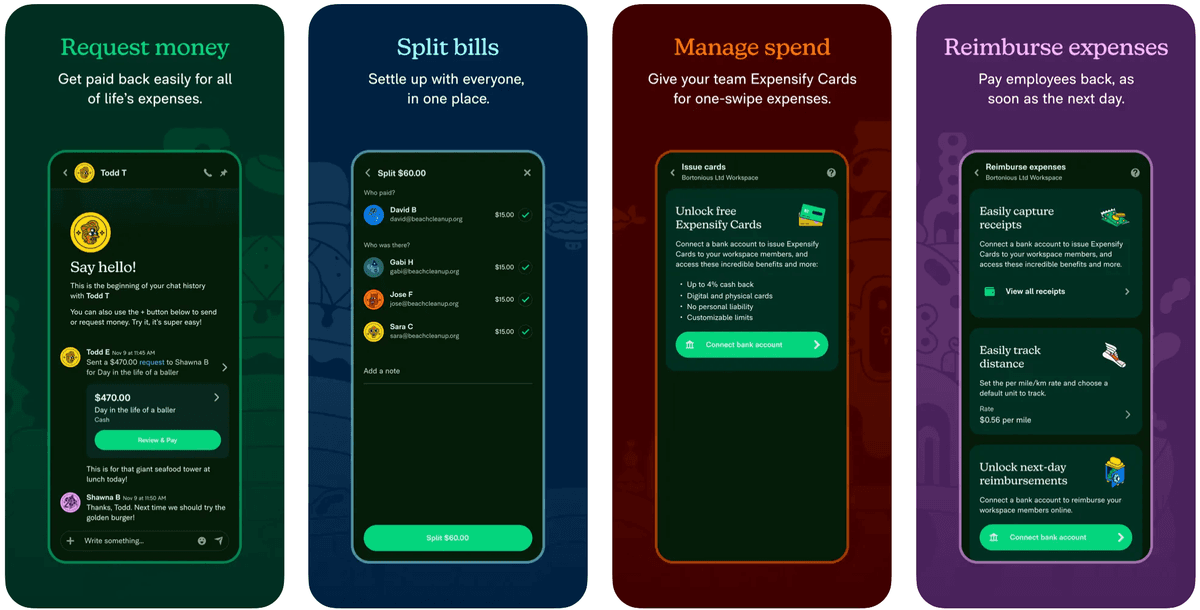
You can hire me as an Expo developer to take a React Native app from idea to both app stores — EAS builds, over-the-air updates, push notifications, native modules where needed — with typical projects running $20K–$100K depending on feature depth and backend scope. I have 20+ App Store launches behind me, 7+ years of production delivery, have worked as a Guest Engineer at Expensify, and I'm Top Rated on Upwork with $100K+ earned and verified client reviews. Most Expo builds go from kickoff to store submission in eight to sixteen weeks, with a TestFlight build in your hands within the first few weeks — not at the end.
Expo has quietly become the fastest serious path to shipping on both app stores — the old objections about limitations are years out of date, and the tooling around builds, updates, and store submission now removes entire categories of pain that used to consume weeks. What makes an Expo project succeed is a developer who knows exactly where the framework's boundaries actually are, uses its rails instead of fighting them, and knows when a project genuinely needs to step outside them.
Weekly demos, async Slack updates, production standards.
04
Ship
Store launch, documentation, knowledge transfer.
Engagements this covers
MVP to both stores on a startup clock
A funded founder needs a real app in stores before the next milestone. I build on Expo with EAS from day one — TestFlight builds within weeks, over-the-air updates for rapid iteration during beta, and store submission handled including the review-rejection dance. Outcome: one codebase, two stores, and an update pipeline that ships fixes in hours instead of review cycles.
App needing selective native capability
A product needs something beyond the JavaScript layer — Bluetooth hardware, HealthKit, background location, a payment SDK. I keep the project inside Expo's managed workflow using config plugins and custom development builds, adding precisely the native code required and nothing more. Outcome: native capability where it matters without abandoning the tooling that keeps the rest of the project fast.
Rescuing a stalled or outdated Expo project
An app was started on an old Expo SDK by a previous developer and now won't build, can't ship to current OS versions, or was ejected unnecessarily and lost its tooling. I audit what exists, migrate across SDK versions, un-tangle premature ejections where possible, and restore a working EAS pipeline. Outcome: a project that builds cleanly and ships again, with an upgrade path documented.
What an Expo engagement looks like week by week
Week one sets the foundation: project architecture, navigation structure, EAS build pipeline, and environments — because build infrastructure established on day one is nearly free, and retrofitted in week ten it costs a painful pause. You get a running development build on your own phone in the first week.
Weeks two through six are core feature delivery in visible increments: screens, API integration, auth, offline behavior, push notifications — with TestFlight and Play internal-track builds going out regularly, so feedback happens against the real app on real devices, not screenshots. Weeks seven onward are polish and launch: performance passes on list scrolling and startup time, edge cases like poor connectivity and permission denials, store assets, and submission — including responding to review feedback, which I've been through enough times across 20+ launches to treat as routine rather than crisis. After launch, over-the-air updates carry fast iteration while store builds carry native changes.
What drives cost inside $20K–$100K
Screen count is a weak predictor; three things actually move the number. First, backend scope — whether the app connects to your existing API, needs a new backend built alongside it, or can run on a backend-as-a-service. A surprising share of 'app quotes' are really backend quotes in disguise, so I price them separately and visibly. Second, native surface: each capability beyond the JavaScript layer — Bluetooth, health data, background tasks, payment SDKs — adds config plugins, native testing, and store-review risk, and five such features cost meaningfully more than one.
Third, offline and sync requirements: an app that must work on a subway and reconcile changes later is architecturally different from one that can assume connectivity, and pretending otherwise is where cheap quotes go to die. Auth complexity, in-app purchases, and multi-language support add predictable increments. The honest bottom of the range is a focused app on an existing backend; the top is offline-first with payments and real native integration.
Mistakes companies make hiring for Expo
The classic one is hiring a developer who ejects from Expo's managed workflow at the first obstacle — usually because they didn't know config plugins and development builds could solve their problem inside the rails. Unnecessary ejection throws away the update pipeline, the managed upgrades, and most of Expo's compounding advantages, and un-ejecting later is expensive. The reverse mistake also exists: forcing Expo onto a project that genuinely needs deep native work across the whole surface, then blaming the framework.
Second: treating store submission as an afterthought. Review rejections for permission strings, missing privacy declarations, or demo-account issues can burn two weeks at exactly the moment momentum matters most — launch prep should start weeks before the launch date. Third: skipping over-the-air update setup, then discovering every one-line fix costs a multi-day review cycle. Fourth: no real-device testing until the end, when simulator-only development has hidden a performance problem all along.
How to evaluate an Expo developer
Ask when they'd use a custom development build versus Expo Go — anyone shipping production Expo work lives in development builds and can explain why in one sentence, while tutorial-level developers only know Expo Go and hit its walls in week three. Ask how they'd add a native capability the framework doesn't include; the right answer involves config plugins and existing community modules, with writing a new native module as the documented last resort. Ask their over-the-air update strategy — what ships instantly versus what needs a store build — because that boundary is exactly where Expo fluency shows.
Then verify shipping history the direct way: apps in stores they can point to, and what the launch process was like — anyone with real launches has review-rejection stories and specific opinions about store metadata. Wide gaps between candidates usually show up here: many developers have built with Expo, far fewer have shipped and operated with it.
When Expo is the wrong choice
If the app's core value is deep native work — heavy AR, custom camera pipelines, real-time audio processing, or tight integration with specialized hardware SDKs across the whole app — you'll spend more time working around the framework than benefiting from it, and native development or bare React Native is the honest recommendation. If your team already maintains large native codebases and the app is a thin companion to them, matching the existing stack usually wins.
And if what you actually need is a mobile-formatted website — content, forms, no device capabilities — a responsive web app or PWA delivers it for a fraction of this budget with no store gatekeeping at all; paying app-development prices for a website in a wrapper serves nobody. For the broad middle of products — consumer apps, marketplaces, SaaS companions, health and fitness, social — Expo is not the compromise choice anymore; it's the default, and I'll tell you plainly which side of that line your project falls on.
Low-risk to start
✓Fixed-scope proposal first
You approve milestones and a price before any build starts — no open-ended hourly surprises.
✓Working demos every week
You see running software each week, not status reports, so you can course-correct early.
✓One senior owner, no hand-offs
The person who scopes the work is the person who builds it — no junior layers, no agency markup.
✓A track record you can verify
Top Rated on Upwork with public client reviews and $100K+ earned, plus contributions to Expensify. Check the receipts before you commit.
How much does it cost to hire an Expo developer for an app?
A production Expo app typically runs $20K–$100K. A focused app on an existing backend — core features, auth, push notifications, both store submissions — lands around $20K–$40K. Costs rise with backend work built alongside the app, native capabilities like Bluetooth or health integrations, offline-first sync requirements, and payments. Screen count matters less than buyers expect; backend scope and native surface are the real drivers.
How long does it take to build and launch an Expo app?
Eight to sixteen weeks from kickoff to store availability for most apps. A development build reaches your phone in week one, TestFlight builds start within the first few weeks, and core features land in visible weekly increments. Store review adds a final one to two weeks including potential rejection rounds. After launch, over-the-air updates let fixes and improvements ship in hours rather than waiting on review cycles.
Should I use Expo or bare React Native for my app?
Choose Expo unless you have a specific, named reason not to. Modern Expo supports custom native code through config plugins and development builds, so the old 'Expo is limiting' objection rarely applies — and you gain managed builds, over-the-air updates, and dramatically easier upgrades. Bare React Native makes sense when the app is dominated by deep custom native work or must integrate into existing large native codebases. For most products, Expo ships faster and stays cheaper to maintain.
How much does expo developer for hire typically cost?
Projects typically fall in the $20K–$100K range depending on scope, integrations, and timeline. I provide a fixed-scope proposal after a 30-minute scoping call.
How long does a expo developer for hire project take?
MVPs often ship in 8–12 weeks. Production systems with AI backends or RAG may run 12–20 weeks. Rescue and audit engagements can start within days.
Do you work with startups and enterprises?
Yes. I work with founders, CTOs, product teams, and agencies worldwide — US, UK, EU, and APAC time zones with async updates and weekly demos.
Can you own mobile and backend together?
Yes. I specialize in React Native + Python (FastAPI) + AI (RAG, agents, OpenAI/Claude) under one senior owner — fewer handoffs, faster shipping.
How do I get started?
Book a free 30-minute scoping call on this site, hire through Upwork, or email dhairyasenjaliya@gmail.com with your brief and timeline.