Edtech app development with me runs $30K–$150K: the low end covers a focused learning app for one platform slice — courses, progress, offline access — while the high end covers a full cross-platform product with live content, gamification, subscriptions, and school-compliance requirements. I've shipped 20+ App Store launches, my work includes apps used by millions of users, and I'm Top Rated on Upwork with $100K+ earned and verified client reviews. To hire me, we scope your curriculum and learner flows in one call, then I propose fixed milestones with a testable build in your hands within the first month.
Education apps live or die on one metric nobody puts on the homepage: whether learners come back on day seven. I build edtech apps in React Native that treat retention as an engineering problem — offline-first content, instant interactions, progress that feels earned — while handling the unglamorous requirements like child-privacy compliance that can sink a school deal at the contract stage.
Weekly demos, async Slack updates, production standards.
04
Ship
Store launch, documentation, knowledge transfer.
Engagements this covers
Course creator moving beyond a web platform
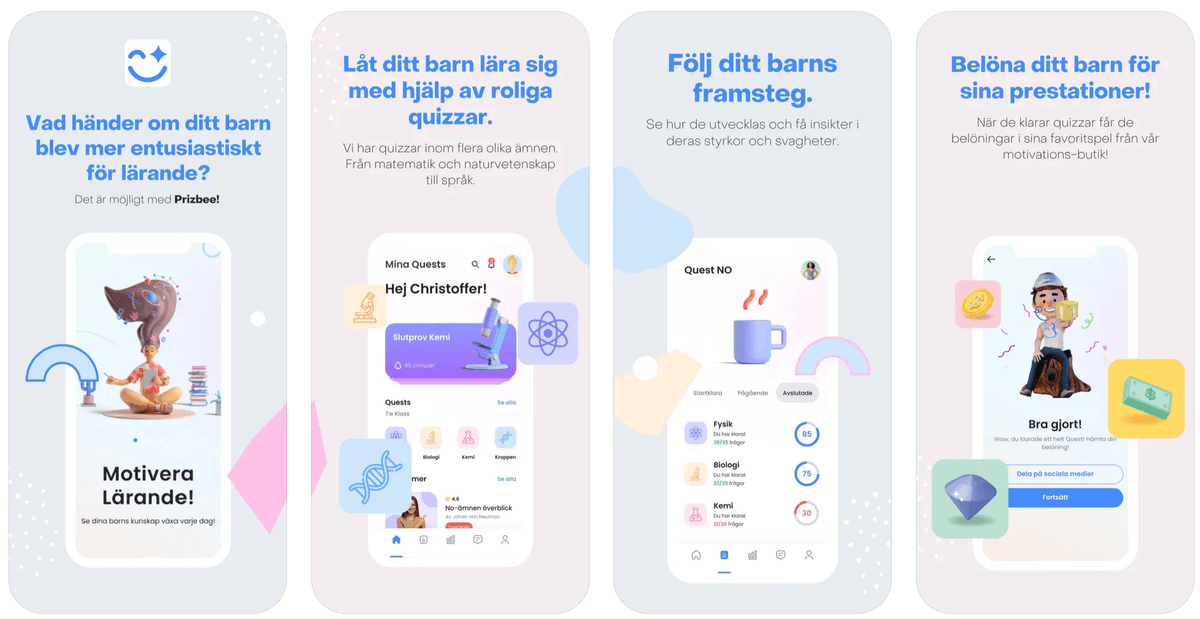
An educator with a successful web course business wants a mobile app their students actually open daily. I build a React Native app with downloadable lessons, streak-based practice, push notifications tuned to study schedules rather than spam, and in-app subscriptions wired to their existing accounts. Completion rates rise because the phone is where their students' attention already lives.
Language or skills app with practice mechanics
A funded startup needs spaced repetition, exercise feedback, and progression that works on a commute with no signal. I build the practice engine offline-first — sessions run entirely on-device and sync when connectivity returns — with animations that make correct answers feel rewarding at 60fps. The app works in the subway, which is precisely where their target users study.
School-facing product that has to pass procurement
A company selling into districts needs teacher dashboards, student rosters, and compliance answers for children's data privacy. I build role-based experiences for teachers and students, minimal-collection data flows designed for COPPA and FERPA conversations, and admin reporting that districts require. The product survives procurement review — the stage where school deals usually die quietly.
What makes edtech different from ordinary app work
Three things. First, offline is not a feature, it's the baseline: students study on commutes, in schools with weak Wi-Fi, and in regions where data is expensive, so content download, on-device progress tracking, and conflict-free sync have to be designed in from the first schema — retrofitting offline into an online-first app is a rewrite. Second, the feedback loop is the product: answer checking, streaks, and progress animations must be instant and satisfying, because a 300ms stutter in a practice loop reads as broken to a twelve-year-old.
Third, the buyer and the user are often different people. Parents buy, kids use; districts buy, teachers and students use. That means building at least two experiences — the learning loop and the oversight layer — and the oversight layer, with its dashboards and reports, frequently decides whether anyone pays. Budgeting only for the learner experience is the classic edtech scoping mistake.
The engagement, milestone by milestone
The first two weeks produce a walking skeleton: navigation, design system, one complete lesson flow from content to completion, running on real devices via TestFlight and internal testing tracks. From there, milestones ship in two-week cycles ordered by risk — the practice engine and offline sync come early because they're the hardest to get right, while settings screens and edge features come late because they're not.
Content tooling is a milestone buyers forget: your team needs a way to author, update, and version lessons without an engineer, so a content pipeline — whether a CMS integration or structured authoring format — is part of every build. The final stretch covers store submission for both platforms, which I've done 20+ times, including the review-team conversations that education apps with subscriptions or children's audiences tend to trigger. Typical timeline: three to five months depending on scope.
What drives cost inside $30K–$150K
The practice mechanics set the floor. A content-delivery app — video lessons, quizzes, progress — is the bottom third of the range. Interactive exercise engines with instant feedback, spaced repetition, handwriting or audio input, and adaptive difficulty are real engineering and push toward the middle. Live features — classes, leaderboards updating in real time, teacher-student messaging — add backend complexity and moderation surface, pushing toward the top.
The second driver is audience. Apps for children under thirteen carry design and data-handling obligations that shape every screen: parental gates, minimal collection, and store-policy compliance that both Apple and Google audit specifically for kids' categories. School-facing products add rostering, admin dashboards, and reporting. The third driver is monetization plumbing — subscriptions with family plans, school licensing, or content marketplaces each carry their own edge cases. One honest note: translations and accessibility cost far less added early than retrofitted later.
Mistakes edtech founders make
The most expensive mistake is building the whole curriculum's worth of features before validating the core loop. If learners don't return to one great lesson flow, they won't return to fifty; ship the loop, measure day-seven retention, and let that number pick the next milestone. The second is treating engagement mechanics as decoration — streaks, progress, and rewards designed as afterthoughts read as manipulative, while the same mechanics designed around genuine progress are why the best-known learning apps dominate.
Third: ignoring the compliance conversation until a district asks. If schools are anywhere on your roadmap, data minimization and privacy answers must be designed in now, because retrofitting them under procurement deadline pressure is how deals slip a school year — and school sales cycles only close in certain months. Fourth: launching on one platform when your audience is split; classrooms especially are heavily Android-and-tablet territory, which surprises iPhone-carrying founders.
When not to build an app yet
If you haven't validated that anyone wants your teaching approach, don't buy a custom app — sell a cohort course, a PDF curriculum, or lessons over an existing platform first. A $50K app cannot fix content nobody finishes, and the fastest way to learn whether your pedagogy retains learners costs almost nothing. Similarly, if your content is video lectures and quizzes with no interactive mechanics, white-label course platforms deliver that for a monthly fee; custom development earns its cost only when your learning loop is genuinely yours.
And if your budget covers either a great app or great content but not both, choose content. I say this as the person who builds the apps: a mediocre app with excellent lessons retains better than a beautiful app with thin material. Come back for the custom build when the content is proven and the app becomes the bottleneck — that's when this budget produces its full return.
Low-risk to start
✓Fixed-scope proposal first
You approve milestones and a price before any build starts — no open-ended hourly surprises.
✓Working demos every week
You see running software each week, not status reports, so you can course-correct early.
✓One senior owner, no hand-offs
The person who scopes the work is the person who builds it — no junior layers, no agency markup.
✓A track record you can verify
Top Rated on Upwork with public client reviews and $100K+ earned, plus contributions to Expensify. Check the receipts before you commit.
How much does it cost to develop an education app?
A production education app typically costs $30K–$150K. Content-delivery apps with lessons, quizzes, and progress tracking sit at $30K–$60K; interactive practice engines with offline support and subscriptions run $60K–$100K; school-facing products with teacher dashboards, rostering, and compliance requirements reach $100K–$150K. Cross-platform React Native keeps one codebase covering iOS and Android, which is most of why these numbers aren't doubled.
How long does edtech app development take?
A focused learning app takes three to four months from kickoff to both app stores; products with interactive practice engines, teacher dashboards, or live features run four to six. You'll have a testable build on your own phone within the first month, and content tooling arrives mid-project so your team can load real curriculum before launch rather than after. Store review adds one to two weeks at the end.
Do I need COPPA compliance for my learning app?
If children under thirteen can use your app — even if they're not the target — United States law requires COPPA-compliant handling: verifiable parental consent for data collection, minimal collection by design, and no behavioral advertising to kids. Both app stores enforce additional children's-category policies of their own. School products add FERPA obligations around student records. It's far cheaper to design for this from the start than to remediate under a district's procurement review.
How much does edtech app development typically cost?
Projects typically fall in the $30K–$150K range depending on scope, integrations, and timeline. I provide a fixed-scope proposal after a 30-minute scoping call.
How long does a edtech app development project take?
MVPs often ship in 8–12 weeks. Production systems with AI backends or RAG may run 12–20 weeks. Rescue and audit engagements can start within days.
Do you work with startups and enterprises?
Yes. I work with founders, CTOs, product teams, and agencies worldwide — US, UK, EU, and APAC time zones with async updates and weekly demos.
Can you own mobile and backend together?
Yes. I specialize in React Native + Python (FastAPI) + AI (RAG, agents, OpenAI/Claude) under one senior owner — fewer handoffs, faster shipping.
How do I get started?
Book a free 30-minute scoping call on this site, hire through Upwork, or email dhairyasenjaliya@gmail.com with your brief and timeline.