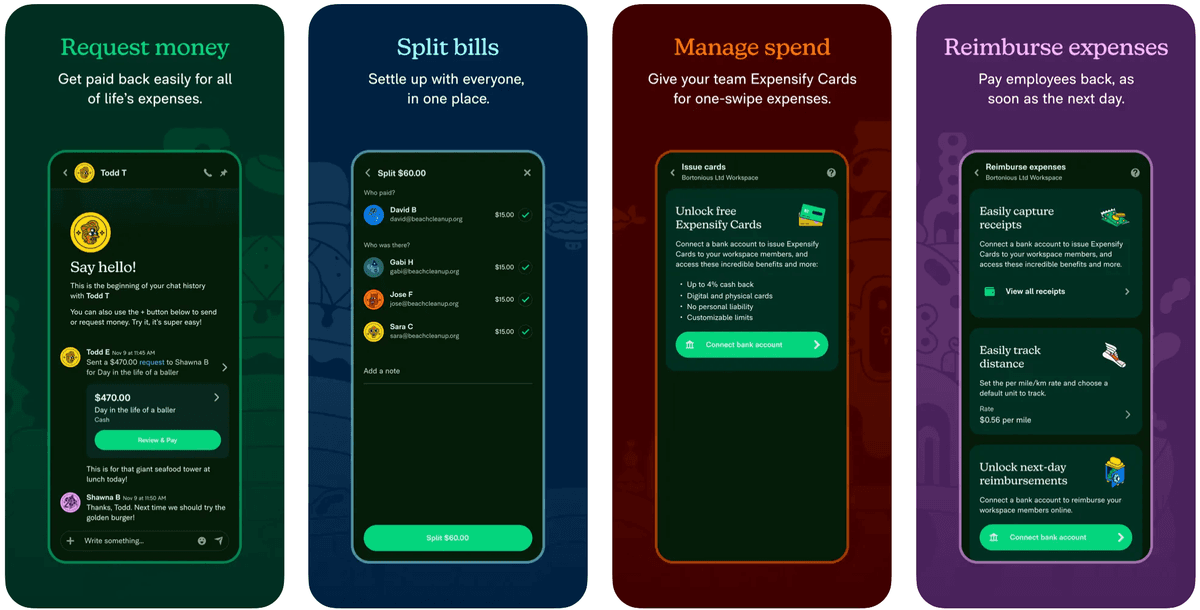
I design and build production data pipelines — ingestion, transformation, orchestration, and the monitoring that keeps them trustworthy — with engagements typically running $20K–$100K depending on source count, data volume, and freshness requirements. I bring 7+ years of production delivery, I'm Top Rated on Upwork with $100K+ earned and verified client reviews, and I've worked as a Guest Engineer at Expensify, a platform moving financial data for millions of users. Most engagements go from audit to a monitored, documented pipeline in six to twelve weeks, sized to your actual data volume rather than a big-data stack you don't need.
The gap between 'we have the data somewhere' and 'the numbers in this dashboard are correct as of this morning' is where analytics projects, ML features, and executive trust all go to die. This service builds the pipeline layer that closes it — and just as importantly, right-sizes it, because most companies buying pipelines are sold ten times the infrastructure their data volume justifies.
Weekly demos, async Slack updates, production standards.
04
Ship
Store launch, documentation, knowledge transfer.
Engagements this covers
Scattered sources into one warehouse
A company runs on Stripe, a production Postgres database, a CRM, and product analytics — and answering 'which customers are at risk' means a week of manual CSV surgery. I build ingestion from each source into a warehouse, model the data into clean, documented tables, and schedule it with freshness monitoring. Outcome: questions that took a week take a query.
Pipeline feeding an AI or ML feature
A team is shipping an LLM or ML feature that needs fresh, clean, structured data — embeddings kept in sync, features computed on schedule, documents processed as they arrive. I build the pipeline with idempotent processing, backfill support, and data-quality gates, so the model layer sits on foundations that don't silently rot. Outcome: the AI feature's inputs are as reliable as its outputs need to be.
Rescuing a fragile in-house pipeline
Cron jobs and scripts written by a departed engineer still run — until they don't, and nobody notices for a week. I audit what exists, add observability first so failures become visible, then incrementally rebuild the fragile stages with idempotency, retries, and alerting. Outcome: a pipeline the current team understands, monitors, and can safely modify, migrated without a big-bang rewrite.
What the engagement looks like week by week
Weeks one and two are the audit: I inventory every source, measure actual volumes and change rates, document who consumes what and how fresh it must be, and find the failure points in anything that already exists. This is also where I stop teams from overbuying — actual volume numbers usually kill the case for heavyweight infrastructure on the spot.
Weeks three to six build the core: ingestion from each source, transformation into clean modeled tables, orchestration with dependency-aware scheduling, and idempotency throughout so any stage can be rerun without duplicating or corrupting data. Weeks seven to ten are trust work: data-quality checks at stage boundaries, freshness and volume alerting, backfill tooling for historical data, and documentation. Handoff includes a runbook and a working session with your team — a pipeline only your consultant understands is a liability with a delivery date.
What drives cost inside $20K–$100K
Source count and source quality dominate. Three clean APIs into a warehouse is bottom-of-range work; a dozen sources including a legacy system with no API, files arriving by SFTP, and a database with undocumented semantics is top-of-range work, and the ugly sources cost more than all the clean ones combined. Freshness is the second lever: daily batch is cheap, hourly is moderate, and near-real-time streaming roughly doubles engineering effort for the stages it touches — which is why I always ask what decision actually requires the freshness before building it.
The remaining multipliers are transformation complexity (mirroring tables is easy; encoding business logic that three departments disagree about takes workshops, not just code), historical backfills against rate-limited APIs, and compliance requirements — PII handling, audit trails, retention policies — which add process weight to every stage they touch.
Mistakes companies make buying pipelines
The most expensive mistake is stack-first thinking: choosing Spark, Kafka, and a streaming architecture because a conference talk did, when the actual workload is a few gigabytes a day that Postgres and a scheduler would handle with capacity to spare. Oversized stacks don't just cost more to build — they cost more forever, in maintenance and in the seniority of engineers needed to touch them.
The second mistake is buying dashboards before data quality: a beautiful BI layer on an untrustworthy pipeline teaches executives to ignore dashboards, and rebuilding that trust takes far longer than building the checks would have. Third: accepting delivery with no observability, so the pipeline fails silently and you find out from an angry stakeholder instead of an alert. Fourth: nobody named as owner post-handoff. Pipelines are living systems — sources change schemas, volumes grow, APIs deprecate — and an unowned pipeline is a countdown.
How to evaluate a pipeline developer
Ask what happens when a run fails halfway through. The answer you want involves idempotency — reruns that don't duplicate data — checkpointing, and alerting; the answer you'll often get is 'we restart it,' which means data corruption is a matter of time. Ask how they'd know the data is wrong even when the pipeline succeeds — silent correctness failures are the expensive ones, and you're listening for quality checks at stage boundaries, row-count and distribution monitoring, and reconciliation against sources.
Then ask them to justify their proposed stack against your actual data volume in numbers. A senior engineer will happily tell you that your scale doesn't need the fancy tool; a vendor optimizing for billable complexity won't. Finally, ask to see documentation from a past project. The code quality of a pipeline matters less than whether the next engineer can understand and modify it — that's where pipeline projects actually succeed or fail.
What good delivery looks like
A well-delivered pipeline is boring in the best sense. Every stage is idempotent, so any failure is recoverable by rerunning without side effects. Every dataset has freshness and volume monitoring with alerts that reach a human before a stakeholder notices. Data-quality checks — nulls, duplicates, referential integrity, distribution drift — run at stage boundaries and block bad data from propagating downstream, because a loud failure is always cheaper than a silent one.
Beyond the mechanics: transformations live in version control with review, not in a BI tool's hidden SQL panels; there's backfill tooling, because you will need to reprocess history; documentation covers not just what each table is but what it should be used for and what its known limitations are; and monthly infrastructure cost is known and proportionate to the data's value. If a proposal doesn't mention monitoring and idempotency, you're being quoted for the demo, and you'll pay for the production version later at emergency rates.
When you don't need a custom pipeline
If your sources are standard SaaS tools — Stripe, Salesforce, HubSpot, common ad platforms — managed ELT connectors plus a warehouse cover ingestion for a few hundred dollars a month, and paying custom-development rates to rebuild those connectors is money on fire. In that world the custom work worth buying is much smaller: the transformation modeling and the data-quality layer on top, which is a $10K–$20K engagement, not a $100K one.
You also don't need a pipeline if nobody has named the decisions the data will drive — 'we want to be data-driven' is not a requirement, and pipelines built without concrete consumers become expensive, unmaintained plumbing within a year. And if your whole company's analytical need is one weekly report from one database, a scheduled query and a spreadsheet export is genuinely the right architecture. I'd rather scope you down in the first call than deliver infrastructure that outweighs its purpose.
Low-risk to start
✓Fixed-scope proposal first
You approve milestones and a price before any build starts — no open-ended hourly surprises.
✓Working demos every week
You see running software each week, not status reports, so you can course-correct early.
✓One senior owner, no hand-offs
The person who scopes the work is the person who builds it — no junior layers, no agency markup.
✓A track record you can verify
Top Rated on Upwork with public client reviews and $100K+ earned, plus contributions to Expensify. Check the receipts before you commit.
Custom data pipeline development typically runs $20K–$100K. A handful of clean API sources flowing into a warehouse with daily freshness lands at $20K–$40K. Costs climb with ugly sources (legacy systems, SFTP files, undocumented databases), near-real-time freshness requirements, complex business-logic transformations, and compliance handling. If your sources are all standard SaaS tools, managed connectors can cut the custom scope — and the price — dramatically, and I'll say so.
How long does it take to build a data pipeline?
Six to twelve weeks for most engagements: two weeks of auditing sources and measuring real volumes, three to four weeks building ingestion, transformation, and orchestration, then two to four weeks of data-quality checks, monitoring, backfills, and documentation. The first useful tables typically land within a month; the remaining time is the trust layer — the difference between a pipeline that runs and one whose numbers people actually believe.
Should I use off-the-shelf ELT tools or build a custom pipeline?
Use managed ELT connectors for every standard SaaS source they support well — rebuilding a Stripe connector by hand is wasted money. Build custom for what they can't reach: internal databases with business-specific semantics, legacy systems, file-based feeds, real-time needs, or pipelines feeding ML and AI features. Most good architectures are hybrid: managed ingestion where possible, custom transformation and quality layers on top, and engineering effort concentrated where your data is genuinely unusual.
How much does data pipeline development typically cost?
Projects typically fall in the $20K–$100K range depending on scope, integrations, and timeline. I provide a fixed-scope proposal after a 30-minute scoping call.
How long does a data pipeline development project take?
MVPs often ship in 8–12 weeks. Production systems with AI backends or RAG may run 12–20 weeks. Rescue and audit engagements can start within days.
Do you work with startups and enterprises?
Yes. I work with founders, CTOs, product teams, and agencies worldwide — US, UK, EU, and APAC time zones with async updates and weekly demos.
Can you own mobile and backend together?
Yes. I specialize in React Native + Python (FastAPI) + AI (RAG, agents, OpenAI/Claude) under one senior owner — fewer handoffs, faster shipping.
How do I get started?
Book a free 30-minute scoping call on this site, hire through Upwork, or email dhairyasenjaliya@gmail.com with your brief and timeline.