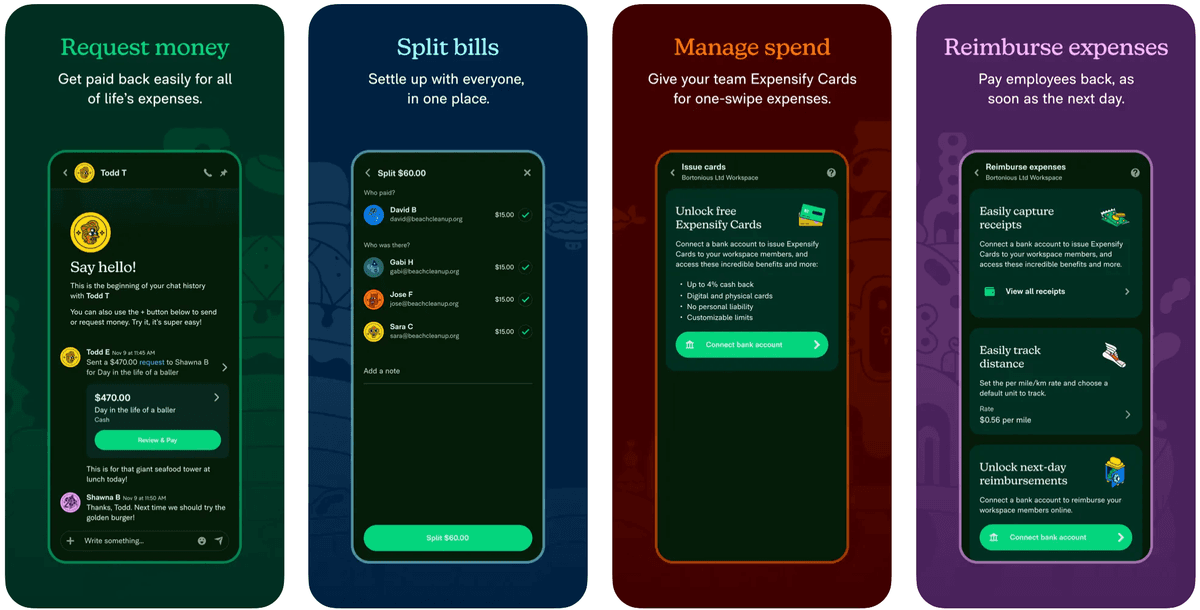
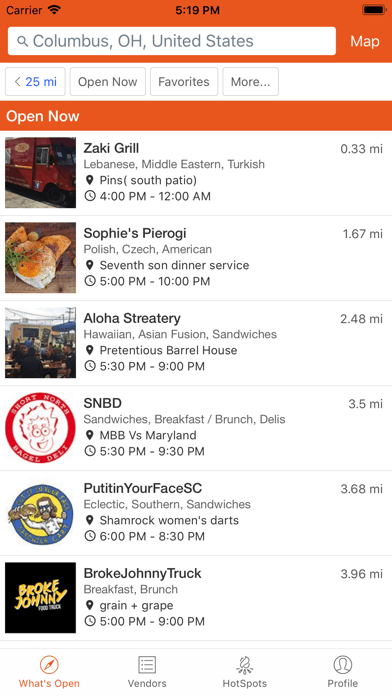
I build cross-platform apps — one codebase shipping to both iOS and Android — as fixed-scope projects typically between $30K and $150K, depending on feature depth, backend needs, and how much native platform work is involved. I have 20+ App Store launches behind me, 7+ years of production delivery, and I work as a Guest Engineer at Expensify, whose cross-platform app serves millions of users. A typical product goes from kickoff to both app stores in 10 to 16 weeks, and you get one codebase your future team maintains instead of two.
Cross-platform development lets you ship to iOS and Android for roughly 60% of the cost of building twice — but only when the person building it knows where the platforms genuinely differ and handles those seams natively instead of papering over them. The projects that fail are the ones sold as write-once-run-anywhere; the ones that succeed treat cross-platform as a strategy with known trade-offs, managed deliberately.
Weekly demos, async Slack updates, production standards.
04
Ship
Store launch, documentation, knowledge transfer.
Engagements this covers
Startup shipping its first product to both stores
A funded founder needs iOS and Android from day one because their market splits across both, but can't afford two native teams. I build a single React Native codebase, design the architecture around their riskiest features first, and manage both store submissions. Outcome shape: two store listings from one codebase, launched together, at well under the cost of parallel native builds.
Replacing separate iOS and Android apps
A company maintains two native apps that have drifted apart — features ship on iOS months before Android, and every change costs twice. I plan a staged migration to one cross-platform codebase, porting screen by screen while both apps stay live, keeping genuinely native pieces where they earn their place. Outcome shape: one team, one release train, features shipping to both platforms simultaneously.
Web product expanding to mobile
A SaaS with a successful web app keeps losing users who expect a real mobile experience — push notifications, offline access, biometric login. I build the mobile companion sharing the existing API, designing for mobile patterns rather than shrinking the web layout, and wire deep links between the two. Outcome shape: a mobile presence that increases engagement instead of embarrassing the brand.
What cross-platform actually saves, and what it does not
The honest math: a well-run cross-platform build costs around 55–65% of building two native apps, not the 50% the arithmetic suggests. You share business logic, screens, state management, and API integration — the bulk of any app — but you still pay per-platform for store submissions, push notification setup, platform-specific UI polish, and testing on both operating systems. Anyone quoting exactly half has not shipped both platforms from one codebase.
What you save beyond the build is often bigger: every future feature ships once, to both stores, on one release train. Teams maintaining separate native apps almost always develop platform drift — iOS gets features first, Android lags a quarter, and the codebases stop matching. That drift is a permanent tax that cross-platform eliminates structurally. The trade-off is a thin layer of native dependency: a few percent of the work still touches native modules, and your team needs access to someone — me during the engagement, documented paths after — who can operate at that layer when a library update or OS release demands it.
How a build runs from kickoff to both stores
Weeks one and two produce the app skeleton with the riskiest technical elements proven first — not the login screen, but whichever feature carries platform risk: background location, offline sync, video, payments, Bluetooth. If something is going to force a native workaround or an architectural change, I want that discovered in week two, when it's a small adjustment, not week ten, when it's a crisis.
From there, features ship in weekly builds you can install on your own phone from day one — both platforms, every week, via internal distribution. This rhythm is not cosmetic; watching the real app weekly on real devices is how scope stays honest and feedback arrives while it's cheap to act on. The final three to four weeks cover release engineering: store assets and listings, review-guideline compliance for both stores, crash reporting and analytics wiring, staged rollout configuration, and the submission process itself — including responding to reviewer rejections, which I've handled across 20+ launches. Handover includes the CI pipeline that builds and ships both apps, so releases don't depend on my laptop.
What drives cost across $30K to $150K
The floor of the range buys a focused app: a handful of core screens, standard auth, an existing backend to talk to, and no exotic device features. Cost climbs along four axes. Feature surface is the obvious one — more flows, more states, more edge cases. Backend scope is the hidden one: if there's no API yet, the backend is often a third to half of total project cost, and buyers regularly forget to budget it.
The third axis is native depth. Features like offline-first data sync, background processing, hardware integration, and real-time media push work into the native layer where progress is slower and testing heavier — an app with two such features costs meaningfully more than one with none. The fourth is polish level: an internal tool ships at a different finish standard than a consumer app competing on feel, where animation, gesture quality, and per-platform UI conventions consume real weeks. A clean MVP with an existing backend lands near $30K–$60K; a consumer-grade product with backend, offline sync, and high polish is where $150K engagements live.
Mistakes companies make buying cross-platform work
The most common mistake is hiring web developers for mobile work because the language looks the same. Cross-platform frameworks use JavaScript, but the discipline is mobile engineering: app lifecycle, memory limits, offline states, store review rules, and the native layer underneath. Teams that hire on language fluency get apps that work in the demo and fall apart on old Android phones and flaky networks. Ask any candidate about their store launches — shipped apps are the credential, not repos.
The second mistake is skipping the design phase to save money, which just moves the design work into the expensive part of the project — screens get built twice when flows change mid-build. The third is ignoring the release infrastructure: an app without crash reporting, staged rollouts, and an update strategy turns its first production bug into a multi-day emergency, because unlike the web, you cannot hotfix a store app in an hour. Budget for the boring 15% — CI, monitoring, release process — or pay for it during your first incident instead.
When cross-platform is the wrong call
Go native when the app's core value lives in platform-specific territory: heavy AR, advanced camera pipelines, deep OS integration like widgets-first experiences or watch apps as the primary surface, or games. If 40% of your app would end up as custom native modules anyway, the cross-platform abstraction is costing you more than it saves — you'd be maintaining three codebases pretending to be one. I'll tell you this in scoping if your feature list points that way, because a mis-fit architecture is expensive for both of us.
Also think twice if you're iOS-only by strategy — a US-market consumer app monetizing through subscriptions may rationally ignore Android for its first year, and pure-native Swift can be the simpler choice for a single platform. Cross-platform earns its complexity when both platforms matter, which for most funded products they do: Android is most of the world's devices, and iOS is most of the world's app revenue. If you need both within a year, building cross-platform from day one is almost always cheaper than building one and porting later.
Low-risk to start
✓Fixed-scope proposal first
You approve milestones and a price before any build starts — no open-ended hourly surprises.
✓Working demos every week
You see running software each week, not status reports, so you can course-correct early.
✓One senior owner, no hand-offs
The person who scopes the work is the person who builds it — no junior layers, no agency markup.
✓A track record you can verify
Top Rated on Upwork with public client reviews and $100K+ earned, plus contributions to Expensify. Check the receipts before you commit.
How much does cross-platform app development cost?
Typical cross-platform projects run $30K to $150K for both iOS and Android from one codebase. A focused MVP against an existing backend lands at $30K–$60K. Costs rise with feature surface, backend scope — often a forgotten third of the budget — native-layer depth like offline sync or hardware features, and consumer-grade polish. Expect roughly 60% of what two separate native apps would cost.
How long does it take to ship an app to both app stores?
Ten to sixteen weeks from kickoff to live listings for a typical product, including two weeks proving the riskiest features, weekly installable builds through the middle, and three to four weeks of release engineering and store submission at the end. Apple and Google review adds days to a couple of weeks, and first-time submissions get rejected often enough that experienced handling of the process matters.
Is cross-platform as good as native app development?
For most product categories, yes — apps serving millions of users ship this way, and users cannot tell when the work is done well. The genuine exceptions are apps whose core value is platform-specific: heavy AR, advanced camera work, games, deep OS integrations. If your feature list would push a large share of the work into custom native modules anyway, native is the better buy, and a good vendor will say so during scoping.
How much does cross platform app development typically cost?
Projects typically fall in the $30K–$150K range depending on scope, integrations, and timeline. I provide a fixed-scope proposal after a 30-minute scoping call.
How long does a cross platform app development project take?
MVPs often ship in 8–12 weeks. Production systems with AI backends or RAG may run 12–20 weeks. Rescue and audit engagements can start within days.
Do you work with startups and enterprises?
Yes. I work with founders, CTOs, product teams, and agencies worldwide — US, UK, EU, and APAC time zones with async updates and weekly demos.
Can you own mobile and backend together?
Yes. I specialize in React Native + Python (FastAPI) + AI (RAG, agents, OpenAI/Claude) under one senior owner — fewer handoffs, faster shipping.
How do I get started?
Book a free 30-minute scoping call on this site, hire through Upwork, or email dhairyasenjaliya@gmail.com with your brief and timeline.