Cloud functions development with me runs $10K–$50K depending on how many functions, triggers, and integrations your backend needs and how much existing infrastructure I'm building into. I bring 7+ years of production delivery, I'm Top Rated on Upwork with $100K+ earned and verified client reviews, and the serverless backends I build power apps used by millions of users. To hire me, we scope your triggers and data flows in one call, I propose a milestone plan, and the first deployed functions are typically live in your environment within two weeks.
Serverless is how small teams run production backends without hiring a DevOps engineer — but a pile of untested functions with tangled triggers becomes harder to operate than the server it replaced. I build cloud function backends that are organized, observable, and cheap to run, so your backend scales with traffic instead of with headcount.
Weekly demos, async Slack updates, production standards.
04
Ship
Store launch, documentation, knowledge transfer.
Engagements this covers
Mobile app that needs a backend without a backend team
A two-person startup has a React Native app and no server engineer. I build their entire backend as cloud functions: authentication triggers, payment webhooks, push notification fan-out, and scheduled cleanup jobs, all deployed through CI with staging and production environments. They get a backend that scales to zero cost when idle and handles launch-day spikes without anyone on call.
Webhook and integration glue that keeps breaking
A company's Stripe, CRM, and email tools are stitched together with fragile no-code automations that fail silently. I replace the critical paths with idempotent cloud functions: verified webhook handling, retry queues for downstream failures, and alerts when anything dead-letters. Orders stop disappearing between systems, and finance stops reconciling by hand at month end.
Function sprawl that nobody can operate
A team has sixty functions written by three departed contractors — no tests, mixed runtimes, secrets in code, and a monthly bill nobody can explain. I audit and consolidate: shared code moves into modules, cold-start-heavy functions get right-sized, secrets move to a manager, and monitoring gets attached to every trigger. The bill drops and deploys stop being scary.
What the engagement looks like
First week: I map every trigger your system needs — HTTP endpoints, database events, queues, schedules, webhooks — and design the function boundaries around them. Getting boundaries right early is most of the game; functions that are too granular become a distributed-systems puzzle, and functions that are too fat redeploy the world for every change.
From week two, I build in vertical slices: each milestone is a working flow deployed to a staging environment you can hit, complete with tests, structured logging, and alerting — not a folder of code awaiting integration. Deployment is automated from the first commit, because serverless projects that deploy from someone's laptop always end in an incident. A typical backend for a mobile or SaaS product takes four to eight weeks, and you can watch it come alive in your own cloud console throughout.
What moves the price inside $10K–$50K
Function count matters less than integration count. Ten functions talking to one database is a small project; ten functions talking to Stripe, Twilio, a legacy SOAP API, and three webhook providers is a large one, because every external system brings its own auth, failure modes, and retry semantics that must be handled correctly.
The other big lever is operational rigor. A prototype backend — happy path, console logging — sits at the bottom of the range. A production backend adds idempotency on every mutation, dead-letter queues, per-function monitoring, staged rollouts, and load-tested concurrency settings, and that's where the budget above $25K goes. Data migration from an existing backend, strict latency targets that require cold-start engineering, and compliance logging each add real scope. I'll tell you which tier your product actually needs; not everything deserves the full treatment on day one.
The mistakes that make serverless expensive
The classic failure is treating functions as a junk drawer: every new need becomes a new function, nothing shares code, and within a year nobody knows what's safe to delete. The fix is architectural — clear module boundaries, shared libraries, and an inventory of triggers — and it's far cheaper to establish at the start than to retrofit.
The second failure is ignoring idempotency. Cloud platforms retry function invocations; if your payment webhook or notification sender isn't safe to run twice, you will double-charge or double-send eventually — not hypothetically. Third is cost blindness: an innocent function that triggers on every database write, then writes back to the database, can recursively burn a four-figure bill in a weekend. Every function I ship declares what invokes it, what it may invoke, and has a budget alert watching it.
How to evaluate a cloud functions developer
Ask how they handle a webhook that arrives twice — the answer should include idempotency keys and deduplication, immediately and specifically. Ask where secrets live; anyone comfortable with credentials in environment files checked into the repo is disqualifying. Ask how they debug a function that fails one time in a thousand: you want structured logs with correlation IDs and traces, not 'add more print statements.'
Then ask about cold starts and when serverless is the wrong choice. A senior answer acknowledges trade-offs — long-running jobs, steady high-throughput workloads, and latency-critical paths sometimes belong on containers — rather than pitching functions for everything. Finally, ask to see the deployment story from a past project. If deploys weren't automated with separate staging and production environments, you're hiring someone who will make you the person who deploys from a laptop.
When cloud functions are the wrong tool
If you have a steady, predictable, high-throughput workload — thousands of requests per second all day — a container or VM is usually cheaper and simpler than functions at that volume; the serverless premium buys elasticity you're not using. Long-running work like video transcoding or model training also fights function time limits, and belongs on batch infrastructure.
Latency-obsessed paths deserve honesty too: cold starts are much better than they were, but if your p99 budget is tight, we should either provision minimum instances — which erodes the cost advantage — or serve that one path from a warm service. And if your team already operates Kubernetes well, adding a second paradigm has a real cost. I'll recommend the boring right answer for your workload even when it's not the service on this page; usually that's a hybrid, and functions still earn their place for webhooks, triggers, and spiky traffic.
Low-risk to start
✓Fixed-scope proposal first
You approve milestones and a price before any build starts — no open-ended hourly surprises.
✓Working demos every week
You see running software each week, not status reports, so you can course-correct early.
✓One senior owner, no hand-offs
The person who scopes the work is the person who builds it — no junior layers, no agency markup.
✓A track record you can verify
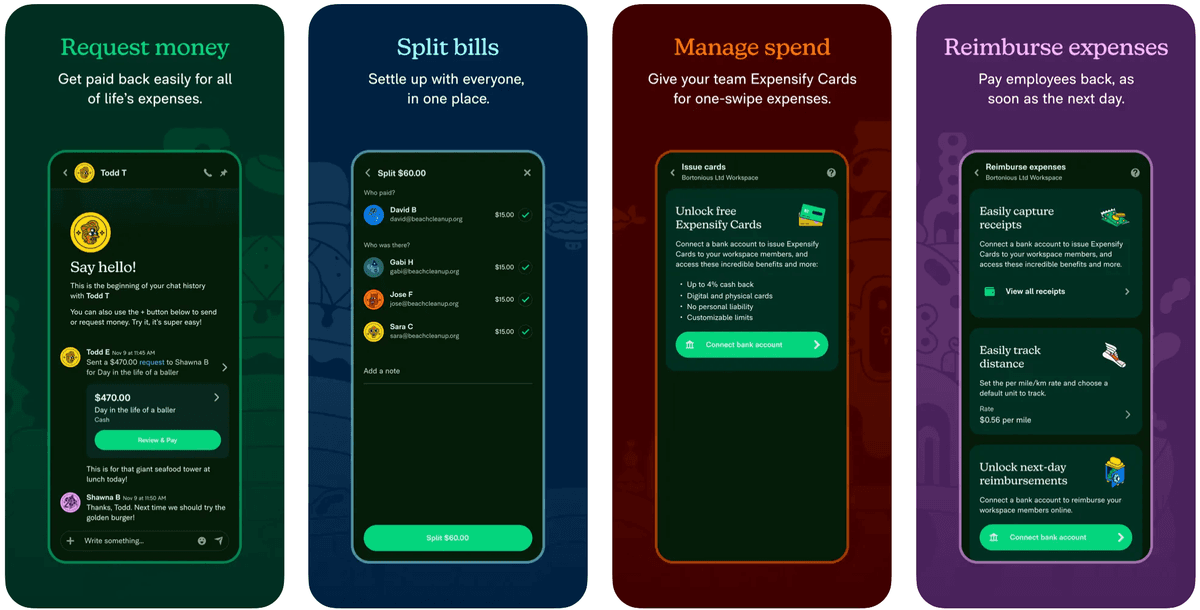
Top Rated on Upwork with public client reviews and $100K+ earned, plus contributions to Expensify. Check the receipts before you commit.
How much does it cost to build a serverless backend with cloud functions?
A production serverless backend typically costs $10K–$50K to build: the low end covers a focused set of functions for a single app with tests and automated deploys, the high end covers many integrations, migration from an existing backend, and full observability. Monthly running costs are the good news — most early-stage products pay single or low double digits until traffic gets serious.
How long does cloud functions development take?
A complete backend for a typical mobile or SaaS product takes four to eight weeks, with the first functions deployed to your staging environment inside two weeks. Smaller scopes — a set of webhook handlers, a notification pipeline, a scheduled-jobs layer — often ship in two to three weeks. Rescuing and reorganizing an existing tangle of functions usually runs three to six weeks depending on how undocumented it is.
Should I use cloud functions or a traditional server for my app backend?
For most early-stage apps, cloud functions win: near-zero cost at low traffic, automatic scaling during spikes, and no servers to patch or babysit. A traditional server makes more sense when you have steady heavy throughput, long-running jobs, or very strict latency requirements. Many production systems sensibly use both — functions for webhooks, triggers, and bursty work; a service for the hot path.
How much does cloud functions development typically cost?
Projects typically fall in the $10K–$50K range depending on scope, integrations, and timeline. I provide a fixed-scope proposal after a 30-minute scoping call.
How long does a cloud functions development project take?
MVPs often ship in 8–12 weeks. Production systems with AI backends or RAG may run 12–20 weeks. Rescue and audit engagements can start within days.
Do you work with startups and enterprises?
Yes. I work with founders, CTOs, product teams, and agencies worldwide — US, UK, EU, and APAC time zones with async updates and weekly demos.
Can you own mobile and backend together?
Yes. I specialize in React Native + Python (FastAPI) + AI (RAG, agents, OpenAI/Claude) under one senior owner — fewer handoffs, faster shipping.
How do I get started?
Book a free 30-minute scoping call on this site, hire through Upwork, or email dhairyasenjaliya@gmail.com with your brief and timeline.