App Store launch services with me run $5K–$30K: the low end covers taking a release-ready app through signing, store setup, and review submission cleanly, while the high end covers full pre-launch hardening — TestFlight beta program, crash monitoring, CI/CD release pipeline, phased rollout, and store listing optimization. I've personally taken 20+ apps through App Store launches across 7+ years of production delivery, including work on platforms used by millions, and I'm Top Rated on Upwork with verified client reviews. Most launches complete in two to six weeks depending on the app's starting condition.
The last mile of shipping an app is a minefield of certificates, review guidelines, privacy declarations, and rollout decisions — and it's where projects that were 'basically done' lose a month. This service exists because launch is a skill separate from development: knowing what Apple's reviewers reject, what breaks at 2x traffic, and what has to be in place before you can afford your first crash.
Weekly demos, async Slack updates, production standards.
04
Ship
Store launch, documentation, knowledge transfer.
Engagements this covers
A finished app that's never been submitted
An agency delivered the codebase and disappeared; the founder has an app but no developer account setup, no signing knowledge, and no idea what review requires. I handle enrollment, certificates, privacy labels, screenshots, and submission — and fix the handful of guideline violations I find in almost every unsubmitted app. Outcome: a live store listing, typically within three weeks, plus documented release steps.
Rejected, twice, and out of ideas
An app has bounced off App Review repeatedly — vague design-spam or minimum-functionality citations, or a metadata violation the team can't decode. I diagnose the actual reason behind Apple's boilerplate, make the targeted fixes, rewrite the review notes, and use the resolution channels correctly. The outcome is approval plus a written explanation of what triggered each rejection, so the next update sails through.
First launch for a funded startup that can't afford a bad one
A startup with press planned needs launch to go right the first time. I run a structured TestFlight beta with staged builds, wire crash reporting and analytics before release, set up phased rollout so a bad build reaches 1% of users instead of all of them, and build the CI pipeline that makes every future release a button press. Launch day becomes boring — which is the goal.
What a launch engagement actually covers
The work splits into four tracks. Compliance: privacy nutrition labels, data-collection declarations, tracking permission flows, required account-deletion capability, and the guideline review I do against your actual app — this is where most rejections are prevented. Infrastructure: code signing sorted properly, a CI/CD pipeline producing store-ready builds, crash reporting and analytics wired before launch rather than after the first fire.
Distribution: the store listing itself — title, subtitle, keyword field, screenshots that communicate in two seconds — plus a TestFlight beta cycle with real users before the public sees anything. And rollout strategy: phased release configuration, a monitoring checklist for the first 72 hours, and a rollback plan. Depending on where your app starts, some tracks are already done; the audit in week one tells us which, and the quote reflects only what's actually needed.
The rejections I see most, and how they're avoided
Three rejection families account for most first-launch pain. Minimum functionality: Apple rejects apps that feel like wrapped websites or thin MVPs — the fix is usually demonstrating native capability and completing half-built flows, not adding features. Privacy violations: undeclared data collection, missing purpose strings for permissions, or login-required apps with no account deletion — all findable in an hour of audit before submission instead of a week of rejection cycles after.
The third family is metadata and review-context failures: screenshots showing features that don't exist, demo accounts that don't work for the reviewer, or payment flows that violate purchase rules. Most of these are process failures, not code failures, which is why a developer who has been through review twenty times catches them on read-through. Every rejection costs roughly a week of calendar time; preventing three of them pays for a meaningful slice of this entire engagement.
What drives cost between $5K and $30K
The starting condition of your app is the dominant variable. An app that's genuinely release-quality — stable, compliant, just never shipped — needs the $5K–$10K version: accounts, signing, listing, submission, and shepherding through review. Apps needing compliance remediation — permission flows, privacy plumbing, account deletion, purchase-rule fixes — land mid-range, because that's real development work with review stakes attached.
The top of the range is launch infrastructure for companies that will release continuously: automated CI/CD with build signing in the pipeline, a structured beta program, staged rollouts, monitoring dashboards, and release runbooks your team owns afterward. Android launch alongside iOS adds Play Console setup, its own review policies, and staged rollout configuration — typically 20–30% on top. What doesn't drive cost: your app's size or category. What does: how much has to be true before shipping it is safe.
Launch mistakes that cost companies real money
Submitting on a deadline with zero buffer is the classic: review takes one to three days when everything is clean, but a single rejection turns your launch date into a moving target with press already booked. Skipping phased rollout is the second — releasing to 100% of users means your worst bug reaches everyone before your first crash report loads. Third is launching without crash reporting and analytics wired: you get one launch's worth of user behavior data, and companies that skip instrumentation simply lose it.
The subtler mistake is treating the listing as an afterthought. Your screenshots and subtitle do more conversion work than anything inside the app, because they're what decides whether a visitor installs. And finally: shipping the iOS and Android launches simultaneously with a team that's never done either. Stagger them a week apart — the first launch always surfaces something you'll be glad the second audience never saw.
When you don't need this service
If your team has shipped to the stores before and has working CI, you don't need me — you need a checklist, and honestly, publicly available ones are good. If you're on Expo with EAS handling builds and submission, the mechanical layer is largely solved; you'd only bring me in for compliance questions or a rejection you can't decode, which is hours of consulting, not a $5K engagement.
And if your app isn't actually finished — core flows broken, backend unstable — launch services can't fix that, and taking your money to submit an app I expect Apple to reject on minimum-functionality grounds would waste both. In that case what you need is development first, and I'll scope that conversation honestly instead. The buyers this service genuinely fits are teams whose product is real but whose store experience is zero — for them, the value is compressing a month of unknowns into a few predictable weeks.
Low-risk to start
✓Fixed-scope proposal first
You approve milestones and a price before any build starts — no open-ended hourly surprises.
✓Working demos every week
You see running software each week, not status reports, so you can course-correct early.
✓One senior owner, no hand-offs
The person who scopes the work is the person who builds it — no junior layers, no agency markup.
✓A track record you can verify
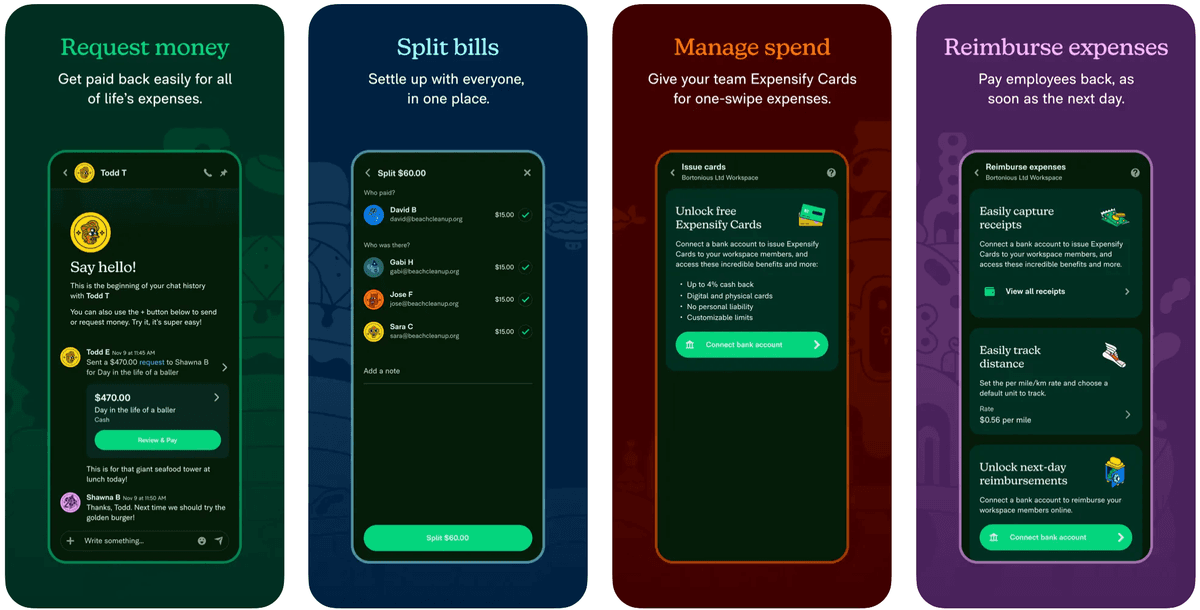
Top Rated on Upwork with public client reviews and $100K+ earned, plus contributions to Expensify. Check the receipts before you commit.
How long does it take to launch an app on the App Store?
From a release-ready codebase: two to three weeks, including developer account setup, store listing, a short TestFlight cycle, and Apple's review — which itself takes one to three days when clean. If your app needs compliance fixes first, four to six weeks is realistic. First-time developer account enrollment adds a few days of Apple-side verification you can't accelerate, so start that immediately.
What do I need before submitting an app to the App Store?
An Apple Developer account ($99/year, with identity verification), correct code signing, a privacy policy URL, accurate privacy nutrition labels, screenshots for required device sizes, and a build that passes guideline review — including account deletion if you have sign-up, and working demo credentials for the reviewer. Miss any one and you're on a rejection cycle costing about a week each round.
My app keeps getting rejected — can you fix that?
Usually, yes. Apple's rejection notices are boilerplate, but having taken 20+ apps through review, I can typically identify the real trigger — minimum functionality, privacy declarations, payment rules, or reviewer-context failures like broken demo accounts — from your rejection history and the binary itself. Engagements like this often resolve in one or two focused weeks: targeted fixes, rewritten review notes, correct use of the resolution and appeal channels.
How much does app store launch services typically cost?
Projects typically fall in the $5K–$30K range depending on scope, integrations, and timeline. I provide a fixed-scope proposal after a 30-minute scoping call.
How long does a app store launch services project take?
MVPs often ship in 8–12 weeks. Production systems with AI backends or RAG may run 12–20 weeks. Rescue and audit engagements can start within days.
Do you work with startups and enterprises?
Yes. I work with founders, CTOs, product teams, and agencies worldwide — US, UK, EU, and APAC time zones with async updates and weekly demos.
Can you own mobile and backend together?
Yes. I specialize in React Native + Python (FastAPI) + AI (RAG, agents, OpenAI/Claude) under one senior owner — fewer handoffs, faster shipping.
How do I get started?
Book a free 30-minute scoping call on this site, hire through Upwork, or email dhairyasenjaliya@gmail.com with your brief and timeline.