App scaling work with me runs $20K–$100K: a performance audit with targeted fixes sits at the low end, and re-architecting a backend and app for an order of magnitude more traffic fills the top. I've shipped apps used by millions of users across 20+ App Store launches, with 7+ years of production delivery behind them. The engagement always starts with measurement — profiling and load testing before any code changes — because paying to fix the wrong bottleneck is the most common way scaling budgets get wasted.
Scaling problems arrive as vague symptoms: the app feels slower, the infra bill keeps climbing, and a big launch is coming that everyone quietly fears. What makes scaling work succeed is refusing to guess — measuring where the system actually breaks, fixing that specific thing, and proving the headroom with a load test.
Weekly demos, async Slack updates, production standards.
04
Ship
Store launch, documentation, knowledge transfer.
Engagements this covers
App slowing down under user growth
A growing product gets more sluggish each month and the team is out of easy ideas. I instrument the stack, profile the slow paths, and typically find a handful of unindexed queries, N+1 patterns, and missing caches doing most of the damage. The outcome is latency measurably down, the fixes documented, and a ranked list of what to tackle next.
Preparing for a launch spike
A marketing moment is scheduled — press, a TV feature, a big partnership — and nobody knows if the system survives it. I load-test to find the actual breaking point, then add autoscaling, queueing for burst work, and feature-flag kill switches for degradable features. The outcome shape: a system verified at multiples of expected peak, and a runbook for launch night.
Mobile performance at scale
A React Native app that was fine at launch now starts slowly and drops frames on mid-range Android devices — where most of its users live. I trace startup, cut and defer bundle weight, fix list virtualization, and eliminate render waste. The outcome is measurably faster cold start and smooth scrolling on the cheap hardware real users own.
Measure first, because guessing is the expensive part
Every scaling engagement starts with instrumentation and a load test, not with opinions. Teams routinely believe the bottleneck is the server size or the framework when it's three database queries; they buy bigger instances, the bill doubles, and the app is exactly as slow — I call this the guessing tax, and it's usually larger than my fee.
A proper baseline takes days and changes everything after it: profiles of the slowest endpoints, a load test that finds the real breaking point, and client-side traces of startup and rendering. From there, scaling work stops being a debate and becomes a ranked to-do list with predicted impact per fix.
Where apps actually bottleneck
It's the database, more often than anyone wants to hear: missing indexes, N+1 query patterns generated by ORMs, unbounded queries that fetch entire tables, and connection pools sized by folklore. After that come chatty APIs — mobile clients making a dozen round trips to render one screen — and synchronous work like image processing or emails blocking request threads when it belongs in a queue.
On the client, the equivalents are unvirtualized lists, render cascades from careless state management, and bloated startup bundles. Genuine CPU saturation — the thing people buy bigger servers for — is the rarest cause on this list. That mismatch between what teams buy and what's actually broken is why the audit comes first.
How the engagement runs week by week
Week one is instrumentation and baseline measurement: tracing on the backend, profiling on the client, and a load test that establishes exactly where and how the system breaks. Week two produces the audit report — every bottleneck found, ranked by user impact against effort, with a recommended sequence.
Then come implementation sprints, highest-leverage fixes first, each verified against the baseline so improvement is measured rather than felt. The engagement ends with a re-run of the original load test to prove the new headroom, plus dashboards and alerts so your team sees the next bottleneck forming months before users do. For audit-only engagements, we stop after the report and your team implements.
What drives cost within $20K–$100K
The starting condition matters most: a system with existing observability is much cheaper to diagnose than one where instrumentation must be built before measurement can begin. An audit with targeted fixes on an observable system is the $20K–$35K zone.
Costs climb with structural work: schema changes that require migrating live data, moving synchronous workloads to queues, introducing read replicas or caching layers — especially under zero-downtime requirements, where every change needs a dual-running phase and rollback plan. Covering both backend and mobile client adds scope, since they're different disciplines that happen to share a symptom. Full re-architecture for ten times the traffic, done safely on a live product, is what the top of the range buys.
Red flags, and when not to buy scaling work
The biggest red flag in a scaling vendor is a proposal without measurement in it — anyone who prescribes microservices, a rewrite, or Kubernetes before profiling your system is selling their default, not your fix. Rewrites in particular are almost never the answer to a performance problem; they're a year of risk to avoid two weeks of query optimization.
And sometimes the right answer is not to buy this at all. If you haven't found product-market fit, scaling headroom is a problem you should be lucky enough to have later — spend on the product. If traffic is stable and users are happy, an occasional index and a monitoring dashboard beat a scaling program. I've told teams exactly that after week one, and it was worth the audit fee to know.
Low-risk to start
✓Fixed-scope proposal first
You approve milestones and a price before any build starts — no open-ended hourly surprises.
✓Working demos every week
You see running software each week, not status reports, so you can course-correct early.
✓One senior owner, no hand-offs
The person who scopes the work is the person who builds it — no junior layers, no agency markup.
✓A track record you can verify
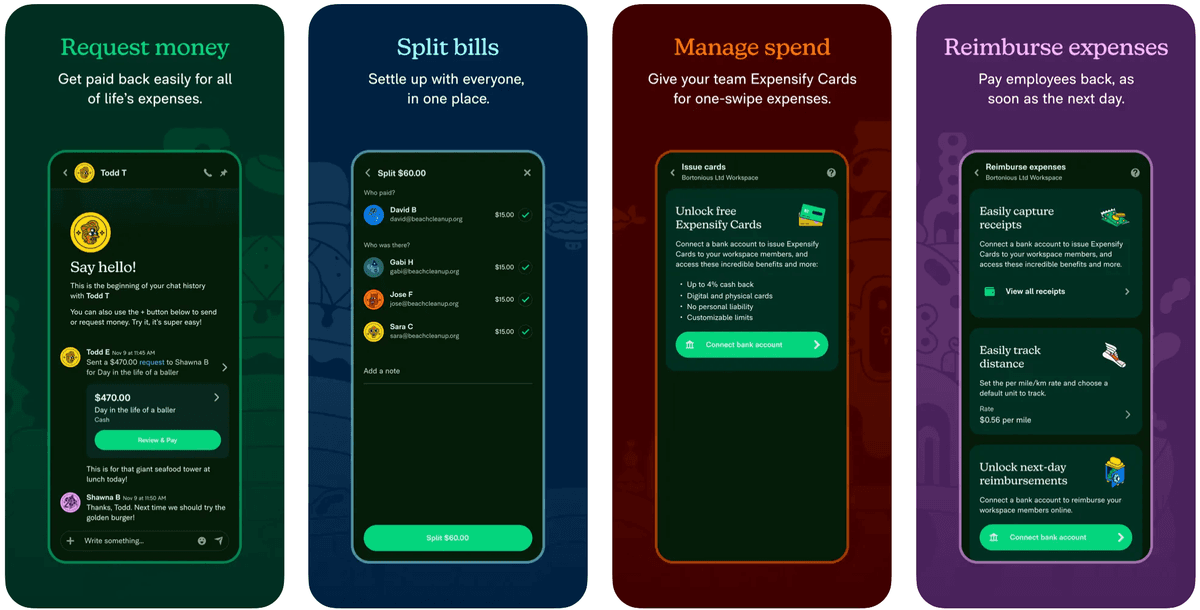
Top Rated on Upwork with public client reviews and $100K+ earned, plus contributions to Expensify. Check the receipts before you commit.
Typical engagements run $20K–$100K. A performance audit with targeted fixes — indexes, query optimization, caching, client-side rendering fixes — lands at $20K–$35K and often resolves the visible symptoms. The higher end covers structural work: queue architectures, read replicas, data migrations under zero downtime, and load-tested preparation for ten times current traffic. The audit comes first regardless, because it determines which of those you actually need.
How do I know if I need scaling help or just better code?
They're usually the same thing — most 'scaling problems' are a handful of slow queries and missing caches, not architecture. The practical test: if latency degrades as traffic grows, if the infra bill grows faster than users, or if a specific launch is coming that current capacity can't absorb, it's time. If the app is slow with ten users, that's a bug hunt, and it's cheaper.
How long does app scaling work take?
The audit takes one to two weeks and produces a ranked list of bottlenecks with predicted impact. Targeted fixes typically take another two to four weeks, with each change verified against the baseline. Structural work — queueing, replicas, live data migrations — runs six to twelve weeks depending on zero-downtime requirements. If you have a launch date, start at least a quarter ahead; load-testing the fix matters as much as making it.
How much does app scaling services typically cost?
Projects typically fall in the $20K–$100K range depending on scope, integrations, and timeline. I provide a fixed-scope proposal after a 30-minute scoping call.
How long does a app scaling services project take?
MVPs often ship in 8–12 weeks. Production systems with AI backends or RAG may run 12–20 weeks. Rescue and audit engagements can start within days.
Do you work with startups and enterprises?
Yes. I work with founders, CTOs, product teams, and agencies worldwide — US, UK, EU, and APAC time zones with async updates and weekly demos.
Can you own mobile and backend together?
Yes. I specialize in React Native + Python (FastAPI) + AI (RAG, agents, OpenAI/Claude) under one senior owner — fewer handoffs, faster shipping.
How do I get started?
Book a free 30-minute scoping call on this site, hire through Upwork, or email dhairyasenjaliya@gmail.com with your brief and timeline.