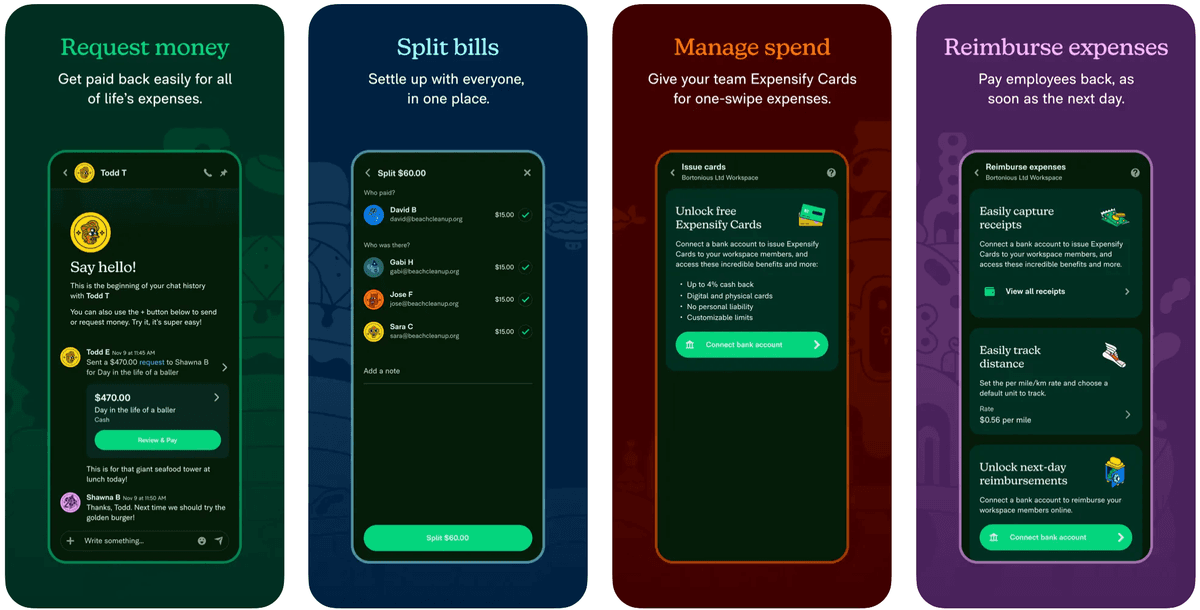
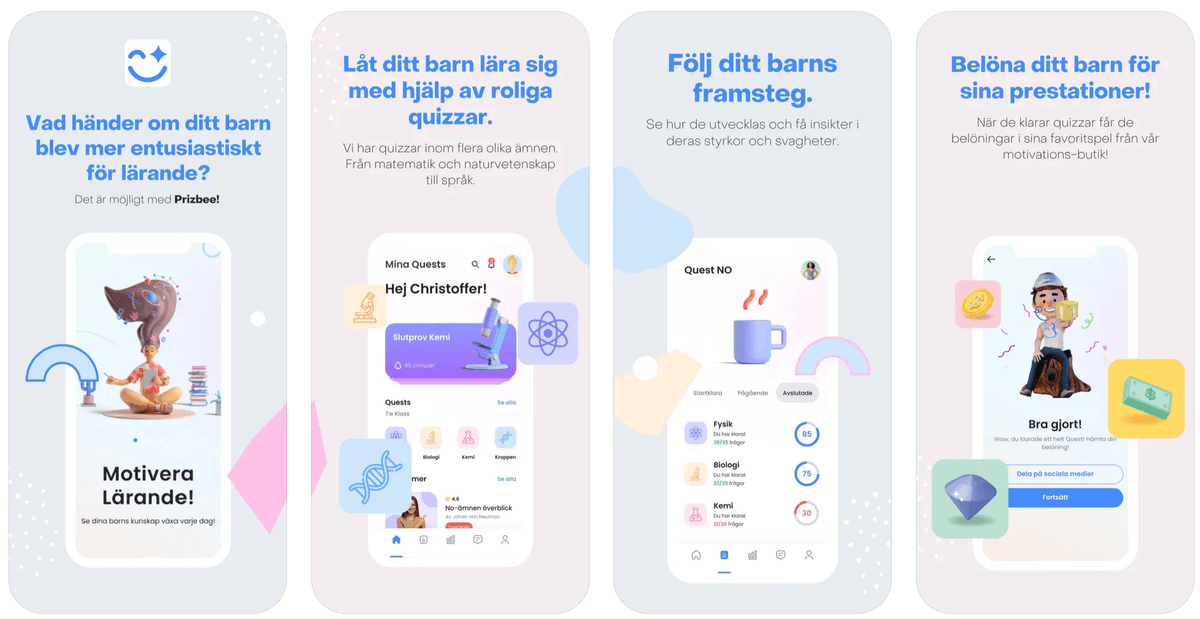
I build AI-powered mobile apps — React Native apps with LLM features, on-device models, camera intelligence, or voice interfaces — for $35K–$180K, typically over 3–6 months. A focused app with one well-executed AI feature lands near the low end; a full product with custom model pipelines, offline AI, and backend infrastructure reaches the high end. This is the intersection I've built my career on: 20+ App Store launches, 7+ years of production delivery, work as a Guest Engineer at Expensify, and apps used by millions of users. Most 'AI app' failures are mobile engineering failures, and that's precisely the part I don't outsource.
AI mobile apps fail in a specific way: the model demo is impressive, then the app around it is slow, drains batteries, breaks offline, and streams tokens awkwardly into a UI designed for instant responses. This service treats the AI feature and the mobile craft as one problem — model integration, latency design, cost control, and App Store review realities together. Teams succeed here when they design for the network and the model failing, because both will.
Weekly demos, async Slack updates, production standards.
04
Ship
Store launch, documentation, knowledge transfer.
Engagements this covers
AI-first consumer app from zero
A founder has a validated concept — an AI coach, scanner, or generator — and needs the actual product. I build the React Native app, the backend that proxies and meters model calls, streaming UI that feels alive during multi-second inferences, and a paywall wired to unit economics. They launch on both stores with per-user AI costs known, not discovered.
Adding an AI feature to an existing app
A company with a shipped app wants a meaningful AI capability — summarization, smart search, a support assistant — without destabilizing what works. I integrate the feature behind a feature flag, design degradation for offline and outage cases, and instrument quality and cost from day one. The feature ships to a percentage rollout, and the app's ratings survive the launch.
On-device AI for privacy or speed
A product needs vision, transcription, or classification that can't ship user data to a cloud — or can't tolerate round-trip latency. I evaluate on-device options (Core ML, whisper-class models, small language models), benchmark them on real mid-tier devices, and integrate the winner with graceful fallbacks. The result runs offline, respects privacy, and doesn't turn phones into hand warmers.
What building an AI mobile app actually involves
There are three systems in every AI mobile app, and buyers usually budget for one. First, the app itself — navigation, state, offline behavior, the fifty screens of ordinary product that surround the AI moment. Second, the AI integration — but not just calling a model: streaming responses into the UI token by token, handling ten-second inferences without users assuming a crash, designing what happens when the model is slow, wrong, or down.
Third, the backend you can't skip: mobile apps must never hold model API keys, so every serious AI app needs a server layer that proxies model calls, enforces per-user rate limits and quotas, caches aggressively, and attributes cost per user. That third system is where AI apps quietly succeed or die — it's the difference between an app whose margins improve with scale and one where every new user deepens the loss. My engagements build all three as one architecture, which is the entire point of hiring someone who does both sides.
Week by week across a typical build
Weeks one and two: product architecture and the riskiest-assumption test. If the concept depends on a model doing something hard — reading receipts, critiquing form in videos, holding a persona — I validate that capability against real samples before building the app around it. Killing a weak concept in week two costs $5K; discovering it in month four costs the project.
Weeks three through eight: core app build in React Native alongside the backend proxy layer, with the AI feature integrated early and crudely rather than late and perfectly — latency and UX problems must surface while architecture is still cheap to change. Weeks nine onward: the polish that separates shipped from launched — streaming UX, error and offline states, onboarding, paywall, analytics, then TestFlight and Play beta cycles and store review. I've been through App Store review with 20+ launches; AI apps attract extra scrutiny around content moderation and subscription clarity, and preparing for that is part of the plan, not a surprise.
What drives cost between $35K and $180K
The AI feature count and depth matter less than buyers expect; the surrounding product drives most of the budget. A single-purpose app — one core AI interaction, clean scope — lands at $35K–$60K. Add accounts, subscriptions, history sync, sharing, and Android/iOS polish, and you're at $70K–$110K. The top of the range is custom model pipelines: fine-tuning, on-device inference, multi-step agent flows, or real-time voice, each of which adds evaluation and infrastructure work beyond simple API calls.
Two cost drivers specific to AI apps deserve honesty. Inference economics: I model per-user AI cost against your pricing before we build, because a $10/month subscription supporting $14/month of API calls is a failed business with excellent retention. And iteration allowance: AI features need tuning cycles against real user behavior that deterministic features don't — budgets that assume feature-complete means done get caught by this.
Mistakes companies make buying AI app development
The most common mistake is hiring an AI specialist who has never shipped a mobile app, or a mobile shop that bolts on AI by calling an API from the client. The first produces a brilliant model wrapped in an app users delete; the second produces leaked API keys, no cost controls, and a feature that dies the moment the network blips. This niche punishes single-sided expertise.
Second mistake: skipping the unit-economics conversation. Ask any vendor what your AI cost per monthly active user will be; if they haven't modeled it, your margin is unmodeled too. Third: demanding every AI capability at once. The strongest AI apps ship one interaction executed superbly, not five executed adequately — scope discipline is more valuable here than anywhere, because each AI feature carries hidden evaluation and tuning cost. Fourth: ignoring store policy. Apple and Google both police AI-generated content and subscription transparency; a vendor without recent review experience is gambling with your launch date.
When not to build an AI mobile app
If your AI concept works equally well as a web app, start there — you'll skip store review, iterate daily instead of per-release, and validate demand for perhaps half the cost, then go native once retention justifies it. If your differentiation is a thin wrapper around a frontier model with no proprietary data, workflow, or distribution, be honest that model providers' own apps are your competition, and they ship your feature next quarter for free.
And if you haven't validated that people want the outcome — not the AI, the outcome — spend $5K on prototypes and interviews before spending $80K on a build. The AI apps that earn their development cost own something defensible: private data, a specific workflow, a distribution channel, or genuine on-device or offline requirements that web can't serve. When one of those is true, mobile plus AI is a real moat, and it's where this service does its best work.
Low-risk to start
✓Fixed-scope proposal first
You approve milestones and a price before any build starts — no open-ended hourly surprises.
✓Working demos every week
You see running software each week, not status reports, so you can course-correct early.
✓One senior owner, no hand-offs
The person who scopes the work is the person who builds it — no junior layers, no agency markup.
✓A track record you can verify
Top Rated on Upwork with public client reviews and $100K+ earned, plus contributions to Expensify. Check the receipts before you commit.
How much does it cost to build an AI-powered mobile app?
With a senior engineer, $35K–$180K. A focused app with one core AI feature, backend cost controls, and both-store launch runs $35K–$60K. Full products with accounts, subscriptions, and multiple AI capabilities land at $70K–$110K. Custom model work — fine-tuning, on-device inference, voice — pushes toward $180K. Budget separately for ongoing inference costs, which scale with usage and must be modeled against your pricing before you build, not after.
How long does AI mobile app development take?
A focused AI app takes about 3 months from kickoff to App Store and Play Store launch; fuller products run 4–6 months. Two phases surprise buyers: an early validation sprint proving the model can actually do the core job before the app gets built around it, and a tuning period after beta users arrive, because AI features need iteration against real behavior. Store review adds one to two weeks, occasionally more for AI apps.
Should my app call AI models directly or through a backend?
Through a backend, always. An app that calls model APIs directly ships your API key to every user's device, where it can be extracted and abused — and you'll have no per-user rate limiting, no caching, no cost attribution, and no way to switch providers without an app-store release. A thin server proxy solves all five. This is the single most common architecture mistake I find when auditing AI apps built elsewhere.
How much does ai mobile app development typically cost?
Projects typically fall in the $35K–$180K range depending on scope, integrations, and timeline. I provide a fixed-scope proposal after a 30-minute scoping call.
How long does a ai mobile app development project take?
MVPs often ship in 8–12 weeks. Production systems with AI backends or RAG may run 12–20 weeks. Rescue and audit engagements can start within days.
Do you work with startups and enterprises?
Yes. I work with founders, CTOs, product teams, and agencies worldwide — US, UK, EU, and APAC time zones with async updates and weekly demos.
Can you own mobile and backend together?
Yes. I specialize in React Native + Python (FastAPI) + AI (RAG, agents, OpenAI/Claude) under one senior owner — fewer handoffs, faster shipping.
How do I get started?
Book a free 30-minute scoping call on this site, hire through Upwork, or email dhairyasenjaliya@gmail.com with your brief and timeline.