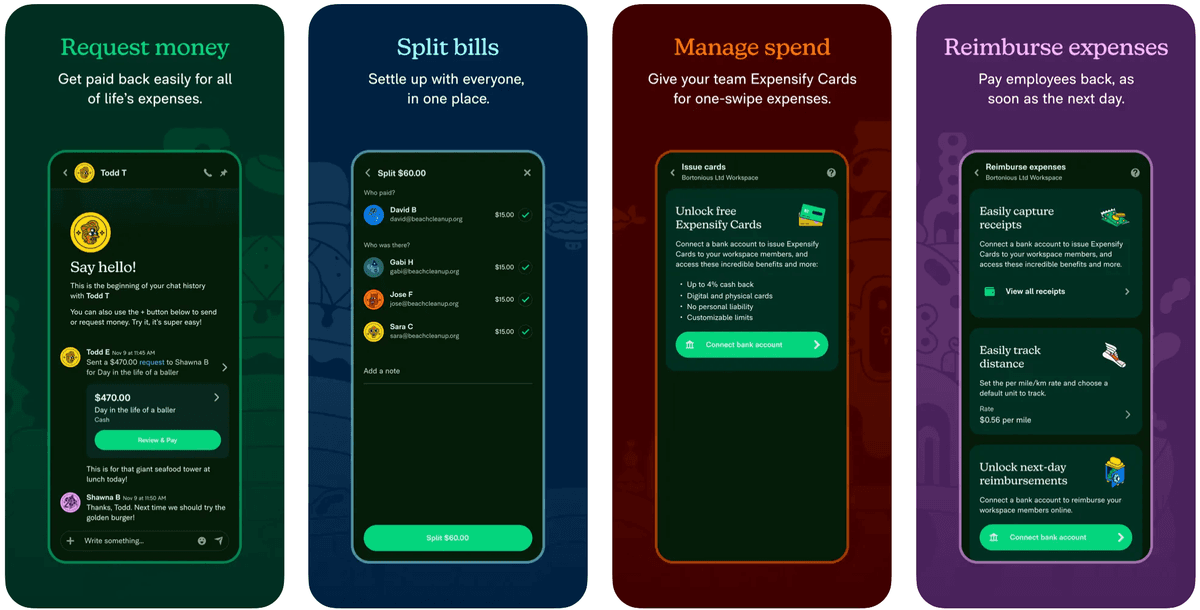
Agencies bring me in as their senior React Native developer on engagements of $25K–$120K — the low end covers overflow capacity or a rescue on a single client project, the high end covers owning full app builds delivered under the agency's brand. I have 20+ App Store launches, 7+ years of production delivery, and worked as a Guest Engineer at Expensify on an expense platform used by millions. I work white-label under NDA as standard: your client sees your agency, and I make your delivery look good.
Agencies win React Native work faster than they can hire for it, and one underqualified subcontractor can burn a client relationship worth years of revenue. What agencies actually need is a senior developer who ships without supervision, communicates in a way that can be forwarded to the client verbatim, and never competes for the account.
Weekly demos, async Slack updates, production standards.
04
Ship
Store launch, documentation, knowledge transfer.
Engagements this covers
Overflow capacity for a won pitch
An agency lands a mobile project bigger than its bench. I slot in as the senior React Native developer — working in the agency's repos, joining standups under their brand if needed, following their delivery process. The agency scales delivery without a six-month hiring cycle, keeps its margin, and hands the client a launched app on the promised date.
Rescuing a subcontracted project gone sideways
A cheaper subcontractor left an agency with a half-built React Native app, an angry client, and a deadline. I audit what exists within the first week, give the agency an honest keep-or-rebuild assessment per module, then stabilize and drive to launch. The agency gets a defensible technical story for the client conversation and a working app for the renewal one.
The senior layer over a junior bench
An agency has capable junior and mid-level developers but no one senior in React Native to own architecture and unblock hard problems — native modules, performance, release automation. I take that layer: reviewing pull requests, setting patterns, handling the store submissions. The agency's existing team ships faster and levels up, without the cost of a senior full-time hire.
How the white-label arrangement actually works
Standard terms, agreed before any code: I sign your NDA and a non-solicitation covering your client, I work in your repositories under an account you control, and all written communication is professional enough to forward directly to the client. If you want me in client calls as part of your team, I present under your brand; if you prefer I stay invisible, the client never learns I exist. The work product, the credit, and the relationship are yours.
This is not a grudging concession — it is the business model. Agencies are repeat buyers, and one successful project typically turns into a standing relationship where I am the React Native answer the agency reaches for. Poaching a client would trade a recurring relationship for a one-off project, which is bad ethics and worse economics. I put it in writing so nobody has to rely on trust alone.
What agencies get from a senior developer versus a cheaper one
The rate difference between a senior React Native developer and a cheap subcontractor disappears the first time something goes wrong — and on mobile, something always goes wrong: an App Store rejection two days before the client demo, a native crash that only reproduces on specific Android devices, a performance cliff when real data replaces test data. With 20+ launches behind me, these are Tuesday problems, not emergencies that consume your project manager's week.
The second difference is communication. A subcontractor who ships decent code but writes updates you must translate before the client can see them costs you account-management hours on every sprint. My status updates, estimates, and risk flags are written to be forwarded. For an agency, that is the real product: delivery you do not have to babysit, wearing your brand.
Engagement models and what they cost
Three models cover most agency relationships. Project-based: the agency scopes a build with its client and I deliver it end to end, typically $25K–$70K per app depending on feature surface — this suits agencies that sell fixed-price work. Retainer: a reserved block of my capacity each month across whatever projects need it, which suits agencies with steady mobile pipeline and gives them a guaranteed senior bench without payroll. Rescue and audit: shorter, intense engagements priced by the situation.
The $120K end of the range is a year-scale relationship — multiple apps or one large client program delivered sequentially. Two pricing notes agencies appreciate: I quote so you can mark up sustainably, because a subcontractor who prices you out of your own margin is useless; and I flag scope creep to you privately before it becomes a client conversation you were not prepared for.
How to vet any React Native subcontractor
Ask for shipped apps you can install today, then actually install them — the App Store is the one portfolio that cannot be faked. Ask what they do when App Review rejects a build, because the answer reveals whether they have lived through the process or only read about it. Give them a small paid task before the big project: a code review of an existing module, a one-week feature slice. How they handle a small engagement — communication cadence, estimate accuracy, pull request quality — predicts the large one almost perfectly.
Check the layer beneath React Native: can they debug a native crash from a stack trace, write a native module when a library does not exist, reason about the bridge and the new architecture? Plenty of JavaScript developers list React Native; the difference surfaces exactly when your client project hits a problem Stack Overflow has not answered.
When an agency should not subcontract this
If mobile is becoming your core offering rather than an occasional project, subcontracting indefinitely caps your margin and your institutional knowledge — use a subcontractor to bridge while you hire, and pick one who is happy to help interview and onboard the hire that replaces him. If the client contract prohibits subcontracting, respect it or renegotiate it; discovering a hidden subcontractor destroys agency-client trust permanently, and I will not work under those terms.
If the project is small enough that coordination overhead eats the subcontractor's leverage — a two-week banner change does not need a senior contractor — keep it in-house. And if your delivery problem is actually a scoping problem, no developer fixes that: an agency that sold a $40K scope for $20K will lose money with any subcontractor, and the honest move is renegotiating the scope, not hunting for someone desperate enough to build it at a loss.
Low-risk to start
✓Fixed-scope proposal first
You approve milestones and a price before any build starts — no open-ended hourly surprises.
✓Working demos every week
You see running software each week, not status reports, so you can course-correct early.
✓One senior owner, no hand-offs
The person who scopes the work is the person who builds it — no junior layers, no agency markup.
✓A track record you can verify
Top Rated on Upwork with public client reviews and $100K+ earned, plus contributions to Expensify. Check the receipts before you commit.
How much does a white-label React Native developer cost an agency?
Senior white-label React Native developers typically bill $70–$150 per hour, leaving room for a sustainable agency markup. Project-based, expect $25K–$70K per app depending on feature surface, and up to $120K for year-scale programs covering multiple apps. Monthly retainers for a reserved capacity block are the most economical model for agencies with a steady mobile pipeline.
How does white-label development stay invisible to the agency's client?
Through standard, written terms: NDA, non-solicitation of the client, work performed in the agency's repositories under agency-controlled accounts, and communication written to be forwarded verbatim. If the agency wants client-facing participation, the developer presents as part of the agency team; otherwise the client never encounters them. Deliverables, credit, and the ongoing relationship belong entirely to the agency.
Should my agency subcontract React Native work or hire in-house?
Subcontract when mobile projects are intermittent, when you need senior capability faster than a hiring cycle allows, or when one project exceeds your bench. Hire when mobile becomes a standing revenue line with year-round utilization. A common path is both: subcontract now to deliver the pipeline you have already sold, and have the subcontractor help interview and onboard your eventual full-time hire.
How much does agency react native developer typically cost?
Projects typically fall in the $25K–$120K range depending on scope, integrations, and timeline. I provide a fixed-scope proposal after a 30-minute scoping call.
How long does a agency react native developer project take?
MVPs often ship in 8–12 weeks. Production systems with AI backends or RAG may run 12–20 weeks. Rescue and audit engagements can start within days.
Do you work with startups and enterprises?
Yes. I work with founders, CTOs, product teams, and agencies worldwide — US, UK, EU, and APAC time zones with async updates and weekly demos.
Can you own mobile and backend together?
Yes. I specialize in React Native + Python (FastAPI) + AI (RAG, agents, OpenAI/Claude) under one senior owner — fewer handoffs, faster shipping.
How do I get started?
Book a free 30-minute scoping call on this site, hire through Upwork, or email dhairyasenjaliya@gmail.com with your brief and timeline.