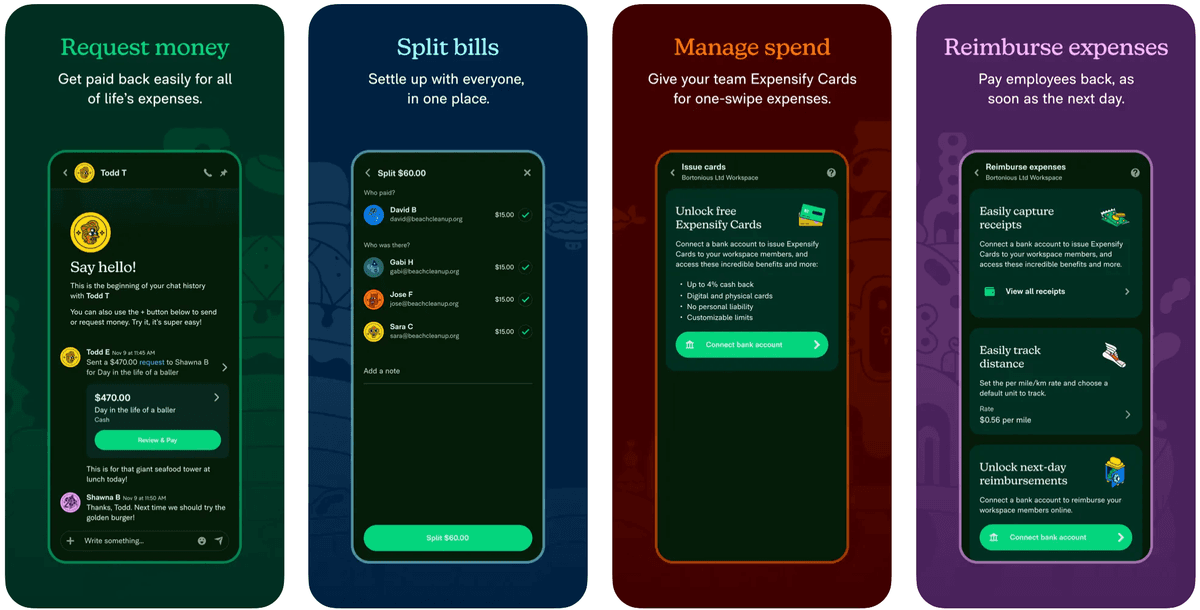
I build production Python APIs — typically FastAPI services with authentication, database design, background jobs, tests, and deployment — with engagements running $15K–$90K depending on integration surface and scale requirements. I bring 7+ years of production delivery, worked as a Guest Engineer at Expensify, and I'm Top Rated on Upwork with $100K+ earned and verified client reviews. A typical build goes from spec to a deployed, documented, monitored API in five to twelve weeks, and because I also ship React Native apps, the APIs I design are shaped by real knowledge of what mobile and web clients actually need from a backend.
An API is the part of your product every client, partner, and future feature depends on — which means its mistakes compound quietly and get expensive to reverse. This service delivers a backend that's boring in the right ways: predictable contracts, honest error handling, tests that let you change things, and an architecture sized to your actual traffic instead of your fundraising deck.
Weekly demos, async Slack updates, production standards.
04
Ship
Store launch, documentation, knowledge transfer.
Engagements this covers
Backend for a new product
A founder has designs and a frontend plan but no backend. I design the data model and API contract first — reviewed together before code — then build the FastAPI service with auth, payments integration, background jobs, and admin tooling, deployed with CI and monitoring. Outcome: a documented API the frontend team builds against from week two, not week ten.
API layer for an AI product
A team is shipping an LLM-powered product and needs the backend that makes it usable: streaming endpoints, job queues for slow model calls, usage metering per customer, rate limiting, and cost tracking. I build the Python service layer between your users and the model providers — the part that turns an API key into an actual product.
Rescuing or extending a legacy service
An existing Python service — often early-stage Flask or Django written under deadline — is slow, untested, and scary to change. I add tests around current behavior first, then refactor incrementally: fixing N+1 queries, extracting tangled logic, adding typing, and modernizing deployment. Outcome: the same product on a service your team can change without holding their breath.
What the engagement looks like week by week
Week one is contract design: the data model, the endpoint surface, auth strategy, and error conventions — written down and reviewed with you before implementation starts, because API contracts are cheap to change on paper and expensive to change once clients depend on them. If a frontend team is waiting, they get a mocked OpenAPI spec this week and stop being blocked.
Weeks two through five build the core: endpoints with validation, the database layer with migrations, authentication and permissions, background jobs for anything slow, and tests written alongside — not after — the code. Weeks six through eight are production work: rate limiting, structured logging, monitoring and alerting, load testing against realistic traffic, deployment pipeline, and documentation. Longer engagements extend into integrations, admin interfaces, or data-heavy features. Every week ships working, reviewable software; there is no big reveal at the end, because big reveals are where backend projects hide their problems.
What drives cost inside $15K–$90K
The endpoint count matters less than people think; the integration surface matters more. A CRUD API over a clean data model is bottom-of-range work even with forty endpoints. What moves the price is third-party integrations (payments, KYC providers, partner APIs — each with its own failure modes and webhook handling), real-time features like websockets or streaming, multi-tenancy with data isolation guarantees, and compliance environments where audit logging and access controls are requirements rather than options.
Scale is a factor, but an honest one: designing for your real traffic plus healthy headroom is included; designing for a hundred times your traffic is a premium you shouldn't pay yet. The other silent cost driver is ambiguity — if the product behavior isn't decided, you're paying engineering rates for requirements discovery. A week of contract design up front is the cheapest insurance in this budget, and it's why I insist on it.
Mistakes companies make buying backend work
The most common one is buying microservices because they've heard monoliths are bad. For nearly every team under fifty engineers, a well-structured monolith is faster to build, cheaper to run, and easier to debug — the operational overhead of distributed systems is a tax you should pay only when team scale forces it. A vendor who proposes six services for a two-person startup is billing you for their preferred architecture, not yours.
Second: treating tests and monitoring as optional line items to cut. An API without tests can't be changed safely, which means your v2 features arrive slower and buggier — the money saved is repaid within months, with interest. Third: no API contract before coding starts, so the frontend integrates against a moving target and the last month of the project is spent reconciling. Fourth: accepting handoff without deployment access, runbooks, and documentation — code you can't operate is not a deliverable, it's a hostage.
How to evaluate a Python API developer
Ask how they'd design an endpoint that triggers a slow operation — you want to hear background jobs and status polling or webhooks, not a request that blocks for ninety seconds. Ask what their migration story is when the schema needs to change with production data live; anyone who has operated a real service will talk about backward-compatible, staged migrations without downtime. Ask how the API should behave when a third-party dependency goes down — the answer distinguishes engineers who've been paged from engineers who haven't.
Then look at evidence over vocabulary: a deployed API they built that's still running, what its p95 latency looked like, what broke in production and how they found out. Framework fluency is table stakes and easy to fake in an interview; operational scar tissue isn't. Finally, check that they write things down — contract docs, decision notes, runbooks — because six months from now the documentation will matter more than any individual code choice.
When you don't need custom API development
If your product is a frontend over standard data operations — user accounts, records, files — a backend-as-a-service platform covers it for a fraction of the cost, and the honest advice is to start there and migrate when you outgrow it, which many products never do. If you need to expose existing database data internally, auto-generated API layers get you there in days without an engagement.
Custom backend work earns its budget when there's real business logic — rules, workflows, money movement, permissions that matter; when you're orchestrating multiple external systems; when AI features need streaming, metering, and cost control; or when compliance rules out shared infrastructure. There's also a timing answer: pre-validation products should usually buy the cheapest backend that works, because the expensive backend you might need later should be shaped by what you learn. If you're pre-launch and unsure, that's a conversation I'll happily have before proposing anything.
Low-risk to start
✓Fixed-scope proposal first
You approve milestones and a price before any build starts — no open-ended hourly surprises.
✓Working demos every week
You see running software each week, not status reports, so you can course-correct early.
✓One senior owner, no hand-offs
The person who scopes the work is the person who builds it — no junior layers, no agency markup.
✓A track record you can verify
Top Rated on Upwork with public client reviews and $100K+ earned, plus contributions to Expensify. Check the receipts before you commit.
A production Python API typically costs $15K–$90K. A clean, well-scoped service — auth, core endpoints, database, tests, deployment — runs $15K–$30K. Payment integrations, real-time features, multi-tenancy, or compliance requirements move you into the middle of the range; complex integration-heavy platforms or AI product backends with streaming and usage metering reach the top. The biggest hidden cost driver is undecided product behavior, which is why contract design comes first.
How long does it take to build a production API?
Five to twelve weeks for most projects. Week one produces the API contract and data model — and unblocks any waiting frontend team with a mocked spec. The core service takes three to five weeks, and production hardening — monitoring, rate limiting, load testing, deployment, docs — takes two to three more. A working staging API usually exists within a month; the remaining time is the difference between a demo and something you can operate.
Should I use FastAPI or Django for my project?
FastAPI for API-first products: it's fast, typed, async-native, and generates client documentation automatically — the right default for backends serving mobile apps, SPAs, or AI features with streaming. Django when you need its batteries — a mature admin interface, built-in auth flows, and an ORM ecosystem — especially for content-heavy or ops-heavy internal platforms. Both scale far beyond most startups' needs; the framework choice matters less than the data model and test discipline behind it.
How much does python api development typically cost?
Projects typically fall in the $15K–$90K range depending on scope, integrations, and timeline. I provide a fixed-scope proposal after a 30-minute scoping call.
How long does a python api development project take?
MVPs often ship in 8–12 weeks. Production systems with AI backends or RAG may run 12–20 weeks. Rescue and audit engagements can start within days.
Do you work with startups and enterprises?
Yes. I work with founders, CTOs, product teams, and agencies worldwide — US, UK, EU, and APAC time zones with async updates and weekly demos.
Can you own mobile and backend together?
Yes. I specialize in React Native + Python (FastAPI) + AI (RAG, agents, OpenAI/Claude) under one senior owner — fewer handoffs, faster shipping.
How do I get started?
Book a free 30-minute scoping call on this site, hire through Upwork, or email dhairyasenjaliya@gmail.com with your brief and timeline.