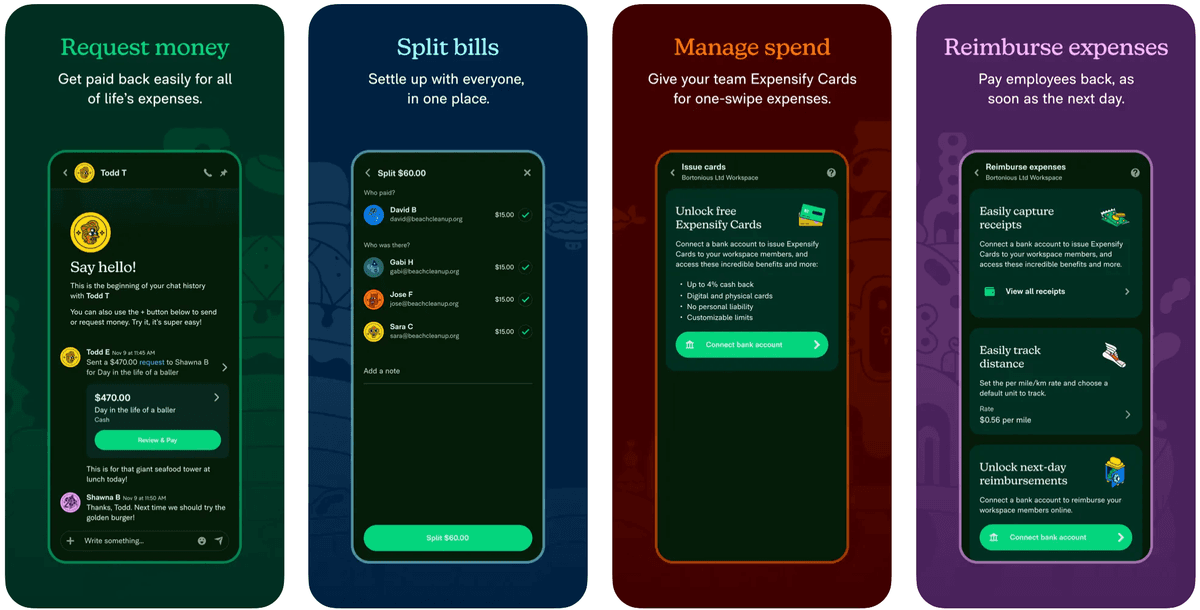
Hiring a senior Python developer on a project basis typically costs $20K–$120K — the low end for a focused API or data pipeline, the high end for a full production backend with AI workloads, background processing, and real scale. I take these projects on personally, with 7+ years of production delivery, experience as a Guest Engineer at Expensify, and apps used by millions of users riding on backends I have built and operated. Engagements open with a scoping call and a fixed first milestone — typically the core API deployed to a staging environment within two to three weeks — so you evaluate running software early, not proposals.
Python backends fail in predictable places: endpoints that worked at demo scale and collapse under real traffic, background jobs nobody can observe, and data pipelines held together by a script only one ex-employee understood. Hiring senior means buying someone who has already made and fixed those mistakes on someone else's budget. Delivery succeeds when the backend is boring — observable, tested, and deployable by anyone on your team.
Weekly demos, async Slack updates, production standards.
04
Ship
Store launch, documentation, knowledge transfer.
Engagements this covers
Production API for a mobile or web product
A startup's app needs a real backend: auth, business logic, payments, push notifications, and an API their frontend team can build against without surprises. I design the schema, build the FastAPI or Django service with tests and typed contracts, and ship it with CI, monitoring, and staging-to-production deployment the team can run without me.
Data pipeline that has outgrown its scripts
A company's reporting runs on cron jobs and a folder of scripts that fail silently and get patched by hand. I rebuild the flow as a proper pipeline — idempotent steps, retries, alerting, and a backfill path — so data lands on schedule and failures page a human with context instead of corrupting a quarter's numbers unnoticed.
AI backend behind an LLM product
A team's AI feature needs serious server-side machinery: async orchestration of model calls, queues for long-running jobs, caching, cost tracking, and streaming to clients. I build the Python service layer that makes the AI feature fast and observable, with evals and load handling, so the product survives its own launch traffic.
What a senior Python hire actually covers
Python's range is exactly why hiring for it goes wrong: the language covers web APIs, data engineering, automation, and the entire AI stack, and no developer is senior at all of it. What I cover in these engagements is the production backend lane — API design and implementation with FastAPI or Django, PostgreSQL schema design, background job systems, third-party integrations, and the AI/LLM service layer where Python now dominates.
Just as important is what surrounds the code: tests that catch regressions, type annotations that make the codebase navigable, deployment pipelines, and observability so problems announce themselves. When you evaluate any Python candidate, make them name their lane. "I do everything in Python" is a junior answer wearing a senior rate — the strong candidates tell you precisely where they are excellent and where you should hire someone else.
How the engagement runs week by week
Weeks one and two produce the skeleton with one real slice through it: repository and CI, database schema for the core entities, deployment to staging, and one genuine endpoint working end to end — because the plumbing decisions made here are the ones that are expensive to change later. From week three the cadence is steady vertical slices: each week completes features from API contract through business logic to persistence, tested and deployed to staging, with the riskiest integrations pulled deliberately early.
The final phase before launch is operational hardening — load testing against realistic traffic, monitoring and alerting, runbooks for the failures worth planning for, and a handoff where your team deploys without me watching. Longer engagements toward the top of the range extend this pattern across more domains: payments, data pipelines, AI orchestration — the rhythm stays identical.
What drives cost inside $20K–$120K
Domain complexity leads. A CRUD API over a clean schema is the $20K–$40K zone; systems with money movement, complex permissions, heavy third-party integration surface, or real-time requirements climb from there, because the cost lives in edge cases and failure handling rather than happy paths. Scale expectations come second: an internal tool for fifty users and a consumer API expecting six-figure traffic are different builds even with identical features — the second needs load testing, caching strategy, and query work the first can skip.
Third is the state of what exists. Greenfield is predictable; inheriting an undocumented legacy codebase adds an archaeology phase that honest vendors price and dishonest ones discover mid-project. AI workloads add their own layer — queues, streaming, eval infrastructure, cost instrumentation — which is why AI-heavy backends cluster in the upper half of the range.
How to interview a Python developer
Skip trivia and ask operational questions, because production seniority lives there. "Walk me through a production incident you caused and how you fixed it" — seniors have war stories with specifics; pretenders have platitudes. "How would you find why an endpoint got slow last Tuesday?" — you want to hear about metrics, traces, and query plans, not guessing. "Show me a schema you designed and defend two decisions" — database judgment separates backend engineers from script writers faster than any algorithm puzzle.
For AI-era hires, add one more: ask how they test code that calls an LLM. Anyone shipping real AI features has an answer involving contract validation and eval sets; anyone who has only built notebooks does not. And weigh evidence over interviews wherever possible — a deployed system they can walk you through, with real decisions defended, outranks any whiteboard performance.
Freelancer, agency, or full-time hire
A senior freelancer fits when the work is a defined build — an API, a pipeline, an AI backend — deliverable in two to six months by one strong owner. You get the actual senior for every hour billed, and the total usually undercuts an agency quote for the same scope by a wide margin. An agency fits when you need several parallel workstreams or contractual staffing guarantees, and you accept paying overhead for coordination.
A full-time hire fits when the backend is your core product and needs continuous evolution for years — but note the math: a strong senior Python engineer costs well into six figures annually plus months of hiring lead time, so a freelance build now with a full-time hire onboarded onto finished, documented infrastructure later is often the sequence that wastes the least money. I regularly hand off to the full-timer who replaces me; that handoff quality is part of what you are buying.
When not to hire a Python developer
If your backend needs are genuinely thin — auth, a database, and simple CRUD for an early product — a backend-as-a-service platform like Supabase or Firebase gets you live in days for a fraction of the cost, and hiring me to hand-build the same thing would be malpractice. Graduate to custom Python when your logic outgrows what those platforms express cleanly, which many products never do.
Skip the hire too if your product direction is still unsettled — backends calcify product assumptions, and rewriting them after a pivot is paying twice. And if the actual pain is an existing system nobody understands, buy a short paid audit before commissioning any build: one to two weeks of investigation often reveals that three targeted fixes beat the rewrite everyone assumed was necessary, and that knowledge costs a tenth of acting without it.
Low-risk to start
✓Fixed-scope proposal first
You approve milestones and a price before any build starts — no open-ended hourly surprises.
✓Working demos every week
You see running software each week, not status reports, so you can course-correct early.
✓One senior owner, no hand-offs
The person who scopes the work is the person who builds it — no junior layers, no agency markup.
✓A track record you can verify
Top Rated on Upwork with public client reviews and $100K+ earned, plus contributions to Expensify. Check the receipts before you commit.
Senior project-based work runs $20K–$120K. A focused REST API or data pipeline lands around $20K–$45K; full production backends with payments, background processing, and scale requirements run $50K–$90K; AI-heavy backends with orchestration, queues, and eval infrastructure reach $120K. Hourly, expect $70–$150 for genuinely senior independent talent. Domain complexity and scale expectations move the price far more than lines of code.
How long does a Python backend take to build?
A production API for a typical product takes six to ten weeks: two for schema, plumbing, and a first deployed slice, then weekly feature increments, then an operational hardening phase with load testing and monitoring. Data pipelines run three to six weeks. Add time when payments, compliance, or an undocumented legacy system are involved — those extend timelines more reliably than feature count does.
Should I use Python or Node.js for my backend?
Both run production at any scale you will realistically hit, so decide on ecosystem fit. Choose Python when your roadmap includes AI, LLM integration, or data work — that ecosystem is overwhelmingly Python and fighting it is expensive. Choose Node when your team is deeply TypeScript-native and wants one language everywhere. The wrong reason to choose either is a benchmark chart; your bottleneck will be your database and your design, not the language runtime.
How much does hire python developer typically cost?
Projects typically fall in the $20K–$120K range depending on scope, integrations, and timeline. I provide a fixed-scope proposal after a 30-minute scoping call.
How long does a hire python developer project take?
MVPs often ship in 8–12 weeks. Production systems with AI backends or RAG may run 12–20 weeks. Rescue and audit engagements can start within days.
Do you work with startups and enterprises?
Yes. I work with founders, CTOs, product teams, and agencies worldwide — US, UK, EU, and APAC time zones with async updates and weekly demos.
Can you own mobile and backend together?
Yes. I specialize in React Native + Python (FastAPI) + AI (RAG, agents, OpenAI/Claude) under one senior owner — fewer handoffs, faster shipping.
How do I get started?
Book a free 30-minute scoping call on this site, hire through Upwork, or email dhairyasenjaliya@gmail.com with your brief and timeline.