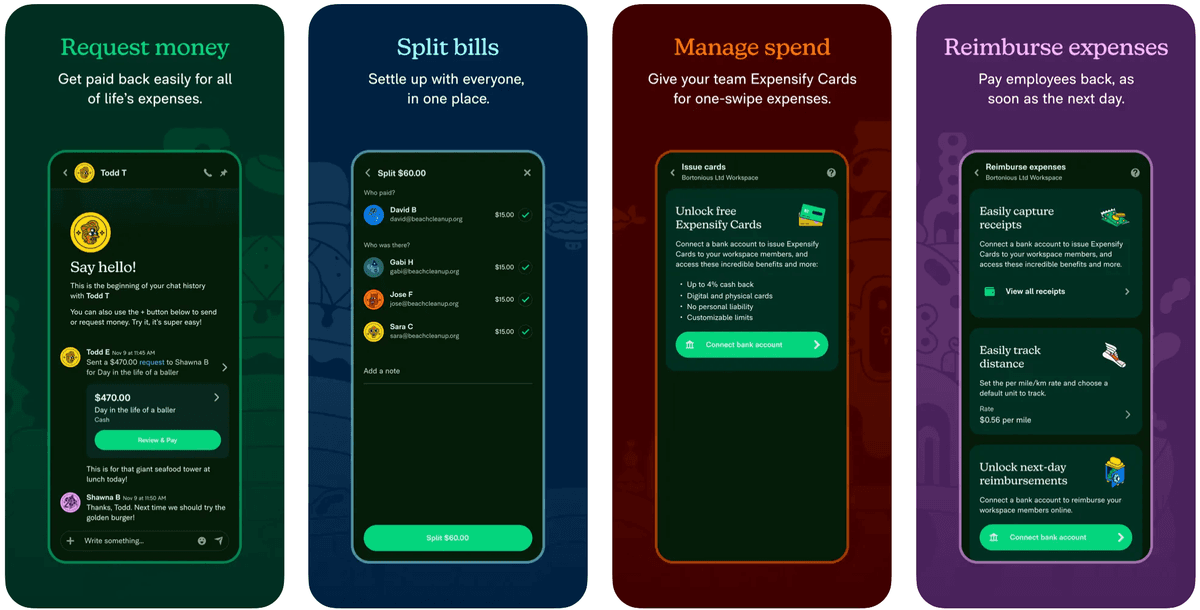
My Python consulting engagements run $10K–$60K: the low end covers a focused audit, performance fix, or small API build, the high end covers multi-month backend and data pipeline delivery. I have 7+ years of production delivery, worked as a Guest Engineer at Expensify, and hold Top Rated status on Upwork with $100K+ earned and verified client reviews. Engagements start with a short diagnostic — I read your code or your architecture before quoting, so the price reflects reality rather than optimism.
Python is where business logic, data, and AI meet, which is why Python problems are rarely just Python problems — they are architecture, data modeling, and deployment problems wearing a Python syntax. Senior consulting means fixing the cause, not the symptom, and leaving your team faster than I found them.
Weekly demos, async Slack updates, production standards.
04
Ship
Store launch, documentation, knowledge transfer.
Engagements this covers
An API that buckles under growth
A product built on Django or FastAPI was fine at a hundred users and is timing out at ten thousand. I profile the real bottlenecks — almost always query patterns and missing indexes before anything exotic — fix the top offenders, add caching where it earns its complexity, and leave a load-test harness so the team sees the next cliff before customers do.
A data pipeline the business depends on but nobody trusts
Reports feed on a chain of scripts and cron jobs that fail silently and produce numbers nobody can verify. I rebuild the pipeline with idempotent steps, validation between stages, alerting on failure, and backfill tooling. The outcome is boring in the best way: numbers that reconcile, failures that announce themselves, and an ops runbook a new hire can follow.
AI features that need a real backend
A team bolted an LLM feature onto their product and it works, but slowly, expensively, and with no visibility. I restructure the Python service around it — async request handling, response streaming, caching of repeated calls, cost and latency instrumentation per feature — so the AI feature performs like part of the product instead of a bolted-on experiment.
The shapes a Python consulting engagement takes
Three patterns cover most of my Python work. Diagnostic engagements, one to two weeks: I read the codebase, profile the system, and deliver a written assessment with a prioritized fix list — useful before a fundraise, after an outage, or when you inherit code from a departed developer. Build engagements, four to twelve weeks: a new API, a data pipeline, an AI service, delivered with tests, deployment, and documentation.
And rescue engagements, the least predictable and most valuable: something in production is failing, slow, or unmaintainable, and the person who built it is gone. Rescues start with stabilization — stop the bleeding, add observability so we can see what the system is doing — before any refactoring, because refactoring a system you cannot observe is gambling. Most clients start with the diagnostic; it is cheap, fast, and makes every subsequent decision better informed.
What drives cost between $10K and $60K
At the bottom: a diagnostic or a single surgical fix — one slow endpoint, one flaky pipeline — lands $10K–$15K. The middle of the range is bounded builds: a production API with authentication, tests, and deployment, or a data pipeline with proper validation and alerting, typically $20K–$40K depending on integration count and data volume. The top is sustained delivery: multi-month engagements where I own a backend or data platform through several releases.
Two things inflate cost that clients rarely anticipate. Undocumented systems I must reverse-engineer before I can safely change them — reading time is real time. And environments where I cannot get access quickly; every week spent waiting on credentials and VPN tickets is a week of calendar without progress. Two things keep cost down: a reachable person who knows the system's history, and willingness to fix causes rather than paint over symptoms.
How I work inside your codebase
First rule: no rewrites by reflex. Existing code that runs in production embodies hundreds of fixed bugs and learned edge cases, and I treat it with respect until there is evidence a piece is beyond repair. I start every change by adding observability — logging, metrics, traces where they are missing — because you cannot responsibly modify what you cannot see. Changes land as small, reviewed pull requests with tests, in your repository, under your CI, from day one.
Second rule: your team levels up as a side effect. I write decision notes explaining not just what changed but why the alternative lost, and I pair with your developers on the tricky parts rather than disappearing into a cave. The engagement fails if you need me forever; it succeeds when the last month of my involvement is mostly your team asking sharper questions.
Mistakes companies make hiring Python help
The most common: hiring on framework keywords instead of systems judgment. Django versus FastAPI is a two-day learning curve for a senior engineer; knowing when a queue beats a cron job, when to denormalize, and when caching will hurt you is a decade. Interview for the judgment. Second: buying a rewrite when you need an audit. Teams in pain assume the codebase is unsalvageable, and consultants happily sell six-month rewrites; in my experience most systems need four weeks of targeted surgery, not a transplant.
Third: accepting work without tests or deployment automation because it was cheaper — you are buying the second engagement at the moment you save on the first. Fourth: no knowledge transfer clause. If nothing in the engagement obliges the consultant to document decisions and pair with your team, you are renting understanding rather than acquiring it, and the meter never stops.
When not to hire a Python consultant
If the problem is a missing product decision — nobody knows what the system should do — a consultant will build you the wrong thing efficiently. Decide first, or hire for discovery explicitly and separately. If the codebase is small and your existing developer just needs a week of focused time, buy them the week; a consultant's ramp-up cost only pays for itself past a certain problem size. If you need someone forty hours a week for a year embedded in team rituals, that is a hire, not a consulting engagement, and pretending otherwise costs a premium for the wrong relationship.
And if your Python problem is actually an infrastructure bill problem — the code is fine but the cloud spend is not — start with a cost review before paying for code changes. Part of a useful diagnostic is telling you which of these categories you are actually in.
Low-risk to start
✓Fixed-scope proposal first
You approve milestones and a price before any build starts — no open-ended hourly surprises.
✓Working demos every week
You see running software each week, not status reports, so you can course-correct early.
✓One senior owner, no hand-offs
The person who scopes the work is the person who builds it — no junior layers, no agency markup.
✓A track record you can verify
Top Rated on Upwork with public client reviews and $100K+ earned, plus contributions to Expensify. Check the receipts before you commit.
Senior Python consultants typically bill $80–$180 per hour. On a project basis: a codebase audit or single performance fix runs $10K–$15K, a bounded build such as a production API or data pipeline runs $20K–$40K, and sustained multi-month backend ownership reaches $60K. A short paid diagnostic first is the best way to get a fixed quote grounded in your actual code.
How long does a typical Python consulting engagement last?
Diagnostics take one to two weeks and end with a written, prioritized findings report. Focused builds and performance rescues run four to twelve weeks. Longer engagements exist but should taper by design — a good consultant transfers knowledge to your team as they go, so the final month is mostly handover rather than dependence. Be wary of open-ended engagements with no defined end state.
Should I hire a Python consultant or a full-time Python developer?
Hire a consultant for bounded, senior-shaped problems: an audit, a rescue, a build your team lacks the specialty for, or an architecture decision you will live with for years. Hire full-time when there is a standing stream of Python work measured in years. Consultants cost more per hour and less per problem; the mistake is using one as a long-term staff substitute at consulting rates.
How much does python consulting typically cost?
Projects typically fall in the $10K–$60K range depending on scope, integrations, and timeline. I provide a fixed-scope proposal after a 30-minute scoping call.
How long does a python consulting project take?
MVPs often ship in 8–12 weeks. Production systems with AI backends or RAG may run 12–20 weeks. Rescue and audit engagements can start within days.
Do you work with startups and enterprises?
Yes. I work with founders, CTOs, product teams, and agencies worldwide — US, UK, EU, and APAC time zones with async updates and weekly demos.
Can you own mobile and backend together?
Yes. I specialize in React Native + Python (FastAPI) + AI (RAG, agents, OpenAI/Claude) under one senior owner — fewer handoffs, faster shipping.
How do I get started?
Book a free 30-minute scoping call on this site, hire through Upwork, or email dhairyasenjaliya@gmail.com with your brief and timeline.