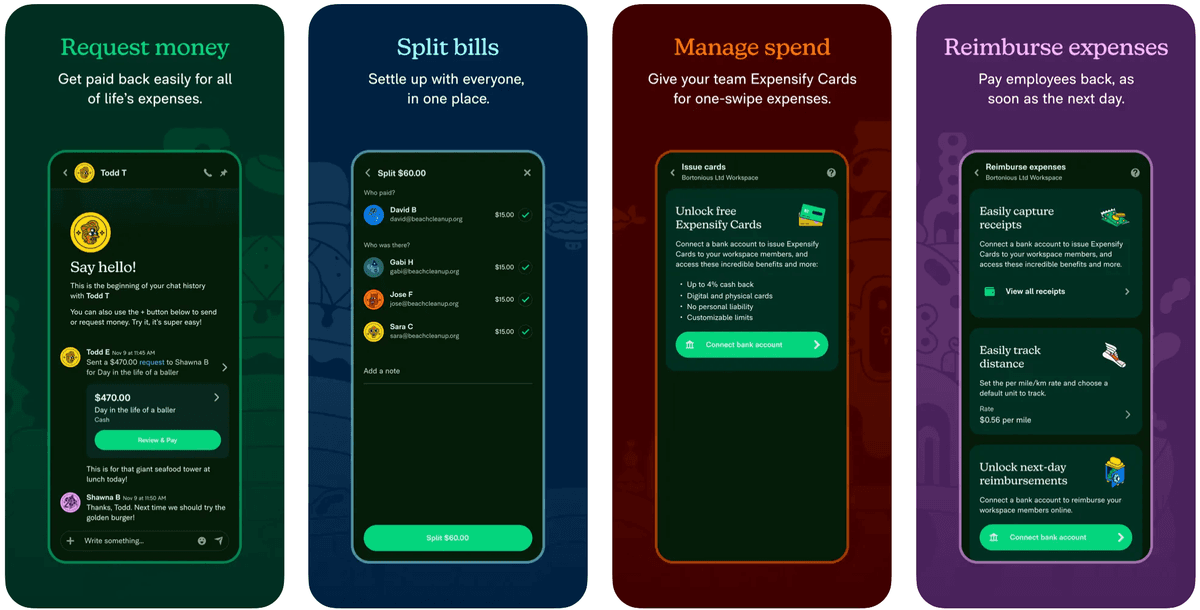
I take on multi-agent system development as scoped engagements typically ranging from $50K to $200K, depending on how many workflows the agents automate, the tool surface they need, and the reliability bar for unattended operation. My background is 7+ years of production delivery including work as a Guest Engineer at Expensify, and I'm Top Rated on Upwork with $100K+ earned and verified client reviews. Engagements start with a two-week workflow mapping phase that identifies which processes actually justify agents, followed by an incremental build where each agent proves itself against evaluation criteria before the next is added.
Multi-agent systems automate workflows too complex for a single prompt — research pipelines, operations processes, tiered support — but most of them fail in production for a mundane reason: nobody defined what correct behavior looks like, so nobody can tell when the system drifts. The engagements that succeed treat agents as software with tests, traces, and cost ceilings, not as a demo that impressed a stakeholder once.
Weekly demos, async Slack updates, production standards.
04
Ship
Store launch, documentation, knowledge transfer.
Engagements this covers
Operations workflow that consumes a team's week
A company burns dozens of hours weekly on a repeatable process — gathering data from internal systems, cross-checking it, drafting outputs for human sign-off. I map the workflow, build a pipeline of specialized agents with tool access to those systems, and put every output behind human review with full traces. Outcome shape: the team reviews instead of assembles, and throughput multiplies.
A single-agent prototype that falls apart at scale
An internal AI assistant built by the team works for simple requests but hallucinates and loops when tasks get long. I decompose it into an orchestrator with focused sub-agents, add an evaluation suite from logged failures, and set per-task cost and step budgets. Outcome shape: reliability numbers you can track, and a system that fails loudly instead of confidently.
AI feature that needs agents behind the scenes
A SaaS product wants a feature where users delegate a multi-step task — generate a report, reconcile records, prepare a filing. I design the agent architecture, define tool contracts against the product's existing APIs, and ship with guardrails, timeouts, and graceful degradation. Outcome shape: a shippable product feature with predictable per-task cost, not a research project.
How the engagement runs, phase by phase
The first two weeks are workflow mapping. I sit with the people doing the process today and document every step, decision point, and exception. This phase kills bad projects cheaply — roughly a third of the time we discover the workflow needs a deterministic pipeline with one LLM call in the middle, not an agent swarm, and I'll say so because building the wrong thing at $50K-plus helps nobody.
When agents are the right answer, the build is incremental. The first milestone is a single agent doing the narrowest valuable slice of the workflow, with an evaluation suite built from real historical cases. It runs in shadow mode alongside the human process until its scores justify trust. Then the orchestration layer and additional agents come in one at a time, each gated by the same discipline. The last phase is operational: dashboards for cost per task, trace storage for debugging, alerting on failure-rate drift, and a handover where your team learns to read traces and extend the evaluation suite themselves.
What moves the price between $50K and $200K
Agent count is not the cost driver people expect — adding a fourth agent to a working orchestration layer is cheap. The real drivers are tool surface, reliability requirements, and evaluation depth. Every system the agents touch needs a tool contract, permissions design, and failure handling; a workflow spanning six internal systems costs multiples of one spanning two, regardless of agent count.
Reliability is the second driver. A system whose every output gets human review can tolerate a meaningful error rate and ships fast. A system acting unattended — sending communications, moving records, triggering downstream processes — needs layered guardrails, extensive evaluation, and staged rollout, and that difference alone can double the engagement. The third driver is evaluation data: if you have historical cases with known-correct outcomes, evals are cheap to build; if correct behavior has to be defined from scratch with your domain experts, budget for that time. A two-system, human-reviewed workflow lands near $50K–$80K; unattended operation across many systems is $150K–$200K territory.
Red flags when buying multi-agent development
The clearest red flag is a vendor who leads with architecture diagrams — ten named agents with arrows between them — before asking what your acceptable error rate is. Agent topology is the easy part; anyone can draw it. The hard part is defining evaluation criteria, handling the 5% of cases that don't fit the happy path, and keeping per-task costs from silently tripling as prompts grow. Proposals that don't mention traces, evals, or cost budgets are describing a demo.
Be equally wary of framework-first pitches. Orchestration frameworks change quarterly, and a system designed around one framework's abstractions becomes hostage to its roadmap. The durable assets in an agent system are the tool contracts, the evaluation suite, and the workflow definitions — those should be framework-independent so the orchestration layer can be swapped without rebuilding everything. Ask any vendor which parts of their proposed system survive a framework migration. Silence answers the question.
When you do not need multiple agents
If your workflow is a fixed sequence of steps with no branching judgment calls, you need a pipeline, not agents — deterministic code with LLM calls at the steps that need language understanding. It's cheaper to build, dramatically easier to debug, and its failure modes are boring, which is what you want in production. I've talked several prospects out of agent architectures during scoping, and those became some of the fastest, most successful projects because the simpler design shipped in half the time.
Agents earn their complexity when the path through the work genuinely varies per case — when the system must decide what to check next based on what it just found, or when tasks decompose differently every time. If you can write the steps of your process on a whiteboard and they're the same every run, that whiteboard is your architecture. The honest scoping question I start every engagement with is: where exactly does judgment happen in this workflow? The answer determines whether you should spend $50K or $15K.
What good delivery looks like at handover
A production multi-agent system is done when your team can answer three questions without me in the room. First: what did the system do on task X yesterday, and why? That requires stored traces of every agent step, tool call, and decision — not console logs, but queryable history a support engineer can read. Second: is the system getting better or worse? That requires the evaluation suite running continuously against live traffic samples, with a dashboard showing accuracy and cost trends. Third: what does it cost per task, and what's the ceiling? That requires hard budgets on steps and spend, enforced in code, so a runaway loop hits a wall instead of your invoice.
Handover includes documentation of every tool contract, a runbook for the failure modes we observed during rollout, and a working session where your engineers extend the evaluation suite themselves. If a vendor's definition of done is a working demo rather than these three capabilities, you're buying a liability with a launch date.
Low-risk to start
✓Fixed-scope proposal first
You approve milestones and a price before any build starts — no open-ended hourly surprises.
✓Working demos every week
You see running software each week, not status reports, so you can course-correct early.
✓One senior owner, no hand-offs
The person who scopes the work is the person who builds it — no junior layers, no agency markup.
✓A track record you can verify
Top Rated on Upwork with public client reviews and $100K+ earned, plus contributions to Expensify. Check the receipts before you commit.
How much does it cost to build a multi-agent AI system?
Production multi-agent systems typically run $50K to $200K. Human-reviewed workflows touching one or two internal systems land near the bottom of that range. Unattended operation, broad tool surfaces across many systems, and strict reliability targets push toward the top. The workflow-mapping phase in the first two weeks produces a firm fixed-scope quote, and it sometimes concludes you need a simpler, cheaper pipeline instead.
How long does it take to ship a multi-agent system to production?
Plan for three to six months to genuine production, not demo. The first agent handling a narrow slice typically runs in shadow mode within four to six weeks. Expanding coverage, building the evaluation suite, and earning the reliability numbers for unattended operation take the remaining time. Vendors promising a full production system in a few weeks are describing a prototype.
Should I build a multi-agent system or a single AI agent?
Start by asking where judgment happens in your workflow. Fixed step sequences need a deterministic pipeline with LLM calls, not agents. A single agent suits tasks with variable paths but one skill set. Multiple agents earn their cost when a workflow spans genuinely different capabilities — research, verification, drafting — that benefit from separation. Most projects I scope need something simpler than the buyer expected.
How much does multi-agent system development typically cost?
Projects typically fall in the $50K–$200K range depending on scope, integrations, and timeline. I provide a fixed-scope proposal after a 30-minute scoping call.
How long does a multi-agent system development project take?
MVPs often ship in 8–12 weeks. Production systems with AI backends or RAG may run 12–20 weeks. Rescue and audit engagements can start within days.
Do you work with startups and enterprises?
Yes. I work with founders, CTOs, product teams, and agencies worldwide — US, UK, EU, and APAC time zones with async updates and weekly demos.
Can you own mobile and backend together?
Yes. I specialize in React Native + Python (FastAPI) + AI (RAG, agents, OpenAI/Claude) under one senior owner — fewer handoffs, faster shipping.
How do I get started?
Book a free 30-minute scoping call on this site, hire through Upwork, or email dhairyasenjaliya@gmail.com with your brief and timeline.