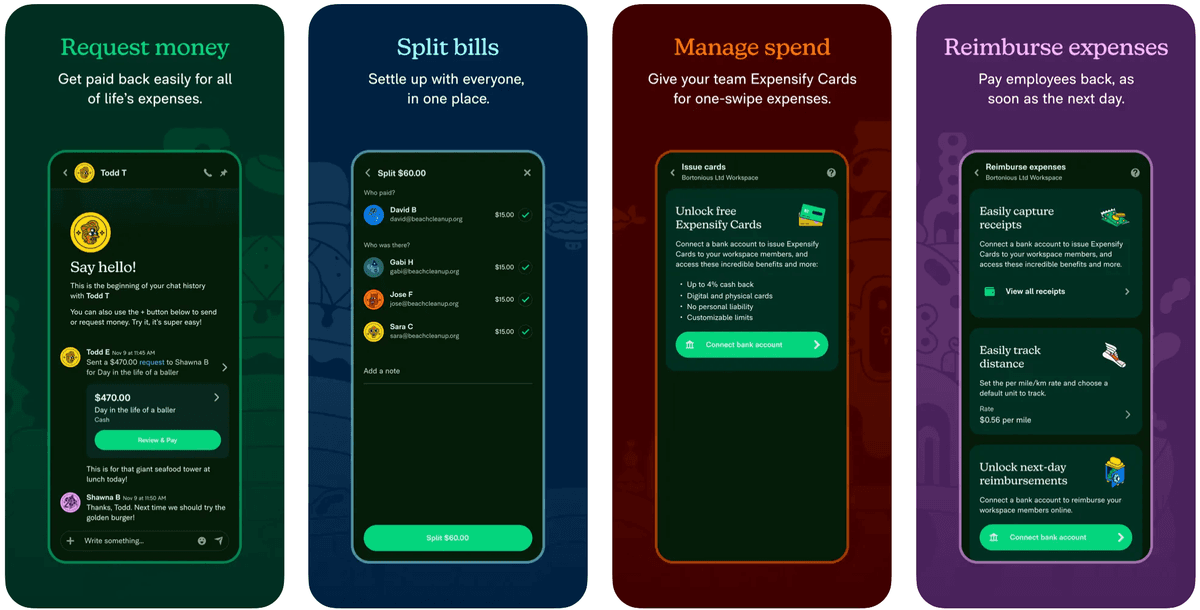
I build production features and backends on the Claude API — tool use, structured outputs, streaming, prompt caching, and evaluation pipelines — with typical engagements running $15K–$90K depending on integration depth and reliability requirements. I've spent 7+ years shipping production systems, worked as a Guest Engineer at Expensify, and I'm Top Rated on Upwork with $100K+ earned and verified client reviews. A typical project goes from API design to a deployed, monitored integration in four to ten weeks, with an eval suite and cost controls included rather than bolted on later.
Getting a Claude integration from 'works in the playground' to 'works for ten thousand users' is where most teams stall: token costs balloon, latency is unpredictable, outputs break downstream parsers, and nobody can say whether last week's prompt change made things better or worse. This service is the engineering discipline around the API call — the part that determines whether the feature survives contact with production.
Weekly demos, async Slack updates, production standards.
04
Ship
Store launch, documentation, knowledge transfer.
Engagements this covers
AI feature inside an existing product
A SaaS team wants document summarization, drafting, or extraction inside their app. I design the API layer — streaming responses to the UI, structured outputs that never break the parser, prompt caching to cut token spend — and ship it behind a feature flag with per-tenant cost tracking. The feature launches with latency and quality numbers, not hopes.
Migration from another provider or a failing integration
A team built on another LLM provider or an early Claude integration that's now slow, expensive, or flaky. I audit the current implementation, rebuild the prompt and context strategy against an eval set, introduce caching and model-tier routing, and migrate with a side-by-side comparison so the switch is justified by measured quality and cost, not vibes.
Backend pipeline processing documents at scale
A company needs thousands of documents classified, extracted, or enriched daily. I build a batch pipeline on the Claude API with concurrency control, retry and rate-limit handling, schema-validated outputs, and per-document cost accounting. The pipeline runs unattended, flags low-confidence results for human review, and produces auditable output your downstream systems can trust.
What Claude API development actually covers
This is backend engineering with a model in the loop, not prompt tinkering. The work includes designing the context strategy — what goes into each request, in what order, and what gets cached; enforcing structured outputs so downstream code receives valid JSON every single time, not 97% of the time; tool use design when Claude needs to call your functions; streaming architecture so users see tokens immediately instead of staring at a spinner; and model-tier routing so you're not paying flagship prices for tasks a smaller model handles identically.
Around that core sits the operational layer: retry logic that distinguishes rate limits from real failures, request-level cost and latency tracking, and an eval pipeline that scores output quality on your actual tasks. Teams usually come to me for the first list and stay because of the second — the operational layer is what they didn't know they needed.
A typical engagement, start to finish
Week one is alignment: I read your codebase, understand the feature, and build an eval set from real examples of the task — inputs paired with what a good output looks like. Weeks two and three produce the core integration: API layer, prompt and context design, structured output enforcement, and the first eval scores, which become our shared definition of quality.
Weeks four through six are iteration and production-readiness: caching strategy to cut cost, streaming and latency work, failure handling, observability, and load behavior under real concurrency. Larger engagements extend from there into tool use, multi-step chains, or batch processing. Every week ends with eval numbers, cost per request, and p95 latency — three metrics that keep the project honest. Handoff includes the eval suite wired into your CI so your team can change prompts safely after I'm gone.
What moves the price inside $15K–$90K
At the low end — around $15K–$25K — sits a single well-defined feature: one task, one integration point, structured outputs, evals, and deployment. The middle of the range adds complexity multipliers: tool use with several functions, multi-step chains where one call's output feeds the next, streaming UIs, or strict latency budgets that force caching and routing work. The top of the range is systems: document pipelines at scale, multi-tenant cost isolation, compliance-sensitive data handling, or migrations where the old system must keep running during cutover.
Token spend itself is rarely the issue — good caching and model routing usually cut projected costs 40–70% — but the engineering to achieve that efficiency is real work. Be suspicious of quotes that don't ask about your request volume and latency requirements: those two numbers determine more of the architecture than the feature description does.
Buying mistakes I see constantly
The most expensive mistake is treating the integration as a thin wrapper — one developer, one week, an API key and a prompt. It works in the demo, then production traffic arrives: rate limits cascade into user-facing errors, malformed outputs crash the parser, and monthly token spend surprises finance. The wrapper mindset defers every hard problem to after launch, when it's most expensive to fix.
Second: no eval set, which means every prompt change is a gamble and quality arguments are settled by whoever has the loudest anecdote. Third: hardcoding a single model with no routing, guaranteeing you overpay on easy requests and can't adopt better models without a rewrite. Fourth: ignoring prompt caching entirely — for context-heavy applications that's often the single largest cost lever available, and I've seen teams leave the majority of their token budget on the table by skipping it.
How to vet a Claude API developer
Ask how they'd handle a response that fails your output schema — you want to hear about schema-enforced structured outputs and validation-with-retry as a designed path, not 'that rarely happens.' Ask what their caching strategy would be for your workload; anyone fluent in the API will immediately ask what's stable across your requests, because that's what prompt caching exploits. Ask how they decide which model tier serves which request — flat 'we use the best model for everything' answers signal they've never owned a token budget.
Then ask for evidence of operating an integration, not just building one: what did they monitor, what broke, what did cost per request look like over time? Builders who've run LLM features in production talk about p95 latency, eval regressions, and rate-limit behavior unprompted. Builders who haven't talk about prompts.
When you don't need custom Claude development
If one internal team wants Claude for research, drafting, or analysis, they need a Claude subscription and maybe an afternoon of setup — not an engineering engagement. If your use case matches an established product category — meeting notes, generic support chat, code review — buy the product; custom development can't beat a company iterating on that exact problem full-time.
Custom work earns its cost in three situations: the model must operate inside your product with your data and your tools; the task is specific enough that generic tools do it badly; or unit economics at your volume demand the caching and routing work that off-the-shelf products won't do for you. If none of those apply, I'd rather tell you in a first conversation than discover it together six weeks into a build — and if a smaller engagement like a prompt-and-eval tune-up solves it, that's what I'll propose instead.
Low-risk to start
✓Fixed-scope proposal first
You approve milestones and a price before any build starts — no open-ended hourly surprises.
✓Working demos every week
You see running software each week, not status reports, so you can course-correct early.
✓One senior owner, no hand-offs
The person who scopes the work is the person who builds it — no junior layers, no agency markup.
✓A track record you can verify
Top Rated on Upwork with public client reviews and $100K+ earned, plus contributions to Expensify. Check the receipts before you commit.
A production Claude API integration typically costs $15K–$90K. A single well-scoped feature — one task, structured outputs, evals, deployment — runs $15K–$25K. Tool use, multi-step chains, strict latency budgets, or migration from an existing provider push into the middle of the range. Large-scale document pipelines and multi-tenant systems reach the top. Ongoing token costs are separate but are usually reduced 40–70% by proper caching and model routing.
How long does a Claude API integration take to build?
Four to ten weeks for most features. Week one covers alignment and building an eval set from your real data; weeks two to three deliver the working integration; the remainder is caching, latency work, failure handling, and monitoring. A prototype exists by week three — the rest is the production engineering that keeps it working under real traffic. Complex tool-use systems or migrations with parallel running extend the timeline.
Should I use the Claude API directly or go through a framework?
For most production features, direct API integration with a thin internal layer beats heavy frameworks. Frameworks speed up demos but add abstraction that fights you on the things production cares about — caching, streaming, precise error handling, and cost attribution. I typically build a small, typed client layer owned by your codebase: you keep full control of requests and can adopt new API features the day they ship instead of waiting for a framework release.
How much does claude api development typically cost?
Projects typically fall in the $15K–$90K range depending on scope, integrations, and timeline. I provide a fixed-scope proposal after a 30-minute scoping call.
How long does a claude api development project take?
MVPs often ship in 8–12 weeks. Production systems with AI backends or RAG may run 12–20 weeks. Rescue and audit engagements can start within days.
Do you work with startups and enterprises?
Yes. I work with founders, CTOs, product teams, and agencies worldwide — US, UK, EU, and APAC time zones with async updates and weekly demos.
Can you own mobile and backend together?
Yes. I specialize in React Native + Python (FastAPI) + AI (RAG, agents, OpenAI/Claude) under one senior owner — fewer handoffs, faster shipping.
How do I get started?
Book a free 30-minute scoping call on this site, hire through Upwork, or email dhairyasenjaliya@gmail.com with your brief and timeline.