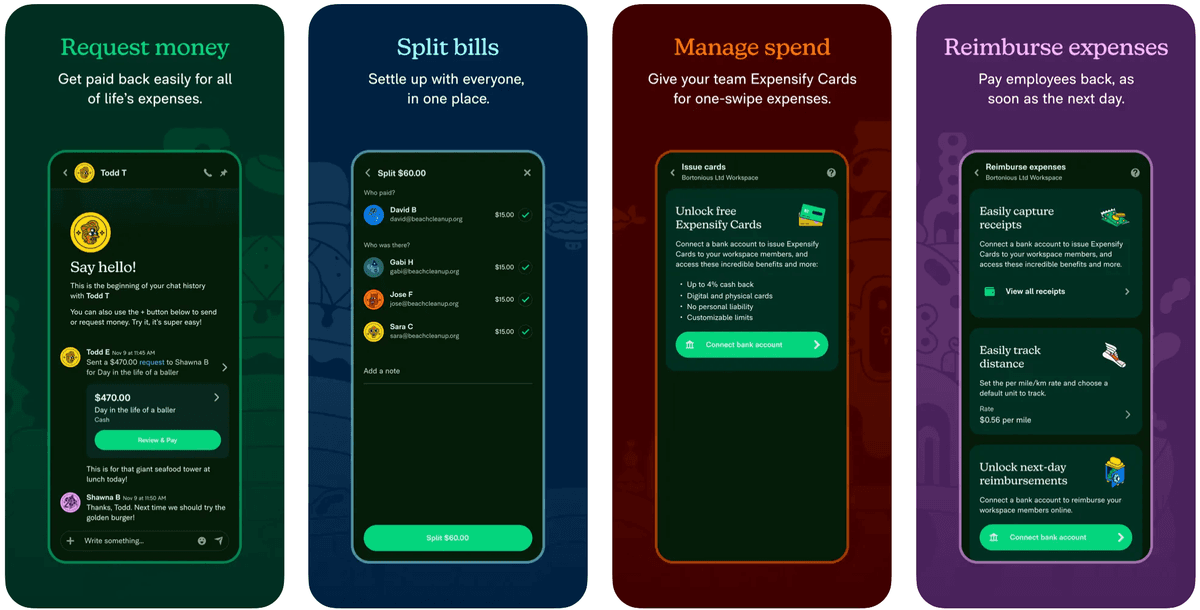
Building a production LLM application with me runs $25K–$150K, driven mostly by how many workflows the system handles and how deep the evaluation and integration work goes. I have 7+ years of production delivery and am Top Rated on Upwork with $100K+ earned and verified client reviews, and my work as a Guest Engineer at Expensify means I have shipped inside a codebase serving millions. The engagement starts with a short discovery phase that turns your use case into a measurable spec, so cost is pinned to defined workflows rather than open-ended experimentation.
LLM features that dazzle in a demo routinely fall apart against real inputs: edge-case documents, adversarial users, model updates that silently change behavior. This service builds the unglamorous majority of an LLM application — evaluation, structured outputs, retries, cost control, observability — so the impressive demo becomes dependable software.
Weekly demos, async Slack updates, production standards.
04
Ship
Store launch, documentation, knowledge transfer.
Engagements this covers
Internal copilot for an operations team
Your ops or support team spends hours on lookups and drafting that an assistant with access to your systems could do in seconds. I build an internal LLM application wired to your tools and data, with permissions respected and every action logged. The outcome is measured time saved per task — and a team that trusts the assistant because it cites what it did.
Document workflow automation
Invoices, contracts, claims, applications — a human reads each one and keys data into a system. I build an extraction pipeline with structured outputs, confidence scoring, and a human-review queue for the cases the model flags as uncertain. Companies typically automate the clear majority of volume while keeping humans on genuinely ambiguous cases, which is where they belong.
Customer-facing assistant inside an existing product
You want a chat or assistant feature in your product, but you are rightly nervous about it saying something wrong to a paying customer. I ship it behind guardrails: scoped knowledge, refusal behavior, escalation to humans, and an evaluation suite that runs before every prompt change. It launches as a controlled rollout with quality metrics, not a hopeful toggle.
The demo is 20% of the project
Getting a language model to do something impressive once takes an afternoon. Getting it to do the same thing correctly across thousands of messy real-world inputs is the actual engineering. The gap is filled by work that never appears in demos: input validation, structured output schemas with repair logic, timeout and retry strategy, per-request cost tracking, prompt versioning, and logging detailed enough to debug a bad answer from last Tuesday.
When I quote an LLM application, roughly a fifth of the budget goes to the visible feature and the rest to this reliability layer. Buyers who compare my quote against someone pricing only the demo are comparing two different products. The cheap version exists — it is the one that gets quietly turned off three weeks after launch when the support tickets start.
What moves the price between $25K and $150K
Three variables dominate. First, workflow count and shape: a single classify-or-extract pipeline is the low end; multi-step agentic flows where the model plans, calls tools, and acts push costs up because every step multiplies the failure surface. Second, integrations: each system the application reads from or writes to — CRMs, ticketing, internal databases — brings auth, rate limits, and data-mapping work. Third, evaluation depth: a customer-facing application needs golden datasets, regression suites, and adversarial testing that an internal tool can partially skip.
Latency and volume targets matter too. An application answering in twenty seconds for fifty users a day is a different build from one streaming answers in two seconds for fifty thousand. I price against these variables explicitly in the proposal, so you can see which requirement costs what — and trim deliberately.
How the engagement runs
The first week is discovery: I collect real examples of the inputs and desired outputs — actual documents, actual tickets, actual questions — and turn them into a measurable specification with acceptance thresholds. Vague goals like summarize accurately become testable ones like extract these seven fields at a defined accuracy on a reference set.
Weeks two through four build the core pipeline against that reference set, with an evaluation harness running from the start. The middle of the engagement wires in your systems and handles the ugly cases discovery surfaced. The final weeks are production hardening: load behavior, cost ceilings, monitoring, and a controlled rollout — internal users first, then a slice of customers. You get working software and eval numbers weekly; the decision to widen rollout is always made on measured quality, not optimism.
Red flags when hiring an LLM developer
Ask any candidate how they know their system works. If the answer involves gut feel, trying a few examples, or pointing at the demo, keep looking — the only credible answer involves an evaluation set and numbers that get re-run on every change. Ask what happened when a model provider deprecated or updated a model under them; anyone with production experience has a story and a mitigation.
Be wary of framework name-dropping as a substitute for judgment — chains and agent libraries are tools, not architecture. Be equally wary of quotes that omit evaluation, monitoring, and a rollout plan; that is the demo priced as the product. And treat a promise to fine-tune a custom model in the first conversation as a sales move: most business problems are solved with better retrieval and prompting at a tenth of the cost.
When you should not build a custom LLM application
If an off-the-shelf product already does the job — a support bot vendor, a document-processing SaaS, a copilot your existing tools ship with — buy it. Custom development earns its cost when your workflow, data, or integration needs do not fit the boxed version, or when the capability is core to your product rather than back-office plumbing.
Hold off, too, if your process is not yet stable: automating a workflow your team changes every month bakes churn into software. And if nobody on your side can own the system afterward — reviewing flagged cases, watching quality dashboards, approving prompt updates — build that ownership plan first. An LLM application is not fire-and-forget; models drift, inputs drift, and unowned AI systems degrade quietly until someone notices in a customer meeting.
Low-risk to start
✓Fixed-scope proposal first
You approve milestones and a price before any build starts — no open-ended hourly surprises.
✓Working demos every week
You see running software each week, not status reports, so you can course-correct early.
✓One senior owner, no hand-offs
The person who scopes the work is the person who builds it — no junior layers, no agency markup.
✓A track record you can verify
Top Rated on Upwork with public client reviews and $100K+ earned, plus contributions to Expensify. Check the receipts before you commit.
Expect $25K–$150K for a production-grade build with me. A single well-defined pipeline — classification, extraction, drafting — lands near the low end. Multi-step agentic workflows, several system integrations, and customer-facing quality requirements move toward the high end. The quote itemizes cost per requirement, so you can cut scope knowingly rather than discover the trade-offs after signing.
How long does it take to build an LLM application?
Six to twelve weeks is typical: one week of discovery to build a measurable spec, three to four on the core pipeline and evaluation harness, and the rest on integrations, hardening, and a staged rollout. Internal tools ship faster than customer-facing features because the acceptable-error bar is lower. Meaningful eval numbers exist by roughly week three.
Should I fine-tune a model or use prompting and retrieval?
Start with prompting and retrieval — they solve most business use cases, cost far less, and adapt instantly when requirements change. Fine-tuning earns its complexity for narrow, high-volume tasks with stable requirements, strict latency or cost targets, or a tone and format that prompting cannot hold. I treat it as a later optimization justified by eval data, never the opening move.
How much does llm application development typically cost?
Projects typically fall in the $25K–$150K range depending on scope, integrations, and timeline. I provide a fixed-scope proposal after a 30-minute scoping call.
How long does a llm application development project take?
MVPs often ship in 8–12 weeks. Production systems with AI backends or RAG may run 12–20 weeks. Rescue and audit engagements can start within days.
Do you work with startups and enterprises?
Yes. I work with founders, CTOs, product teams, and agencies worldwide — US, UK, EU, and APAC time zones with async updates and weekly demos.
Can you own mobile and backend together?
Yes. I specialize in React Native + Python (FastAPI) + AI (RAG, agents, OpenAI/Claude) under one senior owner — fewer handoffs, faster shipping.
How do I get started?
Book a free 30-minute scoping call on this site, hire through Upwork, or email dhairyasenjaliya@gmail.com with your brief and timeline.