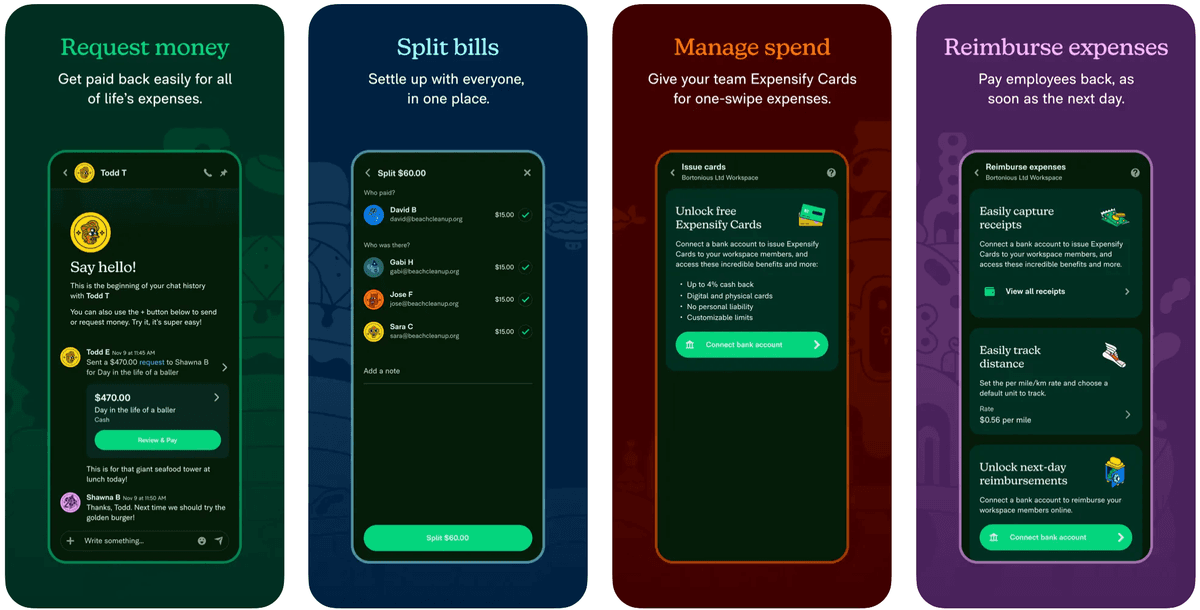
LangGraph development with me runs $25K–$120K: a single well-scoped agent with a handful of tools starts around $25K, while multi-agent systems with human-in-the-loop checkpoints, persistence, and production observability reach the top of the range. I bring 7+ years of production delivery, I'm Top Rated on Upwork with $100K+ earned and verified client reviews, and I've worked as a Guest Engineer at Expensify. Every agent I ship comes with graph-level tracing and an eval suite, so you can see exactly what the agent did on any request and why.
LangGraph is the right tool when a linear chain stops being enough — when your workflow needs loops, branching, durable state, or a human approving steps in the middle. Most agent projects fail on state design and interrupt handling, not on prompts, and that architectural work is exactly what this service delivers.
Weekly demos, async Slack updates, production standards.
04
Ship
Store launch, documentation, knowledge transfer.
Engagements this covers
Support agent with human escalation
A company drowning in support tickets wants an agent that triages, looks up orders and account state through tools, and drafts replies — but a human must approve anything involving refunds. I build the graph with interrupt points, approval UI hooks, and full traces. The outcome is measured ticket deflection with an auditable record of every action the agent took.
Multi-step internal research agent
An operations team spends hours each week compiling reports from internal systems. I build a checkpointed LangGraph agent that queries those systems, cross-references results, retries transient failures, and resumes from its last good state instead of starting over. The outcome shape: hours of manual compilation replaced by a reviewed draft, with each claim traceable to its source query.
Migrating a brittle chain to a graph
A team's existing LangChain pipeline works on the happy path but can't handle retries, branching, or partial failure, and debugging means reading raw logs. I refactor it into a typed state graph with explicit nodes, persistence, and tracing. The outcome is the same capability with recoverable failures and a graph diagram the whole team can actually reason about.
Why LangGraph instead of a chain or a while-loop
A chain is fine when every request follows the same steps in the same order. The moment you need the model to decide what to do next, retry a failed branch, pause for human approval, or resume tomorrow from where it stopped today, you're managing state machines — and hand-rolling that in a while-loop produces code that only its author can debug.
LangGraph gives you explicit nodes, typed state, checkpointing, and interrupts as first-class primitives. That's the honest pitch: not magic autonomy, but a state machine framework that makes agent behavior inspectable. If your workflow is genuinely linear, I'll tell you so and build the cheaper thing.
How the engagement runs week by week
The first week is spent away from prompts entirely: I define the state schema, the tool contracts, and the decision points where the graph branches or waits for a human. Getting state design right up front is what separates agents that ship from agents that get rewritten.
Weeks two through four build the graph node by node, each with its own tests, plus an eval set of full scenarios — not just single responses, but whole trajectories the agent should complete. After a mid-project demo, the remaining weeks add persistence, interrupt handling, tracing, and token budgets, ending with a handover where your team runs and modifies the graph without me.
What moves the price within $25K–$120K
Tool count and human-in-the-loop requirements are the two biggest levers. Each tool the agent calls needs a contract, error handling, and eval coverage; each human approval point needs interrupt logic, a resumption path, and usually UI work on your side that we coordinate.
Beyond that: durable persistence across sessions costs more than in-memory state, multi-agent orchestration costs more than a single graph, and compliance environments that require full audit trails of every model decision add real work. A single agent, five or six tools, no human gates — that's the $25K–$45K zone. Multi-agent systems with approvals and audit requirements occupy the top half of the range.
Red flags in agent projects
The biggest red flag is the phrase 'fully autonomous.' Production agents that touch money, customers, or data need interrupt points, and any vendor promising you'll never need a human in the loop is selling the demo, not the system. Second red flag: no token budget or recursion limit in the design — agents that can loop are agents that can spend unboundedly.
Also watch for demos that only show success cases. Ask to see the agent fail: what happens when a tool times out, when the model returns malformed output, when the same request is retried. Teams that can't demo failure handling haven't built it.
When you should not build an agent
If you can write the workflow as a flowchart with no model-made decisions, write code — it's cheaper, deterministic, and testable with tools your team already knows. If the task is a single generation step (summarize this, classify that), one LLM call with good prompting beats an agent on cost, latency, and debuggability every time.
Agents earn their complexity only when the path through the work genuinely varies per request and the model must choose among tools. I turn down agent projects that are secretly cron jobs, because six months later the maintenance bill lands on you, not me.
Low-risk to start
✓Fixed-scope proposal first
You approve milestones and a price before any build starts — no open-ended hourly surprises.
✓Working demos every week
You see running software each week, not status reports, so you can course-correct early.
✓One senior owner, no hand-offs
The person who scopes the work is the person who builds it — no junior layers, no agency markup.
✓A track record you can verify
Top Rated on Upwork with public client reviews and $100K+ earned, plus contributions to Expensify. Check the receipts before you commit.
Production LangGraph work runs $25K–$120K. A single agent with a handful of tools, tracing, and an eval suite lands around $25K–$45K. Human-in-the-loop approval flows, durable persistence across sessions, multi-agent orchestration, and audit-trail requirements each push the price up. The cost driver people underestimate is tools: every tool needs contracts, error handling, and eval coverage, so a twenty-tool agent is a different project than a five-tool one.
How long does it take to ship a production agent?
Four to twelve weeks. The first week is state and tool design — no prompts — because state schema mistakes are what force rewrites later. A single-graph agent typically reaches production in four to six weeks including eval coverage and tracing. Multi-agent systems or workflows with human approval gates run eight to twelve, mostly because approval flows require coordination with your product's UI and permissions.
Should I use LangGraph or build my own orchestration?
Use LangGraph if you need checkpointing, human-in-the-loop interrupts, or resumable multi-step state — building those primitives yourself takes longer than the rest of the project combined. Roll your own thin loop if your agent is simple: one model, three tools, no persistence. The mistake I see most is the middle path: teams hand-rolling half of LangGraph's feature set, poorly, then migrating anyway after the first production incident.
How much does langgraph development typically cost?
Projects typically fall in the $25K–$120K range depending on scope, integrations, and timeline. I provide a fixed-scope proposal after a 30-minute scoping call.
How long does a langgraph development project take?
MVPs often ship in 8–12 weeks. Production systems with AI backends or RAG may run 12–20 weeks. Rescue and audit engagements can start within days.
Do you work with startups and enterprises?
Yes. I work with founders, CTOs, product teams, and agencies worldwide — US, UK, EU, and APAC time zones with async updates and weekly demos.
Can you own mobile and backend together?
Yes. I specialize in React Native + Python (FastAPI) + AI (RAG, agents, OpenAI/Claude) under one senior owner — fewer handoffs, faster shipping.
How do I get started?
Book a free 30-minute scoping call on this site, hire through Upwork, or email dhairyasenjaliya@gmail.com with your brief and timeline.