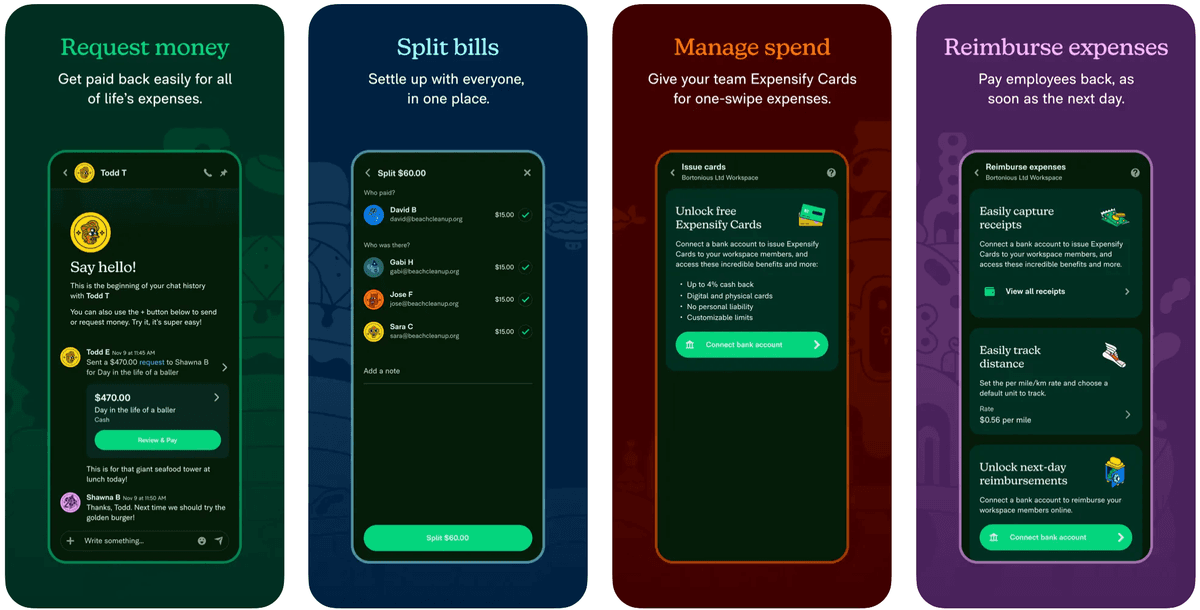
I take on LangChain development engagements — new agent and RAG pipelines, or rescuing existing ones — in the $20K–$100K range, with most production builds landing between $30K and $60K over 8–12 weeks. The spread depends on how many tools and data sources the chain orchestrates and whether you need evaluation and observability built in (you do). I've spent 7+ years shipping production systems, I'm Top Rated on Upwork with $100K+ earned and verified client reviews, and I've worked as a Guest Engineer at Expensify, so the code I hand over is built to be operated, not just demoed.
LangChain makes it easy to build an impressive prototype and surprisingly hard to run one in production — abstraction layers hide token costs, latency, and failure modes until real traffic exposes them. This service covers designing LangChain (and LangGraph) systems that are debuggable and measurable, and un-sticking teams whose prototype collapsed on contact with users. Success depends on treating chains as software with tests, not prompt experiments.
Weekly demos, async Slack updates, production standards.
04
Ship
Store launch, documentation, knowledge transfer.
Engagements this covers
Prototype-to-production rescue
A team built a LangChain agent in a hackathon sprint; it works in demos but times out, loops, and burns tokens in production. I strip it to a traced, testable graph — usually LangGraph with explicit state — add retries, caching, and cost tracking, and cut both latency and spend. They keep the behavior users liked, minus the incidents.
Document intelligence pipeline
A company sits on thousands of contracts, reports, or filings and wants structured answers with citations. I build an ingestion pipeline with layout-aware parsing, a retrieval layer tuned on their actual query patterns, and extraction chains that output validated, typed data. The outcome is a queryable corpus with per-field confidence instead of a chat window over a PDF pile.
Multi-tool internal agent
An ops team wants one interface over their CRM, warehouse, and ticketing system. I design a LangGraph agent with a small set of well-typed tools, permission boundaries per integration, and human approval on any write action. Delivery includes traces for every run, so when the agent misbehaves, the team sees exactly which step and which tool call went wrong.
How I structure a LangChain engagement
The first week is an architecture decision that most teams skip: does this problem need an agent at all, or a fixed pipeline? Chains with predetermined steps are cheaper, faster, and easier to debug than autonomous agents, and roughly half the 'agent' projects I see should be pipelines. I write this decision down with the trade-offs before any code.
Weeks two through four, I build the core graph with tracing from day one — every run recorded with inputs, tool calls, token counts, and latency. Weeks five through eight are tool integration and an evaluation suite: scripted scenarios with expected outcomes that run on every change. The final stretch is hardening — timeouts, fallbacks when a tool or model fails, cost ceilings per run — and handoff with runbooks. Your engineers should be able to answer 'why did the agent do that?' from a trace, without me.
What moves the price between $20K and $100K
Three variables dominate. Tool count and risk: each tool the agent can call needs a typed schema, permission checks, failure handling, and eval coverage — five read-only tools is a mid-range project; fifteen tools including writes to production systems is the top of the range. Data messiness: retrieval over clean Markdown is quick; retrieval over scanned PDFs, tables, and inconsistent schemas can consume a third of the budget in ingestion alone.
The third driver is reliability requirements. An internal tool where a failed run means someone retries costs far less than a customer-facing flow that needs graceful degradation, cost caps, and paging when quality drops. One honest note: LangChain itself is sometimes the wrong choice, and part of what you're paying for is knowing when a direct SDK integration with 200 lines of your own orchestration beats the framework. I've removed LangChain from projects as often as I've added it.
Red flags in LangChain projects and vendors
The most expensive mistake I see is agent maximalism: giving a model ten tools and a vague goal, then patching each bizarre behavior with prompt tweaks. That architecture is untestable by construction. If a vendor's design has no explicit state machine, no step you can unit test, and no answer for 'what happens when the model picks the wrong tool,' the project will stall exactly when it matters.
Other red flags: no tracing plan (LangSmith, Langfuse, or equivalent — pick one, but pick something before launch, not after the first incident); demos that never show a failure case; and version pinning treated as optional. The LangChain ecosystem moves fast and breaks interfaces; a build without pinned dependencies and a regression suite will rot in months. Finally, be wary of anyone who can't tell you what a single run of your agent costs in tokens. If they haven't measured it, you'll discover it on your API invoice.
How to evaluate a LangChain developer
Framework familiarity is table stakes and honestly the least important thing — LangChain's APIs can be learned in a week; production judgment can't. Ask a candidate to walk through a trace of an agent run they've debugged: what went wrong, how they found it, what they changed. Ask when they'd choose LangGraph over a plain chain, and when they'd skip the framework entirely — a senior engineer has opinions with reasons, not loyalty.
Ask how they test non-deterministic systems; you want to hear about eval sets, scenario tests, and scoring, not 'we try it a lot.' And ask what they'd do when a model upgrade changes behavior — because it will. My background is production software first, LLM tooling second: 7+ years of delivery discipline applied to a young ecosystem that badly needs it. That ordering matters more than any framework badge.
When LangChain is the wrong purchase
If your use case is a single prompt-in, answer-out call — summarize this, classify that — you don't need LangChain or me; a direct API integration your own team writes in a day is the right answer. If your data isn't accessible (locked in a vendor system with no export, or too sensitive to send to any model provider you're willing to run), fix access before buying orchestration.
And if nobody on your team will own the system after handoff, reconsider: LangChain apps are living software that needs dependency updates and re-evaluation as models change, and an unowned agent degrades quietly. In that case, a managed platform with a vendor SLA may serve you better than custom code, and I'll say so in the first conversation. The best money I save clients is usually in week zero, by shrinking or killing the wrong project.
Low-risk to start
✓Fixed-scope proposal first
You approve milestones and a price before any build starts — no open-ended hourly surprises.
✓Working demos every week
You see running software each week, not status reports, so you can course-correct early.
✓One senior owner, no hand-offs
The person who scopes the work is the person who builds it — no junior layers, no agency markup.
✓A track record you can verify
Top Rated on Upwork with public client reviews and $100K+ earned, plus contributions to Expensify. Check the receipts before you commit.
Custom LangChain or LangGraph development runs $20K–$100K with a senior engineer. A focused RAG pipeline over reasonably clean data lands at $20K–$35K. A production agent with multiple tools, tracing, evaluation suites, and human-approval flows runs $40K–$70K. The top of the range is multi-agent systems touching many production systems with strict reliability requirements. Ongoing model API costs are separate and worth estimating per-run before you build.
Should I use LangChain or build directly on the model provider's SDK?
Use LangChain (specifically LangGraph) when you genuinely need multi-step orchestration, state management, and swappable components — complex agents, branching workflows, human-in-the-loop steps. Skip it for single-call use cases or simple pipelines, where direct SDK code is easier to debug and has fewer breaking dependency changes. I've built both and removed LangChain from projects where it added abstraction without value; the honest answer depends on your workflow's real complexity.
How long does it take to get a LangChain agent into production?
A realistic timeline is 8–12 weeks for a production agent: one week on architecture (agent versus fixed pipeline), three weeks building the core graph with tracing, three to four weeks on tool integrations and an evaluation suite, and two weeks hardening and rollout. A prototype takes days — which is exactly the trap. The gap between a LangChain demo and a system that survives real traffic is where nearly all the engineering lives.
How much does langchain development services typically cost?
Projects typically fall in the $20K–$100K range depending on scope, integrations, and timeline. I provide a fixed-scope proposal after a 30-minute scoping call.
How long does a langchain development services project take?
MVPs often ship in 8–12 weeks. Production systems with AI backends or RAG may run 12–20 weeks. Rescue and audit engagements can start within days.
Do you work with startups and enterprises?
Yes. I work with founders, CTOs, product teams, and agencies worldwide — US, UK, EU, and APAC time zones with async updates and weekly demos.
Can you own mobile and backend together?
Yes. I specialize in React Native + Python (FastAPI) + AI (RAG, agents, OpenAI/Claude) under one senior owner — fewer handoffs, faster shipping.
How do I get started?
Book a free 30-minute scoping call on this site, hire through Upwork, or email dhairyasenjaliya@gmail.com with your brief and timeline.