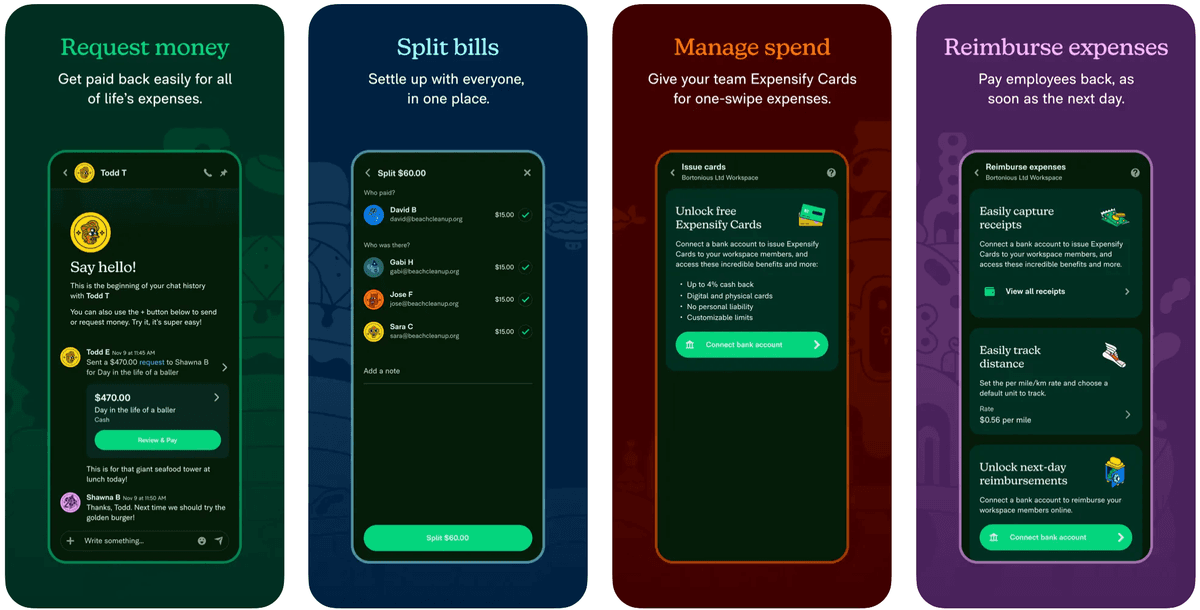
I build knowledge base chatbots — assistants that answer accurately from your docs, policies, and internal content — as fixed-scope projects typically between $20K and $100K, driven mostly by how messy your source content is and how high the accuracy bar needs to be. I'm Top Rated on Upwork with $100K+ earned and verified client reviews, a Guest Engineer at Expensify, and I've spent 7+ years shipping production systems. Most engagements go from content audit to a measured, cited, production chatbot in 6 to 12 weeks, with accuracy evaluated against real user questions rather than demos.
A knowledge base chatbot succeeds or fails on one number: how often its answers are actually correct — and most fail not because the AI is weak but because the underlying content is contradictory, outdated, or missing the answers users need. The engagements that work start with the content, measure accuracy against real questions, and treat a wrong answer as a bug with a root cause.
Weekly demos, async Slack updates, production standards.
04
Ship
Store launch, documentation, knowledge transfer.
Engagements this covers
Support deflection for a growing SaaS product
A support team answers the same hundred questions on repeat while ticket volume grows faster than headcount. I mine the ticket history for the real question distribution, build a retrieval pipeline over the help center and internal macros, and ship a cited chatbot with clean escalation to humans. Outcome shape: a measured deflection rate on repetitive tickets and a team focused on the hard cases.
Internal policy and process assistant
Employees ping HR, IT, and ops daily with questions answered somewhere in a wiki nobody searches. I consolidate the sources, build retrieval with department-level access controls, and deploy the assistant where people already work. Every answer cites its source, and unanswered questions get logged as content gaps. Outcome shape: faster answers for staff and a prioritized list of documentation debt.
Product documentation chatbot for developers
A developer-tools company's users abandon integration because answers are buried across API references, guides, and changelogs. I build a docs assistant that handles version-specific questions, retrieves from structured references and prose guides together, and refuses to guess when the docs are silent. Outcome shape: shorter time-to-first-success for new developers and telemetry showing exactly where docs fall short.
The content audit that determines everything
Before any AI work, I audit what the chatbot would be answering from, and this audit changes the project more often than any technical decision. The method is simple: collect one to two hundred real questions from tickets, chat logs, or search queries, and check whether current documentation actually contains correct, unambiguous answers. Typical results are sobering — often a third of real user questions have no documented answer, and another slice have two documents that contradict each other.
This matters because a chatbot amplifies content quality in both directions. Retrieval over clean docs produces confident correct answers; retrieval over contradictory docs produces confident wrong ones, which are worse than no chatbot at all. The audit output is a gap report your team can act on — sometimes we fix the top fifty gaps as part of the engagement, sometimes your team handles it in parallel with the build. Either way, you should refuse to buy a knowledge base chatbot from anyone who doesn't start here, because they're building on unexamined ground.
How the build phase actually works
Once the content baseline exists, the pipeline goes up in stages. Ingestion first: parsing your sources — help centers, wikis, PDFs, ticket macros — into chunks that preserve structure and metadata like product version, audience, and last-updated date. Retrieval second: hybrid search over those chunks, with filtering so an answer about your enterprise plan never cites the free-tier docs. Generation last: answers composed strictly from retrieved content, with citations on every claim and an explicit refusal path when retrieval comes back weak.
Every week, the system is scored against the question set from the audit — answer accuracy, citation correctness, and refusal behavior — so quality is a number that moves, not an impression from cherry-picked demos. The last phase is integration and escalation design: deploying into your web app, help widget, or internal chat, and wiring the handoff so a user who needs a human reaches one with conversation context attached. Escalation is a feature, not a failure; chatbots that trap users in loops burn more goodwill than they save in tickets.
What drives cost between $20K and $100K
Content condition is the dominant driver. A single well-maintained help center is the friendly case; the expensive case is knowledge spread across wikis, PDFs, slide decks, and tribal knowledge in ticket threads, needing extraction, deduplication, and conflict resolution before retrieval can work. Second is the accuracy and safety bar: an internal assistant where a wrong answer costs a coworker a follow-up question needs far less evaluation and guardrail work than a customer-facing bot whose wrong answer about billing or a regulated topic creates real liability.
Third is freshness and access control. Content that changes daily needs automated re-ingestion with staleness monitoring; permission-sensitive content needs retrieval that respects who is asking, which touches the whole pipeline. Fourth is surface count — one web widget versus web plus internal chat plus API. A single-source internal assistant lands near $20K–$35K. A customer-facing, multi-source, permission-aware bot with a high accuracy bar and continuous evaluation is where engagements reach $100K.
How to judge any chatbot vendor's proposal
Ask one question: how will we measure whether the answers are correct? The only good answer involves a test set of real user questions with verified correct answers, scored regularly — before launch and continuously after. Vendors who answer with model names, or who propose satisfaction thumbs-up ratings as the quality metric, cannot tell you the bot's accuracy today and won't be able to after launch. Users rate confident wrong answers positively; satisfaction is not correctness.
Then probe three specifics. What happens when the answer isn't in the docs — the system should say so and escalate, and you want to see that behavior demonstrated, not promised. How do citations work — every factual claim should trace to a source a user can open. What's the update path when your docs change — if re-ingestion is manual, your bot starts rotting the week it launches. Any vendor fluent in these three answers has operated a chatbot in production. Anyone hand-waving them has shipped demos.
When you should not build a chatbot
If your documentation is thin or badly out of date, fix that first — a chatbot over bad docs is a machine for distributing wrong answers with confidence. The audit phase exists partly to catch this, and I have told prospects to spend their budget on documentation and come back later. Similarly, if your users' top questions are really account-specific actions — where is my order, change my plan — you need API integrations that fetch live data, which is a bigger and different project than document retrieval; a docs-only bot will disappoint those users no matter how good retrieval is.
Also be honest about volume. If your support load is a handful of tickets a day, the chatbot's deflection savings won't cover its build and upkeep for years; better search over your help center gets most of the benefit for a fraction of the cost. Chatbots pay for themselves through repetitive volume — high question counts over stable answers. If that describes your inbox, the economics are excellent. If it doesn't, I'd rather scope the smaller thing you actually need.
Low-risk to start
✓Fixed-scope proposal first
You approve milestones and a price before any build starts — no open-ended hourly surprises.
✓Working demos every week
You see running software each week, not status reports, so you can course-correct early.
✓One senior owner, no hand-offs
The person who scopes the work is the person who builds it — no junior layers, no agency markup.
✓A track record you can verify
Top Rated on Upwork with public client reviews and $100K+ earned, plus contributions to Expensify. Check the receipts before you commit.
How much does it cost to build a knowledge base chatbot?
Production knowledge base chatbots typically cost $20K to $100K. An internal assistant over a single clean documentation source lands around $20K–$35K. Customer-facing bots pull the price up through messy multi-source content, permission-aware retrieval, continuous accuracy evaluation, and multiple deployment surfaces. The content audit in the first two weeks produces a firm quote and a documentation gap report regardless.
How accurate are knowledge base chatbots really?
Well-built retrieval systems over clean documentation reliably answer the large majority of in-scope questions correctly, and — just as important — refuse rather than guess on the rest. Accuracy is determined mostly by content quality, not model choice. The honest way to know your number is a test set of real user questions scored before launch and monitored after. Any vendor who can't state their accuracy methodology can't state their accuracy.
How long does it take to launch a chatbot over our docs?
Six to twelve weeks for a production system: roughly two weeks of content audit and question mining, three to six weeks building ingestion, retrieval, and cited generation with weekly accuracy scoring, then integration, escalation wiring, and a limited rollout. A demo takes days — but the gap between a demo and a bot you can trust in front of customers is precisely the evaluation and hardening work in the middle.
How much does knowledge base chatbot development typically cost?
Projects typically fall in the $20K–$100K range depending on scope, integrations, and timeline. I provide a fixed-scope proposal after a 30-minute scoping call.
How long does a knowledge base chatbot development project take?
MVPs often ship in 8–12 weeks. Production systems with AI backends or RAG may run 12–20 weeks. Rescue and audit engagements can start within days.
Do you work with startups and enterprises?
Yes. I work with founders, CTOs, product teams, and agencies worldwide — US, UK, EU, and APAC time zones with async updates and weekly demos.
Can you own mobile and backend together?
Yes. I specialize in React Native + Python (FastAPI) + AI (RAG, agents, OpenAI/Claude) under one senior owner — fewer handoffs, faster shipping.
How do I get started?
Book a free 30-minute scoping call on this site, hire through Upwork, or email dhairyasenjaliya@gmail.com with your brief and timeline.