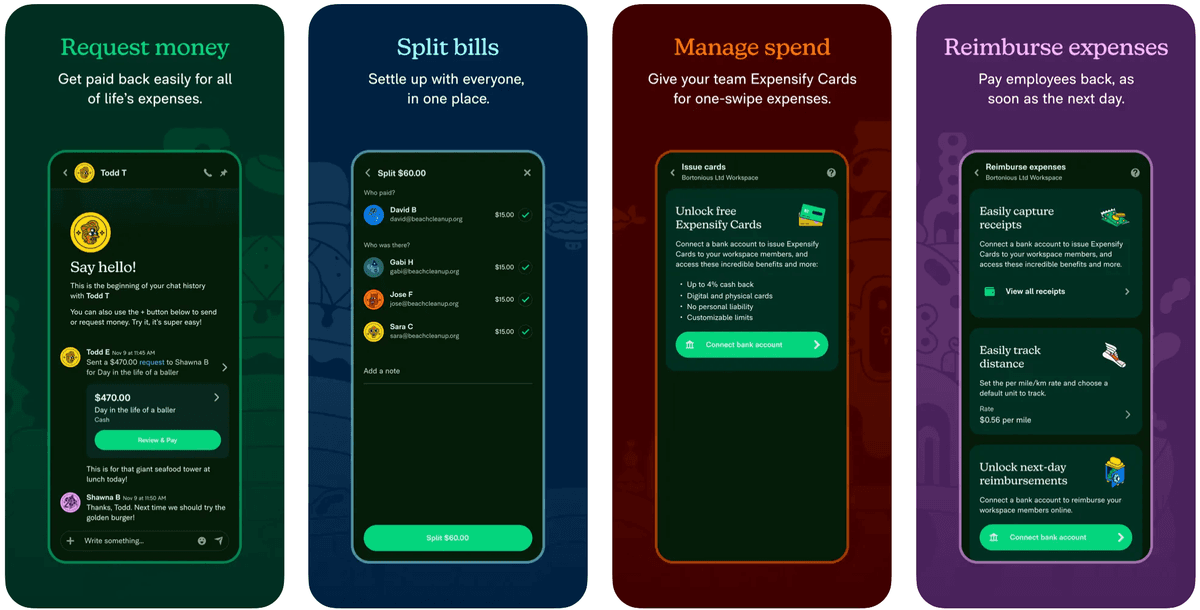
RAG development services — building retrieval-augmented generation systems that answer questions accurately from your own documents and data — typically cost $25K–$150K depending on corpus messiness, permission requirements, and evaluation depth. I build these pipelines hands-on, from ingestion and hybrid search through evals, backed by 7+ years of production delivery, Top Rated status on Upwork with $100K+ earned and verified client reviews, and experience as a Guest Engineer at Expensify. Engagements start with a corpus assessment and a small graded eval set, so we know what "correct" means before writing pipeline code, and pricing is fixed per milestone from there.
The gap between a RAG demo and a RAG product is the gap between answering ten hand-picked questions and answering the ten thousandth real one without inventing policy that does not exist. Production RAG is mostly unglamorous work on ingestion, retrieval quality, and evaluation — the model is the easy part. Delivery succeeds when wrong answers are rare, cited, and traceable to a fixable pipeline stage.
Weekly demos, async Slack updates, production standards.
04
Ship
Store launch, documentation, knowledge transfer.
Engagements this covers
Internal knowledge assistant
A company's operational knowledge is scattered across wikis, PDFs, tickets, and drive folders, and employees interrupt experts to find it. I build the ingestion pipeline, hybrid retrieval, and a cited answer layer over that corpus — respecting document permissions per user — so staff self-serve answers with sources attached and the experts get their focus back.
Customer-facing documentation Q&A
A software company wants customers to ask questions instead of trawling docs, but cannot afford confident nonsense under its own brand. I build retrieval tuned to their documentation structure, strict grounding so answers cite real passages or decline, and an eval suite run on every release. Support ticket volume drops without the hallucination incidents that make legal nervous.
RAG rescue
A team shipped a RAG feature from a tutorial and it embarrasses them weekly — wrong answers, stale content, no way to tell why. I audit each pipeline stage against a fresh eval set, usually finding chunking and retrieval at fault rather than the model, then rebuild the weak stages. Accuracy becomes a tracked number that goes up instead of an anecdote that goes viral.
Why production RAG is nothing like the tutorial
The tutorial embeds clean text and answers softball questions. Your corpus is different: PDFs with tables that shred under naive extraction, near-duplicate policy documents where only one is current, meeting notes that contradict the handbook, and content in formats no loader parses cleanly. Most RAG quality problems are corpus and retrieval problems wearing an AI costume.
Production RAG means solving those: ingestion that preserves document structure, chunking tuned to how your documents actually organize meaning, hybrid retrieval combining keyword and semantic search — because pure vector similarity famously misses exact part numbers, names, and codes — plus reranking, freshness handling so superseded documents stop winning, and access control so retrieval never leaks a document to someone who cannot open it. None of this appears in the demo you saw, and all of it appears in the invoice of whoever fixes the demo you shipped.
Engagement timeline: corpus first, model last
Weeks one and two are corpus assessment and eval design: I inventory your sources, measure their messiness honestly, and build a graded set of fifty-plus real questions with known-correct, source-linked answers — the exam the pipeline must pass. Weeks three through six build the pipeline in dependency order: ingestion and chunking, then retrieval with hybrid search and reranking, each stage measured on the eval set before the next begins, because a generation layer over broken retrieval just narrates the wrong documents fluently.
Only then does the model layer land — grounding, citations, refusal behavior for unanswerable questions. The final weeks cover freshness syncing, permissions, monitoring, and a pilot with real users whose feedback expands the eval set. Engagements toward $150K typically add multiple corpora, per-user access control, or strict compliance review rather than fancier AI.
What drives cost from $25K to $150K
Corpus messiness is the dominant variable and the one buyers most underestimate. A few thousand well-structured pages in consistent formats is the $25K–$50K zone. Scanned PDFs, complex tables, conflicting document versions, and content spread across five systems with different APIs push the ingestion work up fast — I have seen ingestion consume half a project's budget, legitimately.
Permissions are the second driver: a system where every user may see everything is dramatically simpler than one that must mirror per-document access rights from your identity provider at retrieval time. Third is the accuracy bar. An internal tool where a wrong answer wastes minutes needs lighter evaluation than a customer-facing or regulated system where wrong answers carry brand or legal cost — the second demands deeper eval suites, stricter grounding, and human review loops, and that rigor is where the upper range lives.
How RAG quality gets measured
Two layers, measured separately, because they fail separately. Retrieval metrics ask: for each eval question, did the right passages appear in what was fetched? If not, no prompt can save the answer, and the fix lives in chunking, search, or reranking. Generation metrics ask: given correct passages, was the answer faithful to them, complete, and properly cited — or did the model freelance beyond its sources?
Separating the layers turns debugging from guesswork into diagnosis: a bad answer traces to a specific stage with a specific fix. The eval suite runs on every meaningful change — new chunking, new embedding model, new prompt — so regressions surface in CI rather than in a customer's screenshot. When a vendor cannot tell you their retrieval hit rate separately from answer accuracy, they cannot systematically improve either, whatever their demo suggests.
Red flags when buying RAG
First red flag: a quote produced without examining your actual documents. Corpus messiness drives this budget more than any other factor, so a number quoted blind is fiction — I will not give you one, and you should distrust anyone who will. Second: no evaluation methodology in the proposal. "We'll test it with your team" means quality will be measured by whoever complains loudest.
Third: vector-database maximalism — vendors who lead with infrastructure shopping lists before understanding your questions and documents. Most corpora under a few million chunks run beautifully on Postgres with pgvector plus keyword search; the exotic stack is usually solving the vendor's positioning problem, not yours. Fourth: no answer for freshness. Documents change; a pipeline without an update path is a system that starts rotting the day it ships, and re-ingesting everything nightly is not a real answer at scale.
When you do not need RAG at all
If your entire relevant corpus is a few hundred pages, you may not need retrieval — modern long-context models can hold that much directly, and a well-managed context beats a retrieval pipeline you now have to maintain. RAG earns its complexity when the corpus is too large for the window, changes frequently, or must be filtered per user.
Skip RAG too when your real problem is that authoritative answers do not exist in writing — no pipeline retrieves knowledge that lives only in your staff's heads; write it down first, then automate access. And if usage will be occasional — a handful of queries a day — weigh whether an off-the-shelf assistant over your documents is good enough, because a custom pipeline needs ongoing ownership. A short corpus assessment settles this honestly, and "you don't need RAG" is a real outcome of mine.
Low-risk to start
✓Fixed-scope proposal first
You approve milestones and a price before any build starts — no open-ended hourly surprises.
✓Working demos every week
You see running software each week, not status reports, so you can course-correct early.
✓One senior owner, no hand-offs
The person who scopes the work is the person who builds it — no junior layers, no agency markup.
✓A track record you can verify
Top Rated on Upwork with public client reviews and $100K+ earned, plus contributions to Expensify. Check the receipts before you commit.
Production systems run $25K–$150K. Clean, well-structured corpora with permissive access sit at the low end; messy multi-source corpora, per-user permission enforcement, and customer-facing accuracy bars push toward the top. Corpus messiness is the single biggest driver — ingestion of scanned PDFs, tables, and conflicting versions can dominate the budget. Distrust any quote produced before the vendor has examined your actual documents.
How long does it take to build a production RAG system?
Plan for eight to fourteen weeks: two for corpus assessment and building a graded eval set, four for ingestion and retrieval tuned against that set, two to three for the generation layer with citations and refusal behavior, then a piloted rollout with monitoring and freshness syncing. A demo takes days; the calendar goes into making the ten-thousandth answer trustworthy, not the tenth.
Should I use RAG or fine-tuning for my company knowledge?
RAG, in almost every case. Fine-tuning teaches a model style and skills, not facts you can update — your knowledge changes weekly and a fine-tune bakes it in stale, with no citations and no per-user access control. RAG keeps knowledge in a store you update instantly and lets every answer cite sources. Fine-tuning earns a place later, occasionally, for tone or domain phrasing — layered on top of retrieval, never instead of it.
How much does rag development services typically cost?
Projects typically fall in the $25K–$150K range depending on scope, integrations, and timeline. I provide a fixed-scope proposal after a 30-minute scoping call.
How long does a rag development services project take?
MVPs often ship in 8–12 weeks. Production systems with AI backends or RAG may run 12–20 weeks. Rescue and audit engagements can start within days.
Do you work with startups and enterprises?
Yes. I work with founders, CTOs, product teams, and agencies worldwide — US, UK, EU, and APAC time zones with async updates and weekly demos.
Can you own mobile and backend together?
Yes. I specialize in React Native + Python (FastAPI) + AI (RAG, agents, OpenAI/Claude) under one senior owner — fewer handoffs, faster shipping.
How do I get started?
Book a free 30-minute scoping call on this site, hire through Upwork, or email dhairyasenjaliya@gmail.com with your brief and timeline.