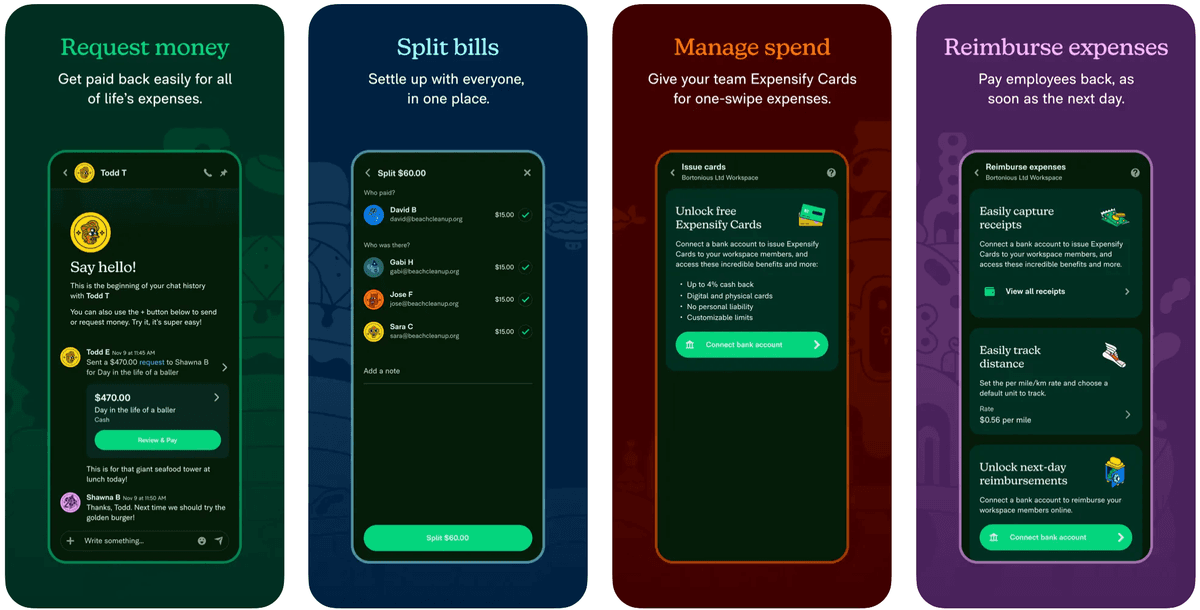
Hiring me for RAG development runs $30K–$150K depending on how far past the demo you need to go: $30K–$50K covers a single-corpus internal assistant with retrieval evaluation in place, while customer-facing, multi-tenant RAG with hybrid search, guardrails, and a full eval harness lands at $80K–$150K. I'm a Python and AI engineer with 7+ years of production delivery — including guest engineering at Expensify, a platform used by millions — and I'm Top Rated on Upwork with $100K+ earned and verified client reviews, alongside direct clients worldwide. The core of what you're buying is not the pipeline; it's retrieval quality you can measure and defend.
Anyone can wire a vector database to an LLM in an afternoon — which is exactly why most RAG projects stall at a demo that answers softball questions and embarrasses itself on real ones. Production RAG is a retrieval-quality problem, an evaluation problem, and a data-freshness problem before it is an AI problem, and that's the work this service actually delivers.
Weekly demos, async Slack updates, production standards.
04
Ship
Store launch, documentation, knowledge transfer.
Engagements this covers
Internal knowledge assistant that employees trust
A company's answers live across wikis, PDFs, and policy docs nobody can search. I build ingestion that respects document structure, hybrid retrieval tuned on real employee questions, and citations linking every answer to its source. The outcome is measured, not vibes: a golden-question eval suite showing retrieval accuracy before launch, and permission-aware access so people only see what they're cleared to.
Customer-facing support bot that doesn't hallucinate refund policies
A SaaS team wants deflection without the horror stories. I ground the bot in the help center and account context, add guardrails that refuse rather than guess when retrieval confidence is low, and wire escalation to humans with full conversation context. Success is defined upfront as a deflection rate at a fixed accuracy bar — and the eval harness proves it weekly.
Adding 'chat with your data' to a vertical SaaS
A B2B product wants AI features that justify a pricing tier. I build multi-tenant RAG where each customer's documents stay strictly isolated, retrieval is scoped per tenant, and cost per query is tracked so the feature's margin is known. Delivery includes the ingestion pipeline for continuous updates, so answers reflect yesterday's documents, not last quarter's snapshot.
Why most RAG projects die between demo and production
The demo works because the demo questions were chosen by the people who built it. Production users ask questions with typos, jargon, missing context, and intent that spans three documents — and naive top-k vector search falls apart there. The failure is almost never the LLM; it's retrieval: wrong chunks, stale indexes, tables mangled during ingestion, and no way to measure any of it.
The second killer is the absence of evaluation. Teams tweak chunk sizes and prompts by feel, fix one query, silently break five others, and lose confidence in the whole system. My engagements are structured around an eval harness from week one — a set of golden questions with known correct sources, scored automatically on every change. It converts RAG from an art project into engineering: every decision about chunking, embedding models, or rerankers gets a number, and the number decides.
How the engagement runs, phase by phase
Phase one, roughly two weeks, is data reality: I audit your actual corpus — formats, quality, update frequency, permissions — and build the golden-question eval set with your domain experts. This phase kills more bad assumptions than any other; sometimes it reveals you don't need RAG at all, and I'll say so.
Phase two builds the retrieval spine: ingestion that preserves document structure, hybrid search combining keyword and semantic retrieval, reranking, and the eval harness proving each choice with numbers. Phase three wraps it in a product: the generation layer with citations and refusal behavior, streaming API endpoints, cost tracking per query, and tenant isolation if you're multi-tenant. The final phase is production hardening — monitoring retrieval quality drift over time, a feedback loop from user ratings back into the eval set, and a runbook so your team can retune the system without me.
What separates a $30K build from a $150K one
Corpus complexity is the first driver: clean markdown docs are easy; scanned PDFs, spreadsheets, tables, and images demand serious ingestion engineering. Update frequency is second — a static knowledge base is indexed once, while documents that change daily need incremental pipelines with deletion handling, which is genuinely hard to get right.
Third is who's asking: an internal tool for fifty employees tolerates rough edges that a customer-facing product cannot, and the gap between them is guardrails, permission-aware retrieval, adversarial testing, and latency work. Fourth is tenancy — multi-tenant isolation done properly touches every layer from ingestion to retrieval filters. Finally, accuracy requirements scale cost non-linearly: getting from 80% to 90% retrieval accuracy on your eval set can cost as much as the first 80%, because the remaining failures are the hard, structural ones. A good proposal shows you this curve honestly instead of promising perfection.
How to evaluate any RAG developer before hiring
One question filters out most of the field: 'How will we know retrieval is working?' The right answer describes a measurable evaluation set built from your real questions, scored on every change. Anyone who answers with a list of tools — a vector database, a framework, an embedding model — is assembling parts, not engineering outcomes. Follow up with: 'When would you not use a vector database?' Strong candidates know keyword search wins on exact identifiers, part numbers, and names, which is why production systems are hybrid.
Ask how they handle documents that update or get deleted — stale-index bugs are the most common production RAG embarrassment. And ask what they've shipped that real users depend on, with verification: marketplace review history, referenceable clients, production systems. My own checkable trail includes Top Rated Upwork status with verified reviews and guest engineering at Expensify. Demand the equivalent from anyone you shortlist.
When you should not buy RAG at all
If your entire corpus fits in a few hundred pages, modern long-context models can often take the whole thing in the prompt — a well-structured context beats a retrieval pipeline you now have to maintain. If your users' queries are lookups with exact answers — order numbers, account statuses — you need structured search or a database query layer, not embeddings. And if the real problem is that your documentation is wrong or outdated, RAG will faithfully retrieve wrong answers with confident citations; fix the docs first.
RAG earns its complexity when the corpus is large, changing, and queried in natural language by people who don't know where answers live. Roughly a third of the RAG inquiries I get are better served by something simpler and cheaper, and I tell those companies so in the first conversation. The projects I do take are ones where the architecture is actually justified — which is why they ship.
Low-risk to start
✓Fixed-scope proposal first
You approve milestones and a price before any build starts — no open-ended hourly surprises.
✓Working demos every week
You see running software each week, not status reports, so you can course-correct early.
✓One senior owner, no hand-offs
The person who scopes the work is the person who builds it — no junior layers, no agency markup.
✓A track record you can verify
Top Rated on Upwork with public client reviews and $100K+ earned, plus contributions to Expensify. Check the receipts before you commit.
With me, $30K–$150K. An internal single-corpus assistant with proper retrieval evaluation runs $30K–$50K. Customer-facing systems with guardrails, hybrid search, and continuous ingestion typically land $60K–$100K. Multi-tenant RAG inside a SaaS product, with per-tenant isolation and cost tracking, reaches $150K. Ongoing costs matter too: budget for LLM API usage, hosting, and periodic eval-driven retuning after launch.
Which vector database should we use for RAG?
For most companies: pgvector inside the Postgres you already run — one less system, transactional consistency with your app data, and it comfortably handles millions of embeddings. Dedicated vector databases earn their place at much larger scale or with heavy filtering workloads. The honest answer is that vector database choice is rarely why RAG succeeds or fails; retrieval strategy and evaluation discipline are. Any developer leading with a database recommendation has the priorities backwards.
How long does it take to build production RAG?
Ten to twenty weeks for most engagements. A focused internal assistant can reach a measured, launch-ready state in ten. Customer-facing or multi-tenant systems take fourteen to twenty because guardrails, adversarial testing, and latency work are real workstreams, not polish. A demo takes a weekend — the gap between that weekend and production is exactly what you're hiring for, and compressing it is how systems launch broken.
How much does hire rag developer typically cost?
Projects typically fall in the $30K–$150K range depending on scope, integrations, and timeline. I provide a fixed-scope proposal after a 30-minute scoping call.
How long does a hire rag developer project take?
MVPs often ship in 8–12 weeks. Production systems with AI backends or RAG may run 12–20 weeks. Rescue and audit engagements can start within days.
Do you work with startups and enterprises?
Yes. I work with founders, CTOs, product teams, and agencies worldwide — US, UK, EU, and APAC time zones with async updates and weekly demos.
Can you own mobile and backend together?
Yes. I specialize in React Native + Python (FastAPI) + AI (RAG, agents, OpenAI/Claude) under one senior owner — fewer handoffs, faster shipping.
How do I get started?
Book a free 30-minute scoping call on this site, hire through Upwork, or email dhairyasenjaliya@gmail.com with your brief and timeline.